* Some links may be affiliate links. See the footer disclosure.
Indoor compost bins can be useful in flats, but they are easy to buy for the wrong reason. A good setup helps you collect food scraps cleanly, reduce kitchen waste and prepare material for a proper composting route. A bad setup becomes a smelly container you avoid opening.
This guide focuses on practical buying decisions for UK renters and flat dwellers: size, smell control, cleaning, placement, routine and whether you need a simple caddy, a bokashi bin or something more involved.
Is an indoor compost bin right for your flat?
An indoor compost bin can make sense if you have regular food scraps, limited outdoor space and a clear plan for emptying or processing the contents. It is less useful if you are hoping the bin itself will make compost with no extra routine.
In a small flat, the most important question is not “which bin is best?” It is “what happens after I put scraps in it?” If the answer is unclear, start with a simple food waste caddy rather than a larger system.
For the wider method decision, read Composting in a Flat: What Are the Realistic Options?.
What indoor compost bin actually means
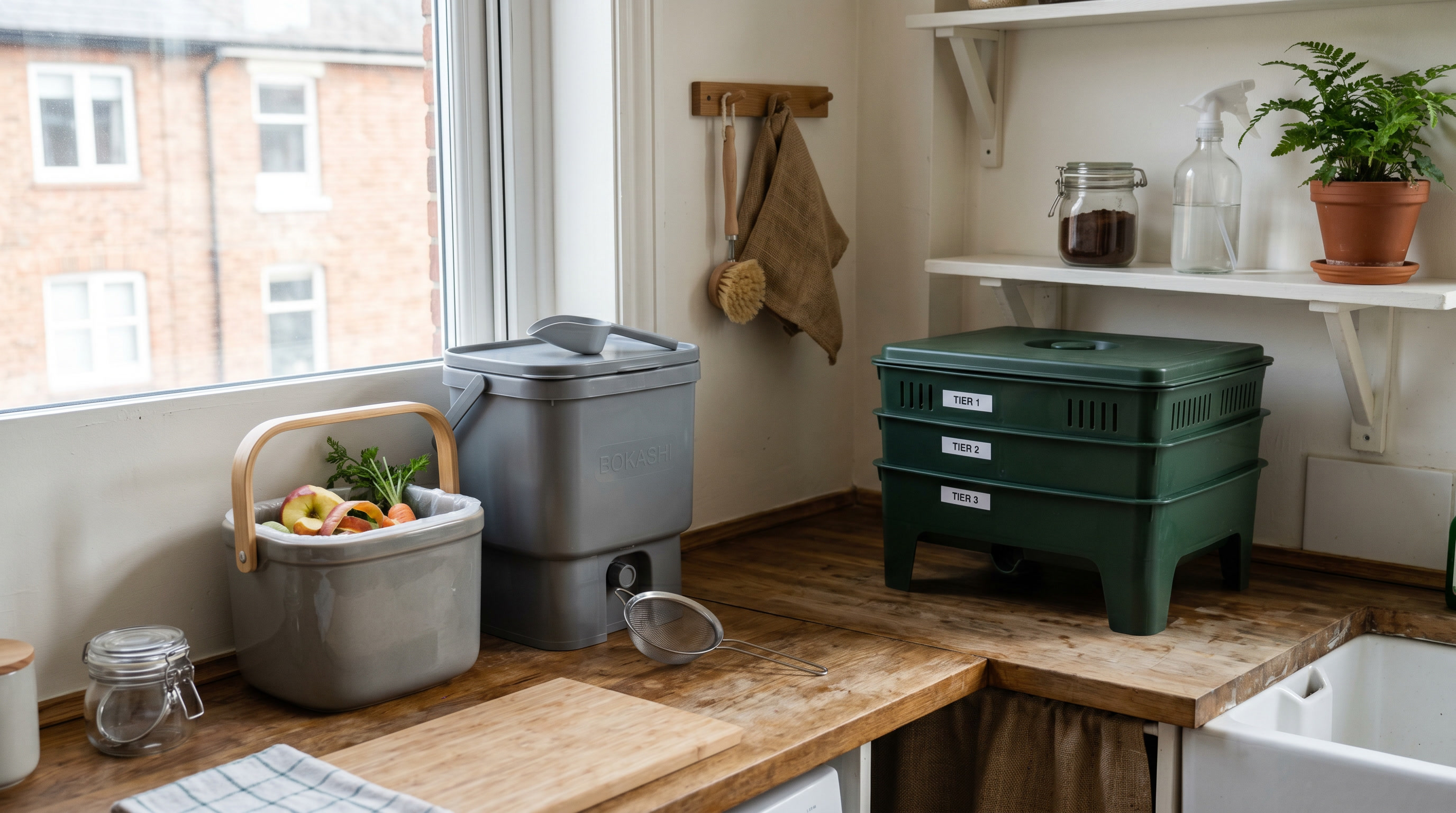
People use “indoor compost bin” to mean different things. Some products are just kitchen caddies for collecting scraps. Others are bokashi bins that ferment food waste before it is buried, added to another system, or disposed of through an appropriate route. Some electric kitchen composters dry and grind food waste, but they do not always create finished compost in the traditional garden sense.
That distinction matters. A countertop caddy is a storage container. A bokashi bin is a processing step. An electric composter is an appliance. They solve different problems and need different levels of maintenance.
Choose your composting route first
Before buying anything, choose the route your food scraps will follow:
- Council food waste collection
- Bokashi processing before disposal or further composting
- Wormery or outdoor composting elsewhere
- Occasional drop-off to a community or garden composting point
If you have no realistic second step, do not buy a large indoor bin. A compact caddy emptied regularly is usually safer and easier.
What to compare before buying
Capacity
Too small means constant emptying. Too large means food waste sits for too long. In most flats, compact or medium capacity is more practical than a large bin, especially if you cook often but have limited kitchen space.
Lid and seal
A good lid matters. Look for a lid that closes cleanly, feels sturdy and does not rely on awkward clips that you will stop using. Filtered lids can help, but filters are not a substitute for regular emptying.
Cleaning design
Choose smooth surfaces, simple shapes and removable parts. Avoid bins with lots of grooves or hard-to-clean hinges if you know you will not scrub them regularly.
Footprint
Measure the space where the bin will live. A bin that looks compact online can still be annoying if it blocks the sink, chopping board, cupboard door or kettle area.
Carry and emptying
Handles matter if you need to carry the bin through a flat, down stairs or to an outside collection point. Check whether the full bin is still easy to lift and empty without spills.
Option 1: countertop food waste caddy
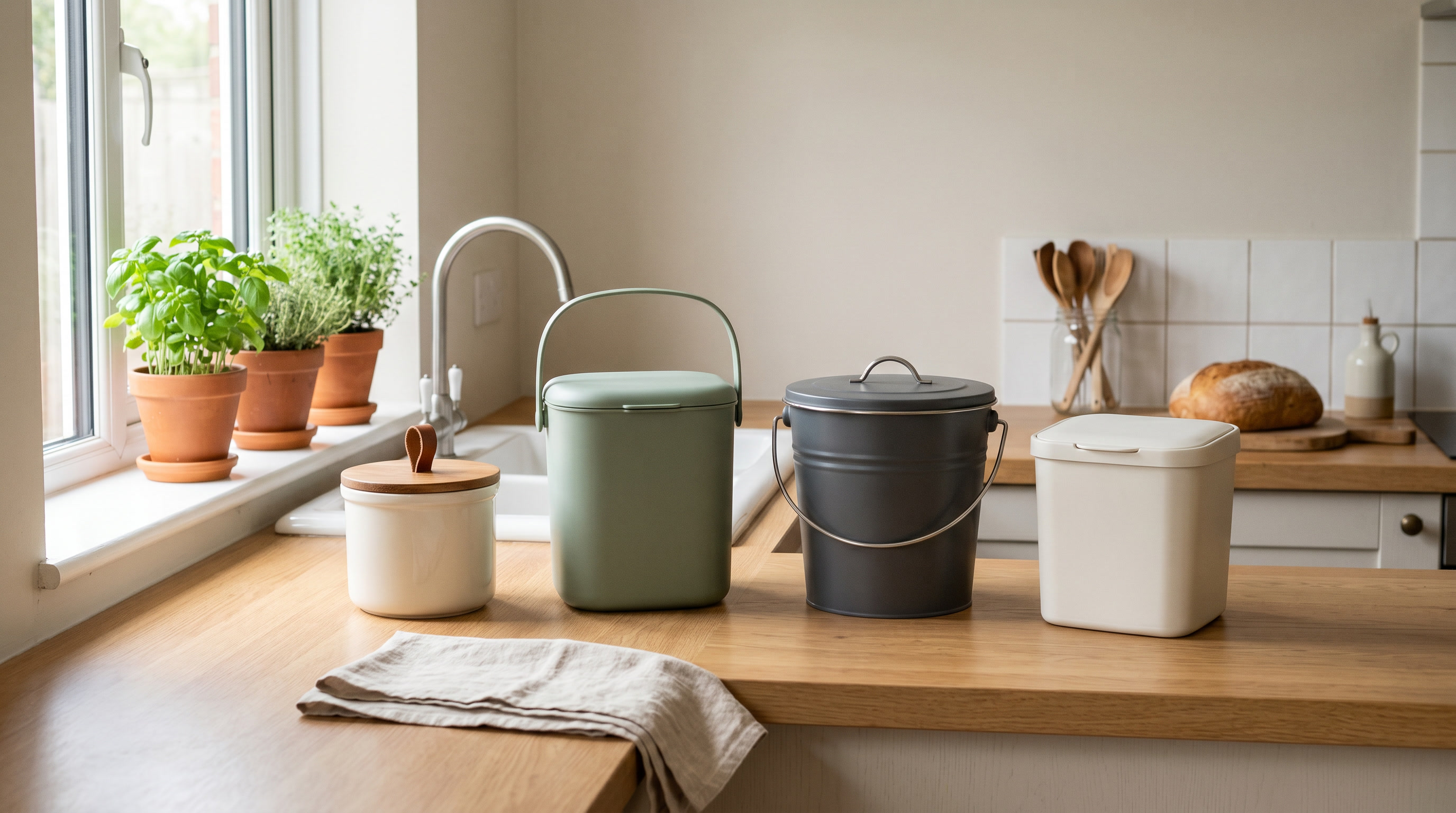
A countertop food waste caddy is usually the simplest option. It collects scraps temporarily before they go to council food waste collection, an outdoor bin, a bokashi system or another disposal route.
This is often the best first choice for renters because it is cheap, removable and easy to understand. The downside is that it does not process waste by itself. You still need to empty it regularly.
Best for: small kitchens, council collection, beginners and anyone who wants a low-effort starting point.
Option 2: bokashi bin
A bokashi bin is a sealed system that ferments food waste using bran or another bokashi starter. It can handle some scraps that are awkward for normal composting, but it is still not a magic “bin to compost” shortcut.
You need space for the bin, a supply of bokashi bran, a place to drain liquid if the system produces it, and a plan for what happens to the fermented material afterwards.
Best for: people who want to process food waste indoors and are comfortable following a routine.
Option 3: electric kitchen composter
Electric kitchen composters can reduce the volume of food waste by drying, heating or grinding it. They can be useful for some households, but they are appliances rather than simple bins.
Before buying one, check running noise, electricity use, filter costs, cleaning requirements and what the output can realistically be used for. Do not assume every machine creates finished compost ready for pots.
Best for: higher budgets, limited disposal options and people who are happy maintaining an appliance.
Simple comparison table
| Option | Best for | Watch-outs | Maintenance level |
|---|---|---|---|
| Countertop caddy | Collecting scraps before emptying | Needs frequent emptying | Low |
| Filtered caddy | Short-term storage with better odour control | Filter replacement and cleaning | Low to medium |
| Bokashi bin | Indoor food waste processing | Needs bran and a follow-up disposal route | Medium |
| Electric composter | Reducing food waste volume indoors | Cost, noise, filters, cleaning and output use | Medium to high |
Use this table to choose the type first. Then compare individual products inside that category.
Placement, smell and cleaning
Put the bin somewhere you will actually use it, but not somewhere it blocks your kitchen. Near the prep area is convenient. Under the sink can work if you will remember to empty it. A hidden bin that gets forgotten is usually worse than a small visible caddy.
Smell control depends on routine as much as product design. Empty the bin before scraps break down unpleasantly, clean it regularly, and avoid letting wet food waste sit for too long. Filters help, but they do not remove the need for maintenance.
What to put in and what to avoid
What you can add depends on your system. A council food waste caddy should follow local collection rules. A bokashi bin should follow the manufacturer’s instructions. A wormery has different limits again.
As a general beginner rule, start with easy scraps such as vegetable peelings, fruit scraps, tea leaves where appropriate, coffee grounds where appropriate, and small amounts of plant material. Be more cautious with cooked food, meat, dairy, oily food and large wet leftovers unless your chosen system specifically allows them.
When in doubt, check the rules for the system you are using rather than assuming all compost bins work the same way.
Renter-friendly buying cautions
Choose a bin you can manage cleanly in shared or compact spaces. Avoid oversized setups that are hard to move, hard to clean, or likely to leak onto worktops and floors.
For rented homes, prioritise:
- A stable base
- No leaks
- Easy cleaning
- No permanent installation
- A size that fits your kitchen without taking over
- A routine that will not annoy housemates, partners or neighbours
If the system feels awkward before you buy it, it will probably feel worse once it contains food waste.
Red flags before purchase
- No clear dimensions listed
- No clear emptying or cleaning instructions
- Repeated feedback about weak hinges, poor seals or leaks
- Filter claims without replacement information
- Large capacity marketed to small kitchens without footprint details
- Claims that imply no smell with no maintenance
If a product page avoids the practical details, skip it or look for better information elsewhere.
Useful composting options to compare
If you are comparing indoor compost bins alongside other small-space supplies, the small-space gardening kit list can help you separate useful basics from extras that can wait.
- Kitchen compost caddy: See examples
- Bokashi bin: See examples
- Indoor compost bin: See examples
Common mistakes
Buying the bin before choosing the method
Choose the route first. Collection caddy, bokashi bin and electric composter are not the same thing.
Buying too large
Large bins sound convenient, but food waste sitting too long indoors can become unpleasant. Smaller and emptied more often is usually better in flats.
Trusting filters too much
Filters can reduce smells, but they do not replace cleaning, emptying and sensible food-scrap habits.
Ignoring cleaning effort
If cleaning is annoying, the bin will quickly become something you avoid.
Not planning the next step
Food scraps still need somewhere to go. The indoor bin is only part of the system.
FAQ
Do I need a special indoor compost bin?
Not always. If you only collect scraps before council food waste collection, a simple sealed caddy may be enough.
What size is best for a flat?
Usually compact to medium. Choose a size you can empty regularly rather than the largest bin that fits.
Do indoor compost bins smell?
They can if scraps sit too long, the seal is poor or the bin is not cleaned. Good routine matters as much as the product.
Is bokashi better than a normal caddy?
Only if you want to process food waste and you have a plan for the fermented material afterwards. For simple collection, a caddy is easier.
Are electric composters worth it?
They may be useful for some households, but check cost, noise, cleaning, filters and what the output can realistically be used for before buying.
Should I buy a bin before choosing a composting method?
No. Choose your method first, then buy the bin that supports it.
Related guides
- Composting in a Flat: What Are the Realistic Options?
- Small-Space Gardening Kit List
- Cheap Ways to Start Gardening as a Renter
- Container Gardening for Beginners: A UK Small-Space Guide
Next step
Decide whether you need a simple food waste caddy, a bokashi system or a larger indoor composting setup. Then shortlist two or three options that fit your kitchen footprint and cleaning routine.