Starting a garden as a renter does not need to be expensive. In fact, small-space gardening is often better when it starts cheaply and simply. You can learn your light, watering routine and crop preferences before spending money on planters, tools or accessories.
The key is to spend on the few things plants genuinely need and avoid buying a decorative setup before you know what works.
Spend money in the right order
A beginner small-space garden needs:
- A suitable growing spot
- Containers with drainage
- Compost
- Seeds or healthy plants
- A way to water
Everything else is optional at the start. Matching planters, labels, stands, decorative trays and specialist feeds can wait.
If you are still planning the basics, start with the Beginner’s Guide to Small-Space Gardening for UK Renters.
Start with seeds that give several attempts
Seeds are usually cheaper than buying lots of plants. Choose crops where one packet gives repeated sowings:
- Salad leaves
- Radishes
- Pea shoots
- Coriander
- Spring onions
- Dwarf beans
Sow small amounts at a time. This avoids wasting seed and gives you more chances to learn.
Buy young plants strategically
Young plants are useful when seeds are slow or tricky. A pot of chives, parsley, mint or strawberries can be worth buying because it gives you an established plant.
Do not buy a trolley of young plants before you have pots ready. Plants decline quickly if they sit around waiting for a home.
Choose practical containers
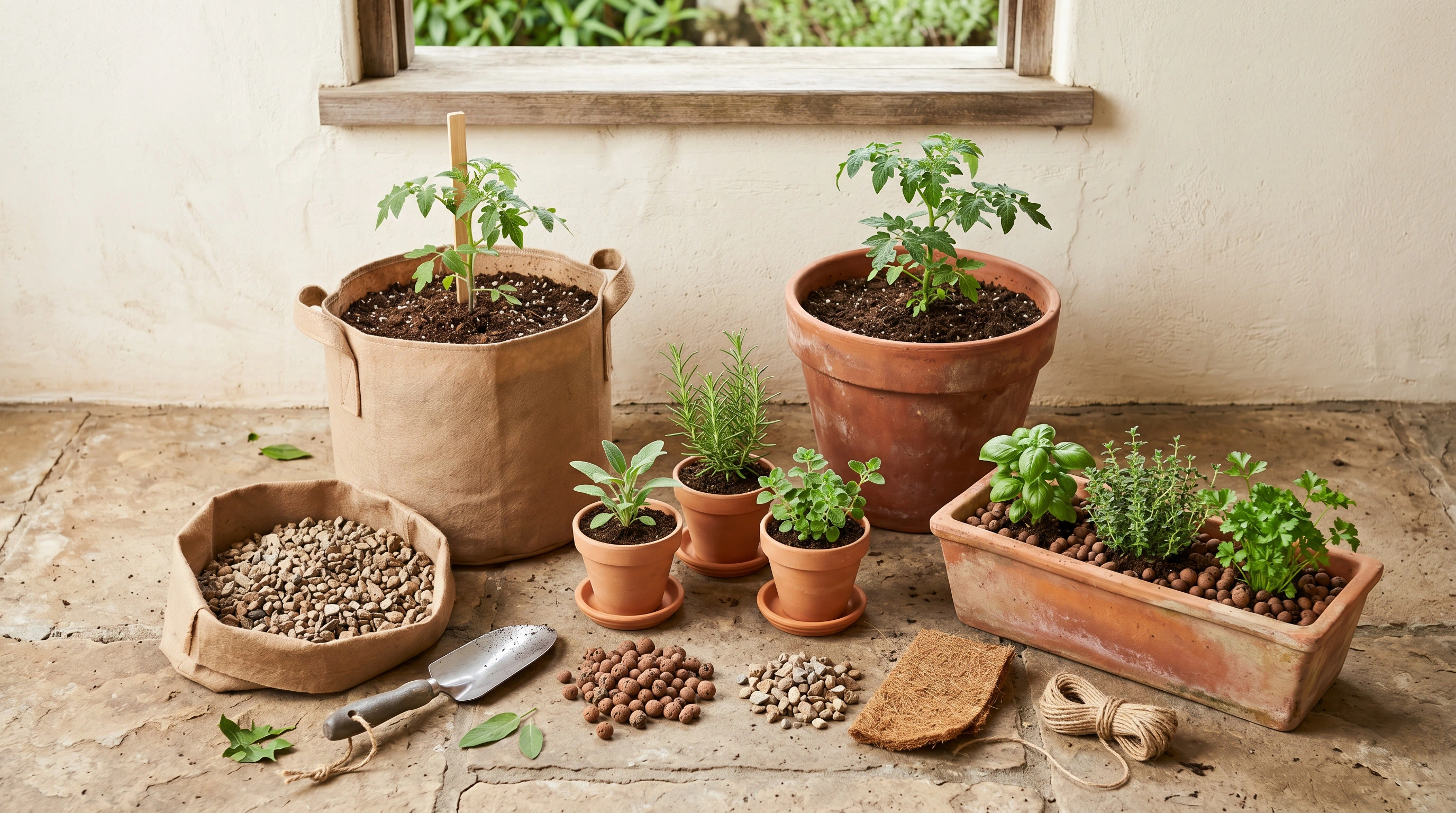
Cheap does not mean unsuitable. A container still needs drainage, stability and enough root space.
Plastic and recycled plastic pots are often good value for renters because they are light, moveable and hold moisture better than small terracotta pots. For more detail, read How to Choose Pots for Balcony and Windowsill Gardening.
Reuse household items carefully
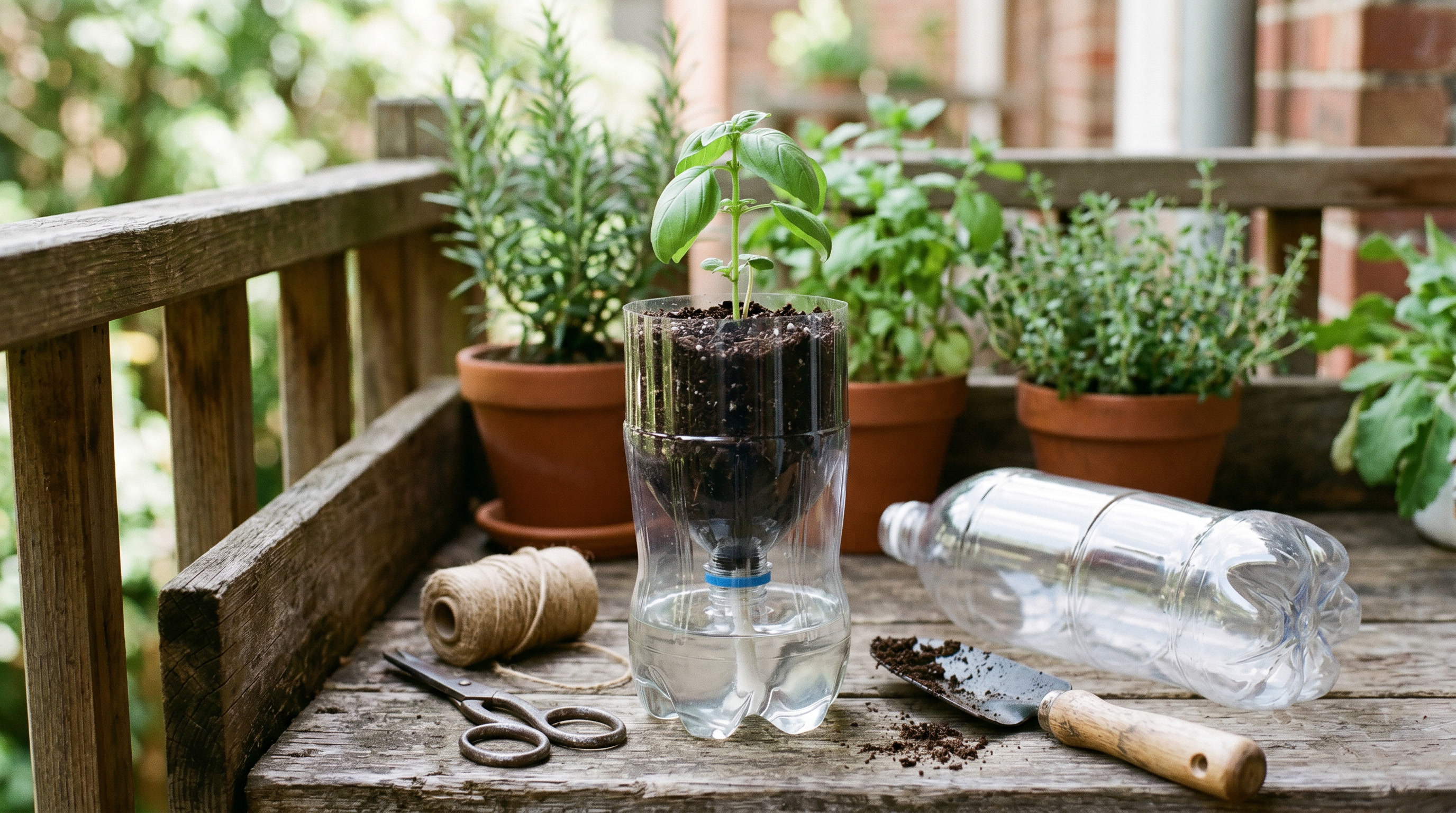
Food-safe tubs, trays and buckets can become seed trays, microgreen trays or outdoor planters. Clean them well and think about drainage.
Some items are better as cover pots than actual plant pots. If there are no drainage holes, keep the plant in a nursery pot inside the container.
For ideas and cautions, read Upcycling Household Items into Planters.
Do not use containers that held paint, chemicals, oils or unknown materials for edible plants. Cheap should still be sensible.
Avoid permanent fixtures
Renters should be careful with drilling, heavy balcony fittings, wall planters and rail-mounted containers. This is general caution, not legal advice. Check your own tenancy or building rules before fixing anything.
Free-standing pots, trays and lightweight moveable setups are usually the easiest starting point.
Choose crops that save frustration
Some crops are cheap to buy but expensive in attention. A large tomato plant in a tiny pot needs frequent watering and may still disappoint if light is poor.
Good budget beginner crops include:
- Chives
- Parsley
- Salad leaves
- Pea shoots
- Radishes
- Mint in its own pot
- Dwarf beans if you have outdoor light
The guide to what you can grow without a garden in the UK gives more options.
Keep compost simple
For most first crops, peat-free multipurpose compost is enough. Avoid buying several specialist bags before you know what you will grow.
If storage is limited, buy a bag size you can manage. Open compost bags can be awkward in flats, so plan where it will live.
Buy fewer tools
You can start with:
- A small watering can or jug
- A hand trowel or scoop
- Scissors
- A tray for indoor potting
- Labels or masking tape
You do not need a full tool set. Borrow rarely used tools if possible.
Cheap does not mean messy
In rented homes, tidy matters. Use trays under indoor pots, sweep compost spills, and avoid containers that leak onto shared areas. A cheap setup should still look cared for.
This helps you keep growing without annoying housemates, neighbours or landlords.
DIY watering help
If you forget watering or travel for short periods, simple self-watering ideas can help. They are not magic, but they can reduce stress for thirsty pots.
Read DIY Self-Watering Planter from Bottles before building anything more complicated.
A realistic starter budget
You can make a useful first setup with a small, focused spend. Exact prices change, but the priority order stays the same:
- One or two practical containers
- One manageable bag of peat-free multipurpose compost
- One or two seed packets
- A tray or saucer if growing indoors
- A small watering can, jug or reused bottle
This is enough for salad leaves, pea shoots, chives, parsley or radishes. It is better to buy these basics than spend the same money on a decorative planter with no drainage.
Where to save and where not to save
Save on labels, fancy tools, decorative outer pots and accessories. Masking tape, old cutlery, yoghurt pots and reused trays can all help at the start.
Do not save by using unsafe containers, poor drainage or mystery compost from an unknown source. Cheap materials still need to be clean, stable and suitable for plants. For edible crops, be especially cautious about containers that previously held non-food materials.
Compost is also worth treating sensibly. You do not need expensive specialist compost for every crop, but old compacted compost from a neglected pot may cause problems for seedlings.
Three low-cost starter setups
For a windowsill, try pea shoots in a shallow tray, chives in a small pot and parsley in a second pot. This gives you quick growth, one long-term herb and one forgiving leafy herb.
For a balcony, try one trough of salad leaves, one pot of mint or chives, and one deeper pot for dwarf beans if the space is bright enough. This gives you a mix of fast leaves and a crop that feels more substantial.
For a patio or paved yard, start with one larger container of salad leaves or herbs and one movable pot for a seasonal crop. Keep everything free-standing and easy to shift.
How to avoid false economy
Some cheap purchases cost more because they fail quickly. Very thin trays crack, tiny pots need watering constantly, and decorative planters without drainage can kill plants. A slightly plainer container with drainage is often the better buy.
Also avoid buying too many seed packets at once. Five packets that suit your light and space are better than twenty packets you cannot sow. Use the Year-Round Balcony Planting Calendar for the UK to spread purchases through the season.
Keeping the setup moveable
Renters benefit from moveable gardens. Use containers you can lift when empty, trays that fit through doors, and plant stands that do not need fixing. If you might move home, avoid building a setup around one exact wall, rail or awkward corner.
Moveable does not mean flimsy. A pot should still be stable when planted and watered. This balance matters most on balconies, where lightness, wind and watering all interact.
Buying second-hand supplies
Second-hand pots, trays and small tools can be useful if they are clean and intact. Check for cracks, brittle plastic, missing trays and containers that are too shallow for the crops you want to grow.
Wash used pots before planting, especially if you do not know what was grown in them. This is a simple precaution and keeps the setup more pleasant indoors.
Avoid second-hand items that create more work than they save. A stack of mismatched broken pots is clutter, not a bargain.
Avoiding impulse seed buying
Seeds are cheap individually, which makes it easy to buy too many. Start with crops that suit your actual space: salad leaves for containers, chives and parsley for herbs, dwarf beans for a sunny outdoor pot, and pea shoots for indoors.
Before buying a packet, ask where it will grow, what container it needs, and when you will sow it. If you cannot answer those three questions, leave it for later.
Sharing and swapping
If you know other growers, seed swaps and spare seedlings can reduce costs. Keep this modest. Accepting six tomato plants when you only have space for one good pot creates more problems than it solves.
Shared compost orders can also help if storage is difficult, but only if you can split the bag cleanly and quickly. In flats, storing half-open compost bags can be messy, so plan the practical side before buying in bulk.
The cheapest useful first crop
If you want the lowest-risk start, choose pea shoots or salad leaves. They grow quickly, use shallow containers, and teach you watering without needing a big pot. Add chives or parsley once you know where the best light is.
Avoid making the first crop a shopping project. One packet of useful seed, one clean tray and one bright spot can teach you more than a basket of accessories.
Once that first crop works, spend money to solve a real problem you have seen, such as a deeper pot, better tray or more suitable compost.
This keeps the budget connected to actual growing rather than the idea of a perfect balcony garden.
Common mistakes
The biggest budget mistake is buying cheap items that do not work: tiny pots, no drainage, weak trays, or seeds for crops that need more space than you have.
Another mistake is buying too much compost, too many plants, or a vertical setup before testing your light and watering routine.
FAQ
What is the cheapest crop to start with?
Pea shoots, salad leaves and radishes are good budget crops because seeds are inexpensive and can be sown in small batches.
Can I garden with no outdoor space?
Yes. Start with windowsill herbs, pea shoots, microgreens or salad leaves in a bright indoor spot.
Are second-hand pots OK?
Yes, if they are clean, intact and suitable for plants. Wash them before use.
Do I need a watering can?
Not always. A jug can work for a few indoor pots, but a small watering can is useful for controlled watering.
Should I buy a mini greenhouse?
Not as a first purchase. Start seeds indoors on a bright sill before buying extra equipment.
Related guides
- Beginner’s Guide to Small-Space Gardening for UK Renters
- Upcycling Household Items into Planters
- How to Choose Pots for Balcony and Windowsill Gardening
Next step
Choose one cheap crop from What Can You Grow Without a Garden in the UK? and one suitable container before buying anything else.