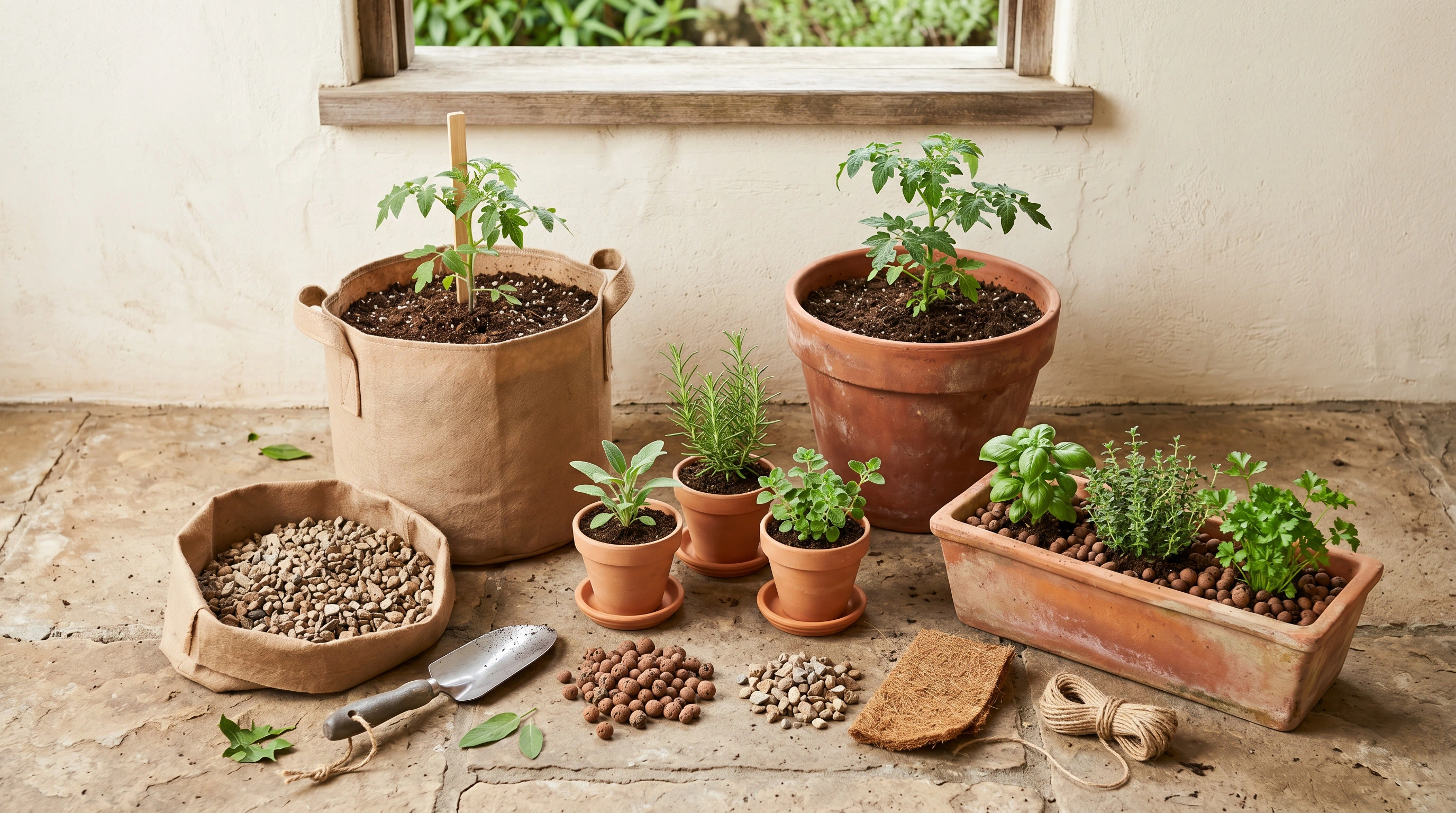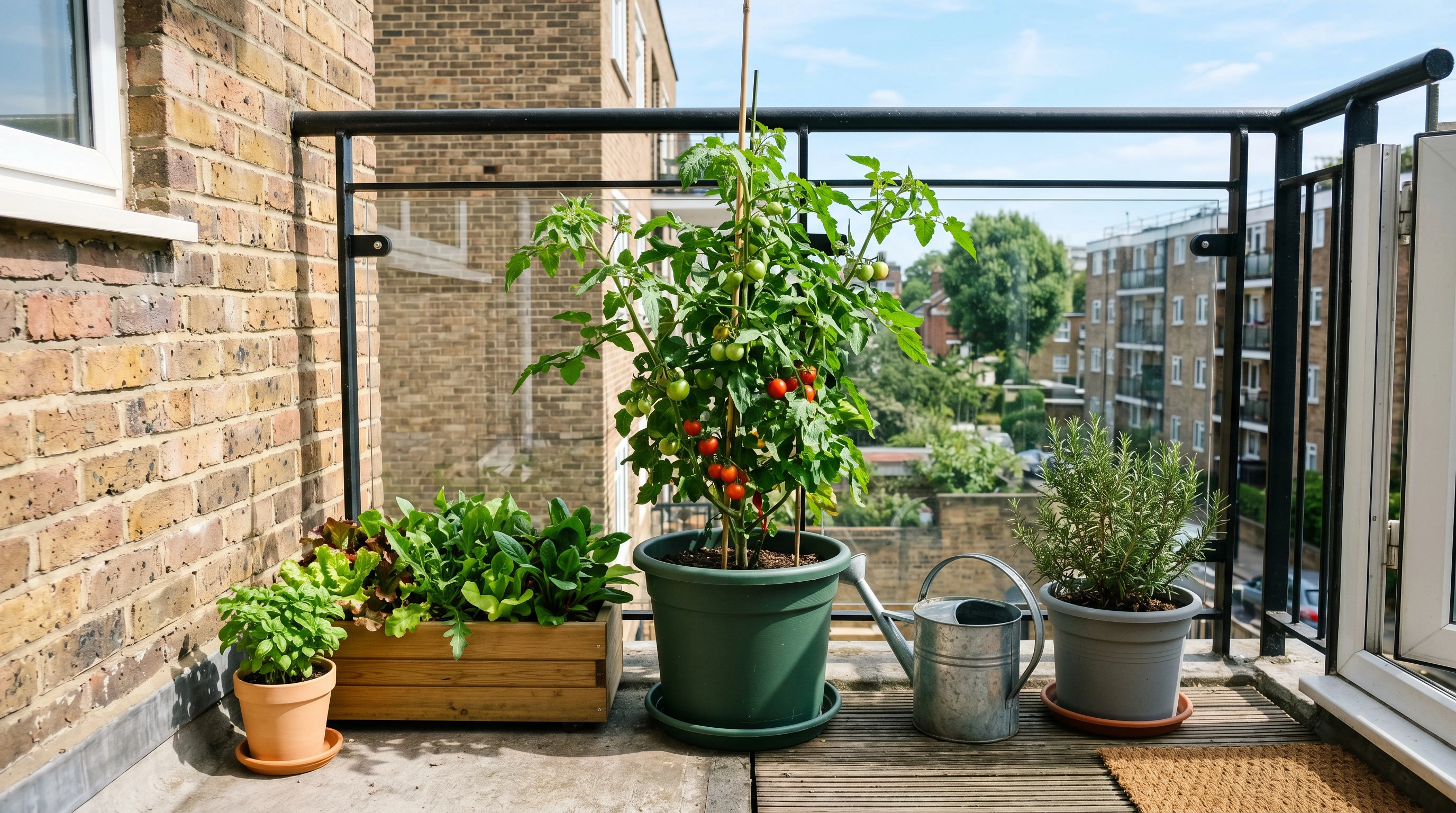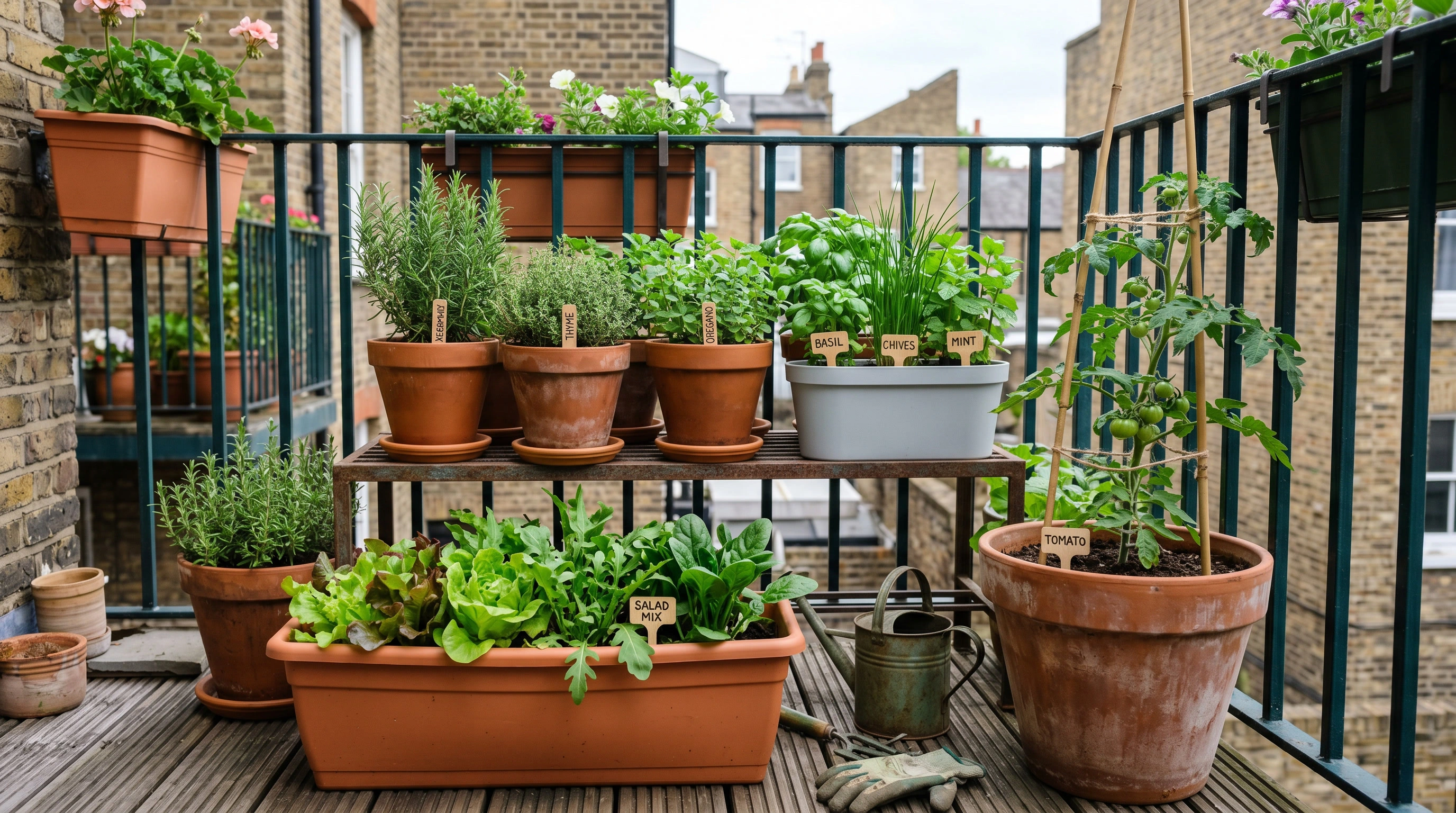
Gardening without a garden is realistic in the UK, but the best choices are not always the crops people imagine first. A flat, balcony, windowsill, doorstep or patio can grow herbs, salad leaves, pea shoots, radishes, dwarf beans, strawberries, compact chillies and some small vegetables. The trick is matching the crop to your light, container size and watering routine.
This guide gives you a realistic overview. It is written for renters and flat dwellers, so it assumes limited space, limited storage, no permanent fixtures and a need to keep mess under control.
Start by matching crops to the space
The question is not only what can grow without a garden. It is what can grow in your particular no-garden space.
A bright windowsill is very different from a windy balcony. A sheltered patio is different from a north-facing flat. Some crops need warmth and sun. Others can cope with cooler, lower-light conditions. Containers also limit root space, so large crops need more compost and more watering.
If you are completely new, read the broader Beginner’s Guide to Small-Space Gardening for UK Renters first, then come back here to choose crops.
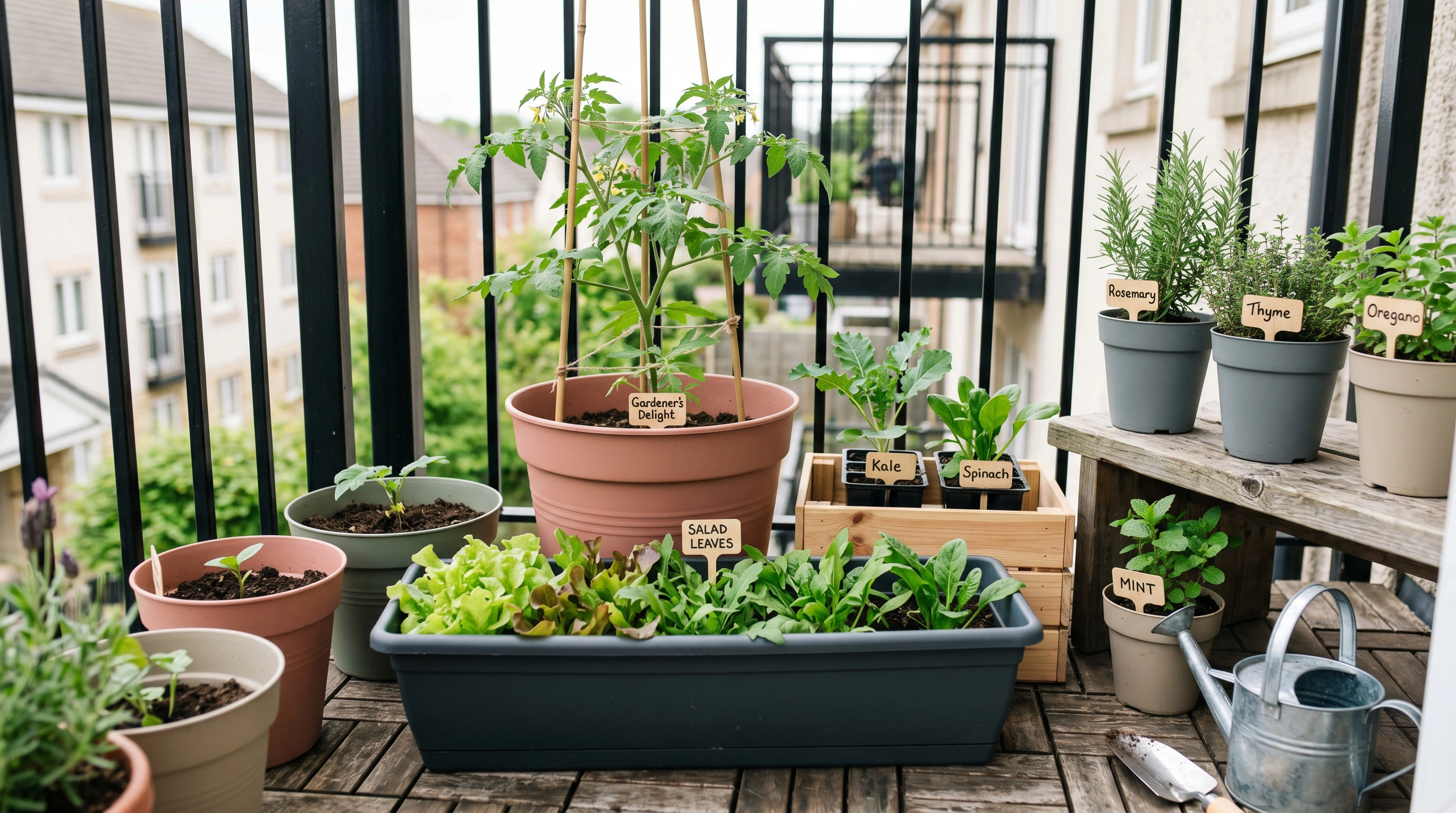
Best crops for windowsills
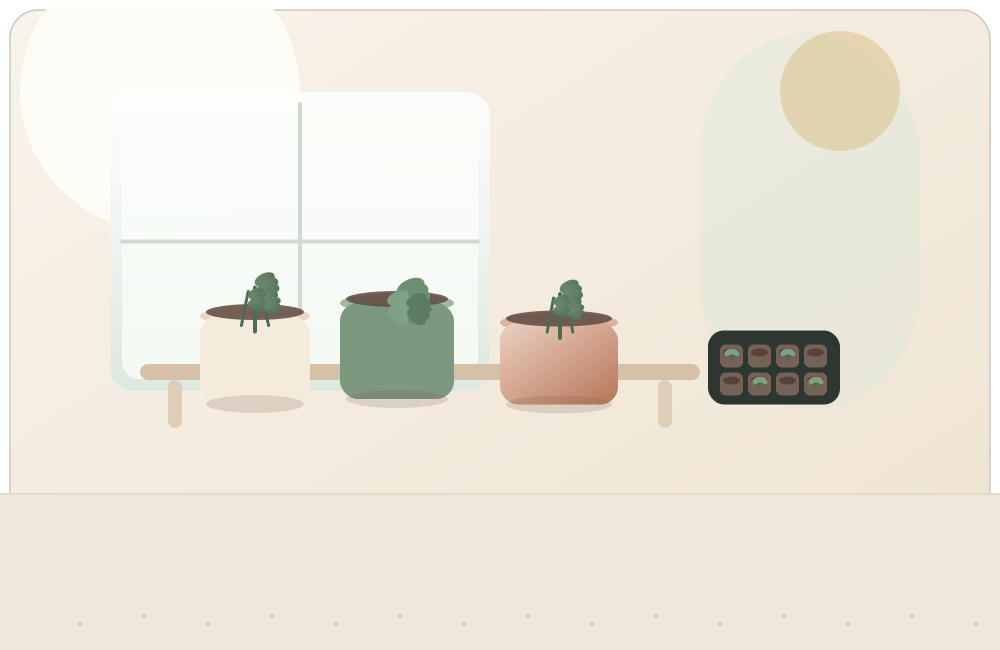
Windowsills are convenient because they are close to the kitchen and easy to check. They are also limited. Indoor light is weaker than outdoor light, and winter windowsills can be cold at night.
Good windowsill choices include:
- Parsley
- Chives
- Mint in its own pot
- Coriander
- Basil in warm bright months
- Pea shoots
- Microgreens
- Small salad leaves
- Spring onions regrown for shoots
Herbs are the obvious starting point, but not all herbs behave the same indoors. Parsley and chives are often easier than rosemary or thyme. Basil is popular, but it wants warmth and strong light. For a fuller guide, read Best Herbs to Grow on a Windowsill in the UK.
Pea shoots and microgreens are excellent if you want quick results. They do not need deep pots, and you can grow them in trays. They are not a replacement for outdoor vegetable growing, but they are satisfying and space-efficient.
For more specific follow-on guides, try Growing Lettuce in Pots: Easy Salad Leaves for Small Spaces if you want a dependable leafy crop, or Growing Mint in Pots Without It Taking Over if you mainly want one reliable herb.
If your windowsill only gets weak light, start with pea shoots or microgreens rather than trying to keep a sun-loving herb happy through winter.
Best crops for balconies
Balconies can grow more than windowsills because they offer outdoor light and airflow. The challenge is wind, watering and practical restrictions.
Good balcony crops include:
- Salad leaves in troughs
- Rocket and mustard leaves
- Parsley, chives, mint and coriander
- Dwarf French beans
- Compact tomatoes in sunny spots
- Compact chillies in warm sunny spots
- Strawberries
- Radishes
- Beetroot for baby roots or leaves
- Spring onions
Sunny sheltered balconies are the most flexible. They can support larger containers and fruiting crops. Shaded or north-facing balconies need a different approach. If your balcony gets little direct sun, read Best Vegetables for North-Facing Balconies in the UK.
Wind is a major balcony factor. It dries compost quickly and can damage tall plants. Compact crops often do better than tall, top-heavy plants.
Best crops for patios and paved yards
A patio or paved yard can be one of the easiest no-garden growing spaces. You can use larger pots than you would on a windowsill, and watering is usually simpler than on a balcony.
Good patio crops include:
- Herbs in pots
- Salad leaves in troughs
- Dwarf beans
- Compact tomatoes
- Chillies
- Strawberries
- Potatoes in bags if you have room
- Carrots in deep containers
- Beetroot
- Courgettes only if space and watering are realistic
Patios can be shaded by walls and fences, so check light carefully. Paving and brick can also heat up quickly in summer, which means containers may dry out faster than expected.
Crops for very small spaces
If your space is tiny, choose crops where small harvests still feel useful.
The best very-small-space crops are:
- Chives
- Parsley
- Mint
- Salad leaves
- Pea shoots
- Microgreens
- Radishes
- Spring onion tops
These do not need huge containers. They are also useful in small amounts. A handful of chives or parsley can improve a meal, even if you are not harvesting baskets of produce.
Best crops by difficulty
It helps to sort crops by how forgiving they are, rather than by how exciting they sound.
Pea shoots, microgreens, chives, parsley, mint and loose-leaf salad are the safest first choices. They are compact, useful and do not need months of perfect conditions.
Radishes, spring onions, dwarf beans, coriander, strawberries and compact chillies are realistic once you have learned basic watering. They need a little more timing, space or light.
Tomatoes, potatoes, carrots, beetroot, courgettes and larger brassicas are more demanding in containers. Some can still work, but they need more compost, more attention or better outdoor conditions.
This does not mean you should never try the harder crops. It means they are better as second-step experiments, not the foundation of your first no-garden setup.
Crops for low-light spaces
Low light is common in flats, especially in built-up areas. You can still grow something, but you need to avoid overpromising.
Try:
- Pea shoots
- Microgreens
- Parsley
- Chives
- Mint
- Salad leaves in the brightest spot
- Spinach or rocket outdoors in brighter shade
Avoid starting with tomatoes, peppers, aubergines, courgettes or Mediterranean herbs if your space is genuinely dim. They may survive for a while, but they are unlikely to be satisfying beginner crops.
Crops for renters who might move
If you rent, choose crops and containers that can be moved without drama. A windowsill herb pot is easy to take with you. A large potato bag full of wet compost is not.
Good moveable choices include individual herb pots, salad troughs, pea shoot trays, strawberry pots, and one or two medium vegetable containers.
Less moveable choices include very large planters, multiple grow bags, heavy ceramic containers, crops tied into fixed supports, and anything that depends on a permanent balcony fitting.
If you expect a move during the growing season, keep the setup modular. Several medium pots are easier than one oversized container.
Crops that need more space than beginners expect
Some crops are technically possible without a garden but awkward in small rented spaces.
Potatoes
Potatoes can grow in bags or large containers, but they need a lot of compost and space. They are better for patios than windowsills or small balconies.
Courgettes
Courgettes are productive in the right conditions, but the plants become large and thirsty. They are rarely a sensible first crop for a tiny balcony.
Full-size tomatoes
Tomatoes can work in pots, but full-size cordon types need support, sun, feeding and steady watering. Compact bush varieties are more realistic for small spaces.
Large brassicas
Cabbages, broccoli and Brussels sprouts usually need more time and space than a beginner container setup can comfortably provide.
Possible does not always mean practical. If a crop needs a large pot, daily summer watering and months of space, leave it until you know your setup works.
A beginner crop plan for a windowsill
For a bright kitchen windowsill, try this simple plan:
- One pot of parsley or chives
- One tray of pea shoots
- One shallow container of cut-and-come-again salad leaves
This gives you three different growing experiences. The herb teaches ongoing care. Pea shoots give fast results. Salad leaves teach sowing, thinning and harvesting.
If you are still gathering the basics, the small-space gardening kit list separates what you need to start from optional extras.
A beginner crop plan for a balcony
For a small sunny balcony, try:
- One trough of salad leaves
- One pot of chives or parsley
- One deeper pot of dwarf French beans
If the balcony is very sunny and sheltered, add a compact tomato or chilli later. Do not make that the only crop in your first season.
A beginner crop plan for a patio
For a patio or paved yard, try:
- One herb pot
- One salad trough
- One container of dwarf beans
- One strawberry pot or compact tomato if the space is sunny
This gives variety without becoming a full container allotment.
What you can grow by season
Spring
Spring is a good time to sow salad leaves, radishes, parsley, chives, coriander, pea shoots and spring onions. The weather can still be cold, so avoid rushing tender plants outdoors too early.
Summer
Summer is best for basil, dwarf beans, tomatoes, chillies, strawberries and fast-growing leaves. Watering becomes more important, especially in pots.
Autumn
Autumn can still support salad leaves, rocket, spinach, herbs and pea shoots. Growth slows as light drops.
Winter
Winter is limited without extra lighting. Pea shoots, microgreens and hardy herbs are more realistic than expecting lots of new growth from summer crops.
How to choose your first three crops
If you feel overwhelmed, choose one crop from each group:
- One everyday herb, such as parsley or chives
- One fast leafy crop, such as salad leaves or pea shoots
- One experiment, such as radishes, dwarf beans or strawberries
This gives you reliability, speed and interest. It also spreads risk. If the experiment fails, the herb and leafy crop can still make the setup feel worthwhile.
Avoid choosing three crops that all need the same perfect sunny conditions. A small mix teaches you more about your space.
Common mistakes
Growing too many crops at once
It is better to grow three things well than twelve things badly. Each crop has its own watering and light needs.
Choosing crops for the wrong light level
Do not choose tomatoes because they are exciting if your space is shaded. Choose leafy crops first.
Using containers that are too small
Tiny pots dry quickly and restrict roots. They are fine for microgreens, but not for productive vegetables.
Forgetting about water
Containers need regular checking. Rain does not always reach balcony pots, and indoor plants rely entirely on you.
Expecting supermarket herbs to behave like established plants
Supermarket herbs often need splitting, repotting and better light if you want them to last.
Related guides
- Beginner’s Guide to Small-Space Gardening for UK Renters
- How Much Sunlight Do Herbs and Vegetables Need?
- Growing Salad Leaves in Containers in the UK
- Year-Round Balcony Planting Calendar for the UK
- Container Gardening for Beginners: A UK Small-Space Guide
- Best Vegetables to Grow in Pots in the UK
FAQ
Can I grow vegetables indoors without a garden?
You can grow some edible crops indoors, especially herbs, pea shoots, microgreens and small salad leaves. Fruiting vegetables are much harder indoors without strong light.
What is the easiest food to grow in a flat?
Pea shoots, microgreens, chives, parsley and salad leaves are among the easiest because they are compact and useful.
Can I grow tomatoes without a garden?
Yes, but they need sun, warmth, a suitable pot, feeding and steady watering. Compact varieties are more realistic than full-size plants.
What can I grow on a shady balcony?
Try salad leaves, spinach, rocket, parsley, chives, mint and pea shoots. Avoid relying on tomatoes or peppers in deep shade.
Do I need raised beds?
No. Pots, troughs, grow bags and trays are enough for many small-space crops.
Next step
If you know what you want to grow, choose the right container next. Read How to Choose Pots for Balcony and Windowsill Gardening before buying a set of pots.