* Some links may be affiliate links. See the footer disclosure.
Choosing pot size is one of the most important decisions in small-space gardening. The right pot makes watering easier, protects rented surfaces, gives roots enough room and keeps the setup moveable. The wrong pot dries out constantly, leaks, stains, traps water or becomes too heavy to manage.
This guide is for practical balcony and windowsill gardening in UK rented homes. It focuses on container size, drainage, material, saucers, leak prevention and renter-friendly choices.
Start with the crop
The best pot depends on what you want to grow. Herbs, salad leaves and microgreens do not need the same container as tomatoes or beans.
If you are still deciding what to grow, read What Can You Grow Without a Garden in the UK? first.
For a simple guide:
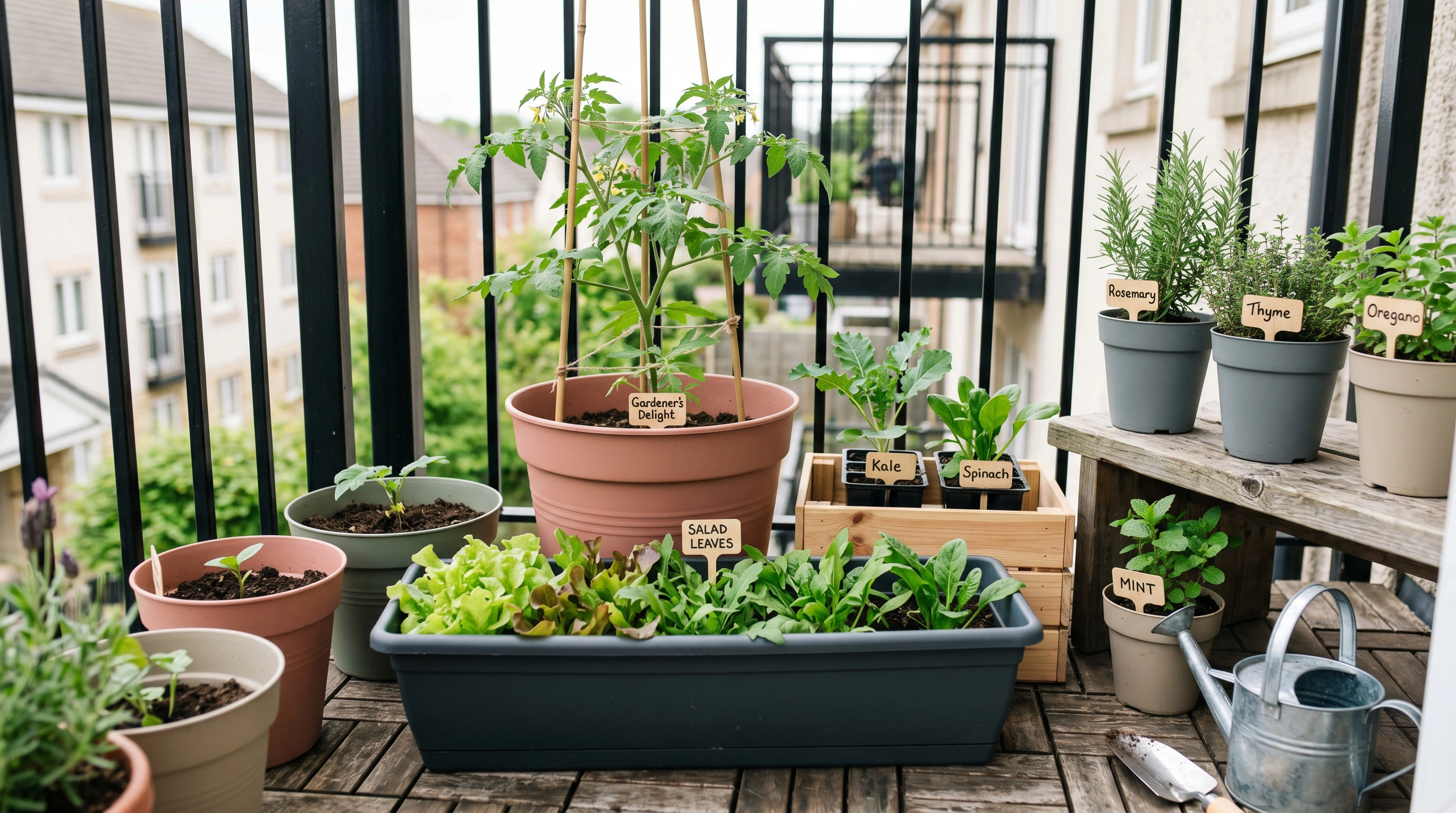
- Microgreens and pea shoots need shallow trays
- Salad leaves need shallow to medium troughs
- Herbs need small to medium pots
- Radishes need modest depth
- Spring onions need medium depth
- Dwarf beans need deeper pots
- Compact tomatoes and chillies need larger, deeper containers
Do not buy a matching set of tiny pots and expect them to suit everything.
A practical size guide
You do not need exact measurements for every crop before you start, but you do need a sense of scale.
Microgreens and pea shoots can grow in shallow trays because you harvest them young. Salad leaves can grow in troughs or window boxes, but they still need enough compost to hold moisture. Most herbs want more space than the tiny pots they are sold in. Dwarf beans, chillies and compact tomatoes need deeper containers because they grow for longer and support more top growth.
When in doubt, choose a little more compost volume rather than less, as long as the pot is still moveable and suitable for the space. More compost gives roots room and makes watering less frantic.
Drainage is non-negotiable
Most edible plants need drainage. Roots need air as well as water. A pot without drainage can become waterlogged, especially indoors or during wet UK weather.
For windowsills, use an inner pot with drainage holes inside a saucer or decorative cover pot. For balconies and patios, use pots with drainage holes and something underneath if water could mark surfaces or drip where it should not.
Decorative pots without drainage are best treated as outer covers. Keep the actual plant in a removable inner pot so excess water can drain away.
Pot size for windowsill herbs
Windowsill herbs often arrive in small nursery pots. They may survive for a while, but many do better with more root space.
Parsley, chives, basil and mint all benefit from pots that are wider and deeper than the smallest decorative herb pots. Mint should have its own container. Basil needs enough compost to stay evenly moist in warm weather.
For more herb detail, read Best Herbs to Grow on a Windowsill in the UK.
Pot size for salad leaves
Salad leaves are flexible. A trough, window box or shallow container can work if it has drainage. The container does not need to be very deep, but it should hold enough compost that it does not dry out every few hours.
Wider containers are useful because you can sow short rows or small patches. Avoid overcrowding. A crowded tray may look productive at first, then struggle for water and airflow.
Pot size for balcony vegetables
Balcony vegetables need more thought. Dwarf beans, compact tomatoes, chillies and strawberries all need more root space than herbs.
Choose deeper containers for crops that need a longer season or more water. A small pot may keep the plant alive, but it may also make watering difficult and growth disappointing.
For north-facing or shaded balconies, you may be better with several medium containers of leaves and herbs than one large pot for a crop that wants sun. See Best Vegetables for North-Facing Balconies in the UK for crop choices.
Depth matters more than decoration
Shallow containers can look neat, but they limit what you can grow. They are fine for leaves and shoots, but poor for plants that need a longer root run.
For herbs, choose enough depth that the compost does not dry out immediately. For beans and compact fruiting crops, choose a deeper pot and expect to water more often in summer. For carrots or beetroot, depth becomes more important again, though these are not always the easiest first crops for tiny spaces.
The aim is not to buy the biggest pot possible. It is to choose a pot that gives the crop enough root space while staying practical for a rented home.
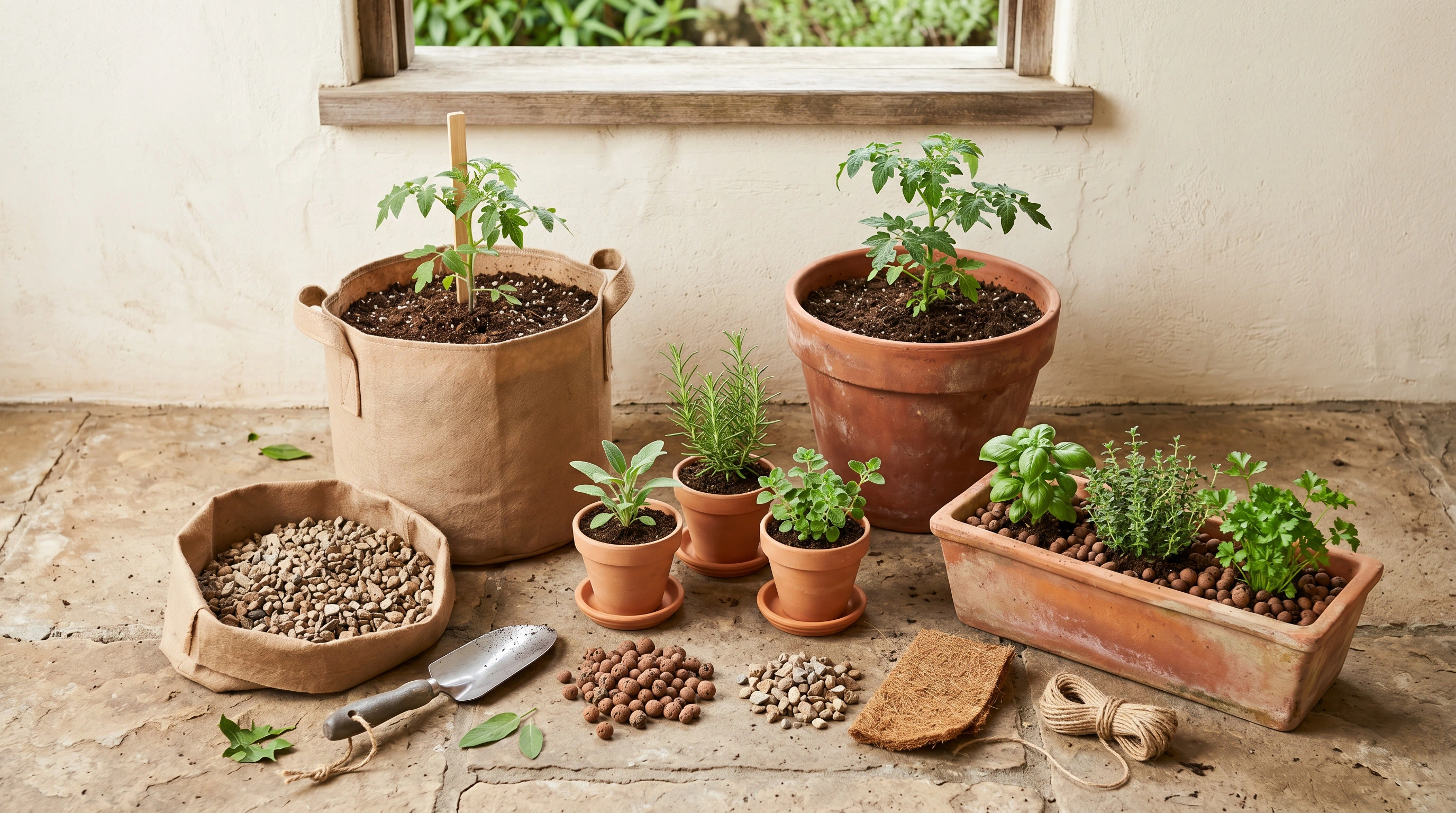
Materials: plastic, terracotta, ceramic, metal and fabric
Plastic and recycled plastic
Plastic pots are lightweight, affordable and practical. They hold moisture better than terracotta and are easy to move. For renters, this is often a strength rather than a compromise.
Choose sturdy pots that will not crack quickly. Dark colours can warm faster in sun, which may help in cool spots but can increase drying in hot weather.
Terracotta
Terracotta looks natural and is breathable, but it dries out quickly. Small terracotta pots can be frustrating on sunny windowsills or windy balconies. They can also mark surfaces if not managed carefully.
Terracotta can work well for some herbs, especially outdoors, but it is not automatically the best beginner choice.
Ceramic
Glazed ceramic pots can look tidy indoors, but they are often heavy and may not have drainage. Use them as cover pots if needed. Be careful on windowsills and balconies where weight and water matter.
Metal
Metal containers can heat up and cool down quickly. They may be useful as decorative covers, but check drainage and avoid letting roots bake in strong sun.
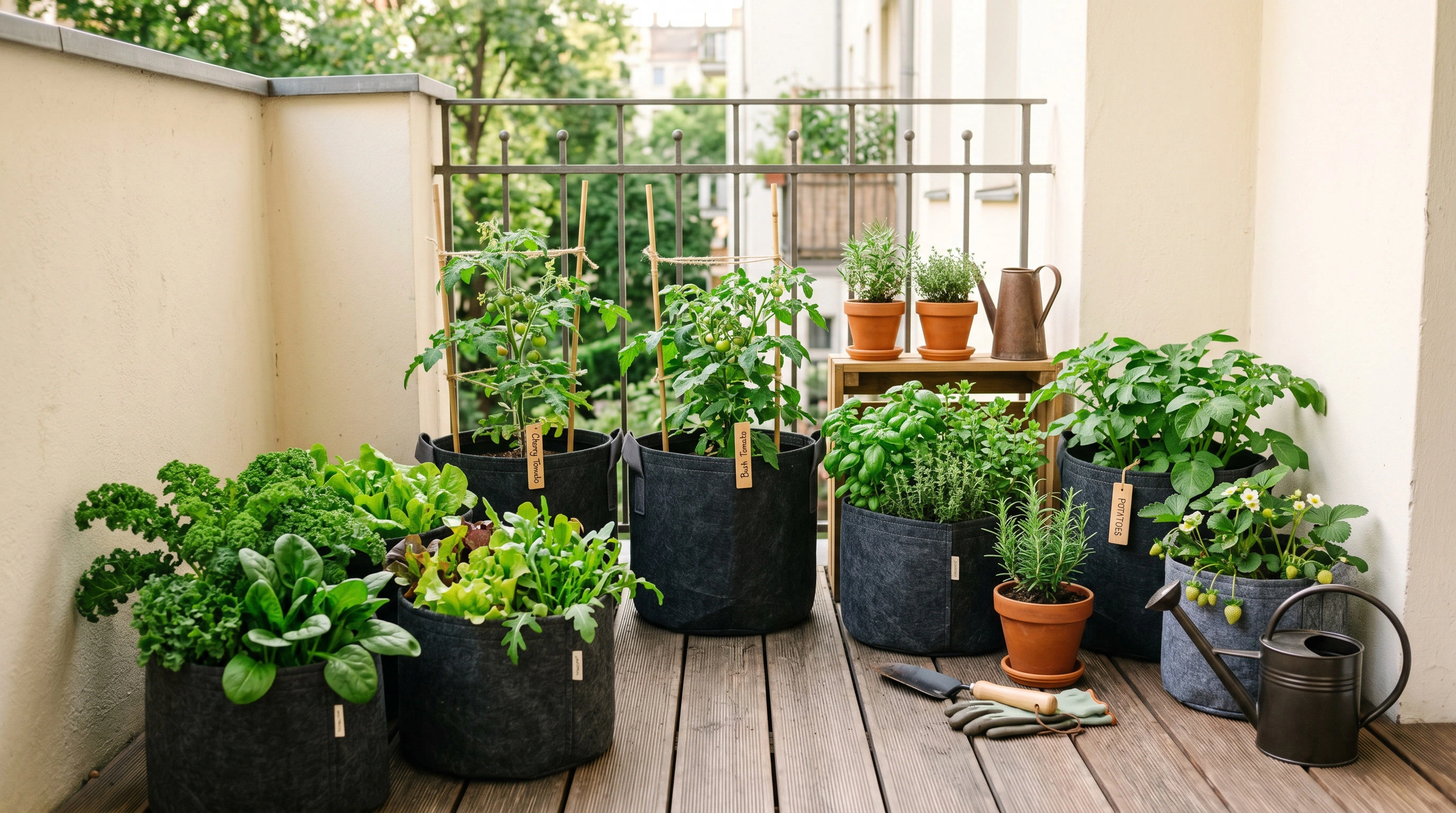
Fabric grow bags
Fabric pots and grow bags can work outdoors for some crops. They are light when empty but can dry quickly and may leak. They are better for patios than indoor windowsills.
Saucers, trays and leak prevention
Saucers and trays are essential in rented spaces. They protect windowsills, floors, balcony surfaces and neighbours below.
Use saucers under indoor pots. Use trays under balcony pots where dripping could cause issues. For larger outdoor pots, pot feet can help drainage while reducing marks.
The key is to check trays after watering or rain. A tray full of standing water can damage roots. It can also become messy.
Water slowly and in stages. Compost absorbs water better when it is not rushed, and you are less likely to overflow trays.
Useful pot setup extras
These extras are not exciting, but they can make a renter-friendly container setup much easier to live with. Compare them only after choosing the right pot size and drainage setup. The small-space gardening kit list covers these alongside other beginner supplies.
- Plant pot saucers: See examples
- Plant pot feet: See examples
- Drainage mesh: See examples
Cachepots and indoor covers
A cachepot is an outer decorative pot. It can be useful indoors because it hides a plain nursery pot and catches drips. The plant itself should still sit in a pot with drainage.
After watering, check the bottom of the cachepot. If water has collected there, empty it. This small habit prevents many indoor herb problems.
For windowsills, make sure the cover pot and saucer fit fully on the sill. A pot that overhangs or wobbles is not worth the risk.
Renter-friendly container choices
Renter-friendly pots should be:
- Moveable when planted
- Free-standing
- Easy to clean around
- Unlikely to stain surfaces
- Not dependent on drilling
- Suitable for trays or saucers
- Easy to take with you if you move
Avoid building a setup that only works because it is wedged, tied, drilled or balanced. General caution is sensible: check your tenancy or building rules before using rail planters, heavy containers or anything fixed.
This is especially important on balconies. Do not hang heavy planters over edges or attach containers to railings unless you are sure the setup is allowed and suitable.
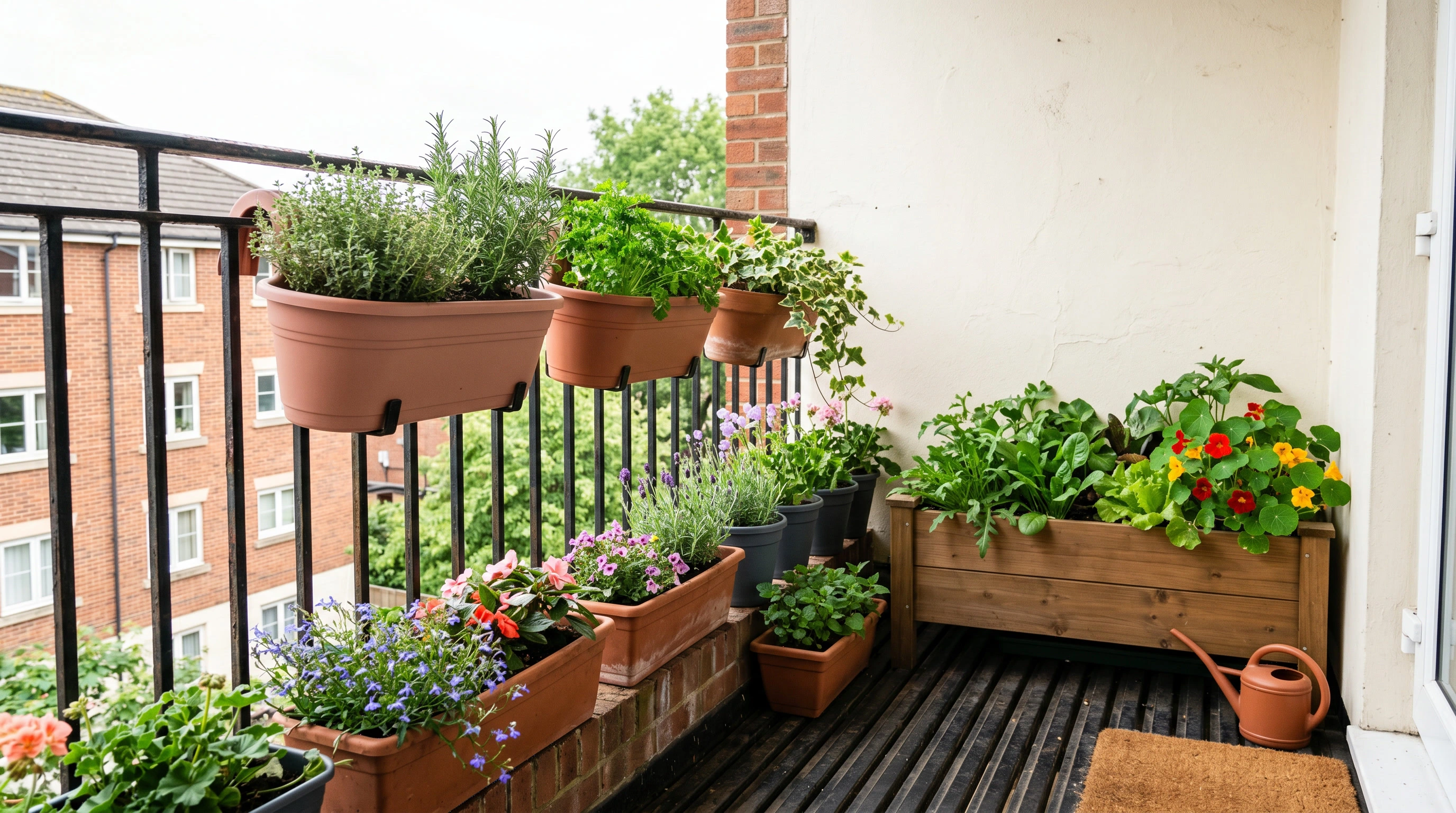
Choosing pots for balconies
Balconies add wind, exposure and water management. A good balcony pot is stable, not too top-heavy, and large enough that it does not dry instantly.
For herbs and leaves, medium pots and troughs are usually enough. For taller crops, choose a pot with a broad base. Put taller plants in sheltered positions if possible.
Keep access clear. Leave room to water, sweep and move pots. A balcony packed with containers may look productive but can become difficult to maintain.
Choosing pots for windowsills
Windowsill pots need to fit safely, protect surfaces and avoid leaks. Use trays that fit fully on the sill. Avoid unstable tall pots on narrow ledges.
Indoor pots should be easy to lift so you can water, drain and clean them. If a pot is too awkward, you will avoid checking it.
Consider light too. A deep window reveal can shade the back of the sill. Smaller pots may need rotating so plants do not lean too strongly toward the glass.
Choosing pots for patios
Patios allow larger containers, but weight and drainage still matter. Use pot feet where needed to reduce staining and improve drainage. Group pots by watering needs so care is easier.
Large containers can be useful for tomatoes, beans or potatoes, but do not start with more than you can water during a warm week.
Reusing containers safely
Reusing pots is sensible, especially on a budget. Clean old containers before using them for new edible plants. Remove old roots, shake out tired compost, and wash away algae or residue.
Do not reuse containers that previously held unknown chemicals, paint or non-garden materials. For food crops, stick to containers intended for plants or food-safe storage where possible.
If you turn a storage box into a planter, drainage still matters. Make sure any changes are safe, stable and suitable for your own property. For most beginners, buying a simple plant pot is easier than making a container.
Storage and end-of-season practicalities
Small-space gardening does not stop at planting. You also need somewhere for spare pots, compost, trays and tools.
Choose stackable pots if storage is tight. Avoid buying awkward shapes that cannot be nested or cleaned easily. At the end of the season, empty annual crop containers, clean trays, and store dry pots neatly.
If you rent, this matters. A setup that packs down cleanly is easier to live with and easier to move.
Common mistakes
Buying pots before choosing crops
This leads to containers that are too small, too shallow or unsuitable for the plant.
Choosing style over drainage
A beautiful pot without drainage is still a problem for most edible plants.
Using tiny pots outdoors
Tiny outdoor pots dry quickly in sun and wind. They are high-maintenance.
Forgetting saucers indoors
Water marks and compost spills are avoidable with trays, saucers and careful watering.
Choosing pots that are hard to move
Wet compost is heavy. Renters should be especially cautious with large heavy containers.
A simple pot setup for beginners
For a first small-space edible setup, choose:
- One medium pot for herbs
- One trough for salad leaves
- One deeper pot for dwarf beans or a compact vegetable
- Saucers or trays for each container
- Peat-free multipurpose compost
This gives you range without making the setup too complicated.
Related guides
- Beginner’s Guide to Small-Space Gardening for UK Renters
- Cheap Ways to Start Gardening as a Renter
- Upcycling Household Items into Planters
- Lightweight Vertical Planters for Small Spaces in the UK
- What Size Pot for Tomatoes? A Simple Guide for UK Growers
- Grow Bags vs Pots: Which Is Better for Renters?
FAQ
What size pot should I use for balcony gardening?
It depends on the crop. Herbs and salad leaves can use smaller containers, while beans, tomatoes and chillies need deeper pots with more compost.
Do balcony pots need drainage holes?
Yes, for most edible plants. Drainage prevents waterlogged compost and root problems.
Are plastic pots OK for vegetables?
Yes. Sturdy plastic or recycled plastic pots are practical, lightweight and often ideal for renters.
How do I stop pots leaking on a balcony?
Use trays, saucers or pot feet, water slowly, and check after rain. Avoid placing pots where water can drip onto neighbours or shared areas.
Are terracotta pots good for windowsill herbs?
They can work, but they dry quickly. Beginners may find plastic inner pots with a saucer easier to manage.
Next step
Once you have suitable containers, choose crops that fit your light. Start with What Can You Grow Without a Garden in the UK? or, if your balcony is shaded, Best Vegetables for North-Facing Balconies in the UK.