Tomatoes can grow well in pots, but pot size makes a big difference. A container that is too small dries out quickly, restricts roots and makes feeding harder. A sensible final pot gives the plant enough compost to support steady growth, flowering and fruiting.
For UK balconies, patios and rented small spaces, the aim is not to grow the biggest tomato plant possible. The aim is to choose a pot size that gives the plant enough room while still being stable, movable and realistic to water through summer.
Why pot size matters for tomatoes
Tomatoes are hungry and thirsty compared with many beginner container crops. In a small pot, the compost dries quickly and nutrients run down faster. That can lead to wilting, stalled growth, leaf stress and uneven fruit development.
A bigger pot gives three practical advantages:
- More root space.
- More compost to hold moisture.
- More stability when the plant becomes tall or fruit-heavy.
This matters even more on balconies and patios, where wind and reflected heat from walls or paving can dry containers quickly.
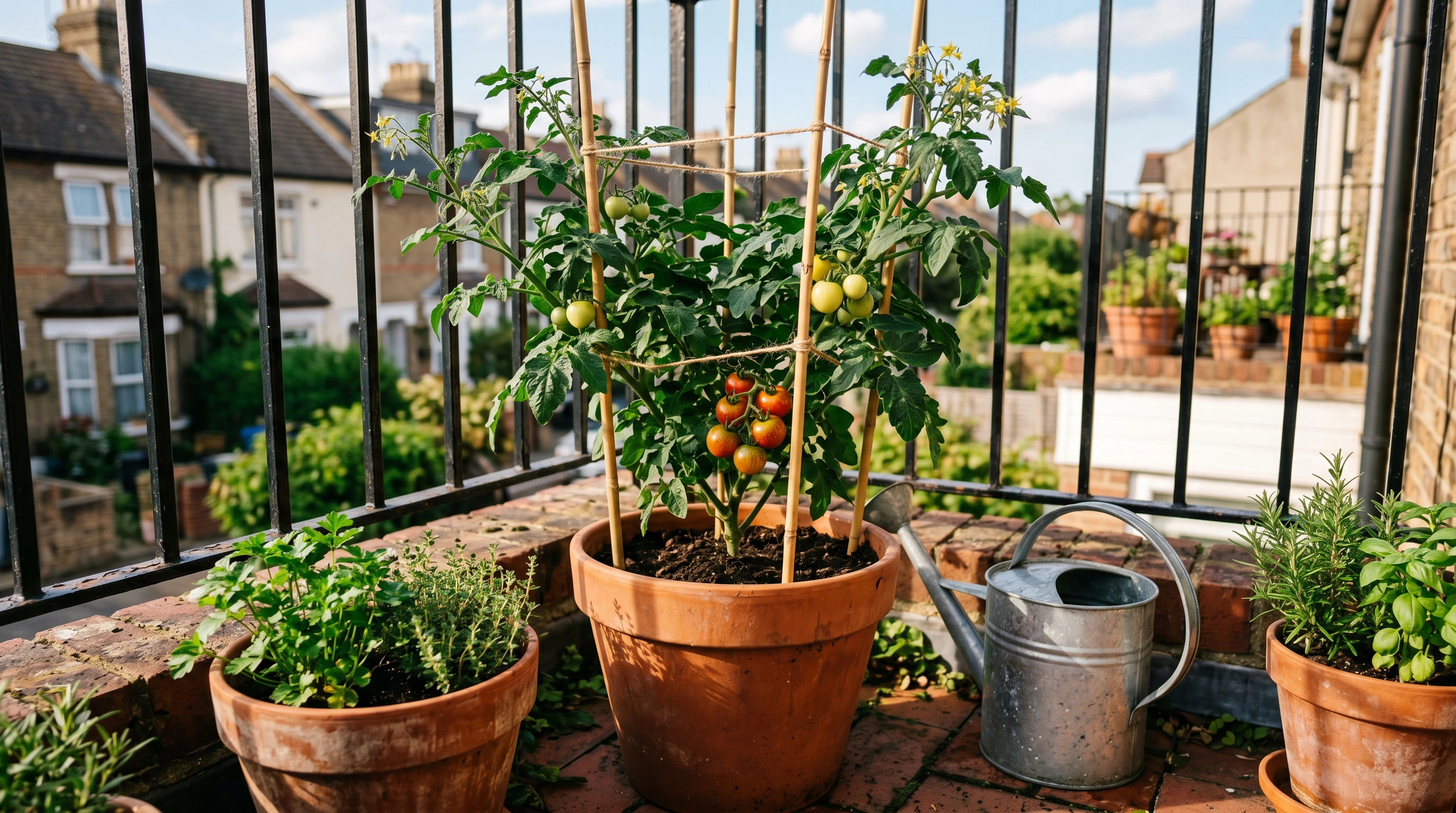
Simple pot size guide
| Tomato type | Suggested final pot size | Best use |
|---|---|---|
| Dwarf patio tomato | 10 to 15 litres | Small balconies, patios and compact containers |
| Compact bush tomato | 20 litres or more | Beginner outdoor pots and patio growing |
| Cherry bush tomato | 20 to 30 litres | Sunny balconies and patios |
| Cordon tomato | 30 to 40 litres or more | Larger containers, strong supports and sheltered sunny spaces |
| Tomatoes in grow bags | Use a full-size grow bag or dedicated tomato planter | Patios and sheltered spaces with easy watering access |
These are practical beginner ranges, not strict rules. Variety, weather, compost, watering and feeding all affect how well a plant performs.
Dwarf, bush and cordon tomatoes
Tomato type matters as much as pot size. A dwarf patio tomato is bred to stay compact, so it can cope with a smaller container. A cordon tomato grows taller and needs more compost, stronger support and more regular care.
For small rented spaces, compact bush or patio tomatoes are usually easier than tall cordon types. They stay lower, are less likely to catch wind, and are easier to support in a pot.
If you are growing tomatoes for the first time, choose a compact variety and give it a larger pot than the minimum. This makes watering easier and reduces stress during warm weather.
Seedling to final pot stages
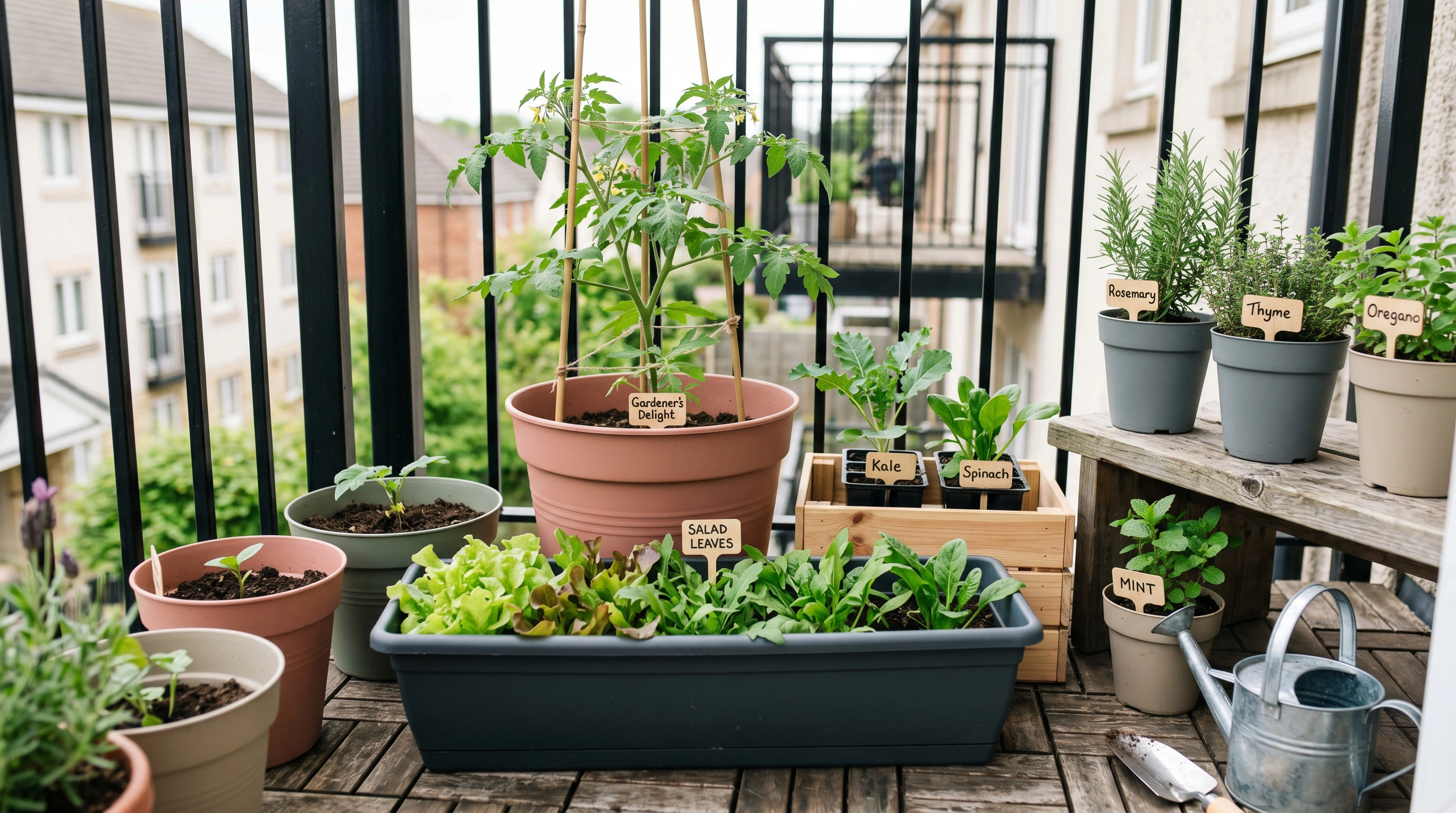
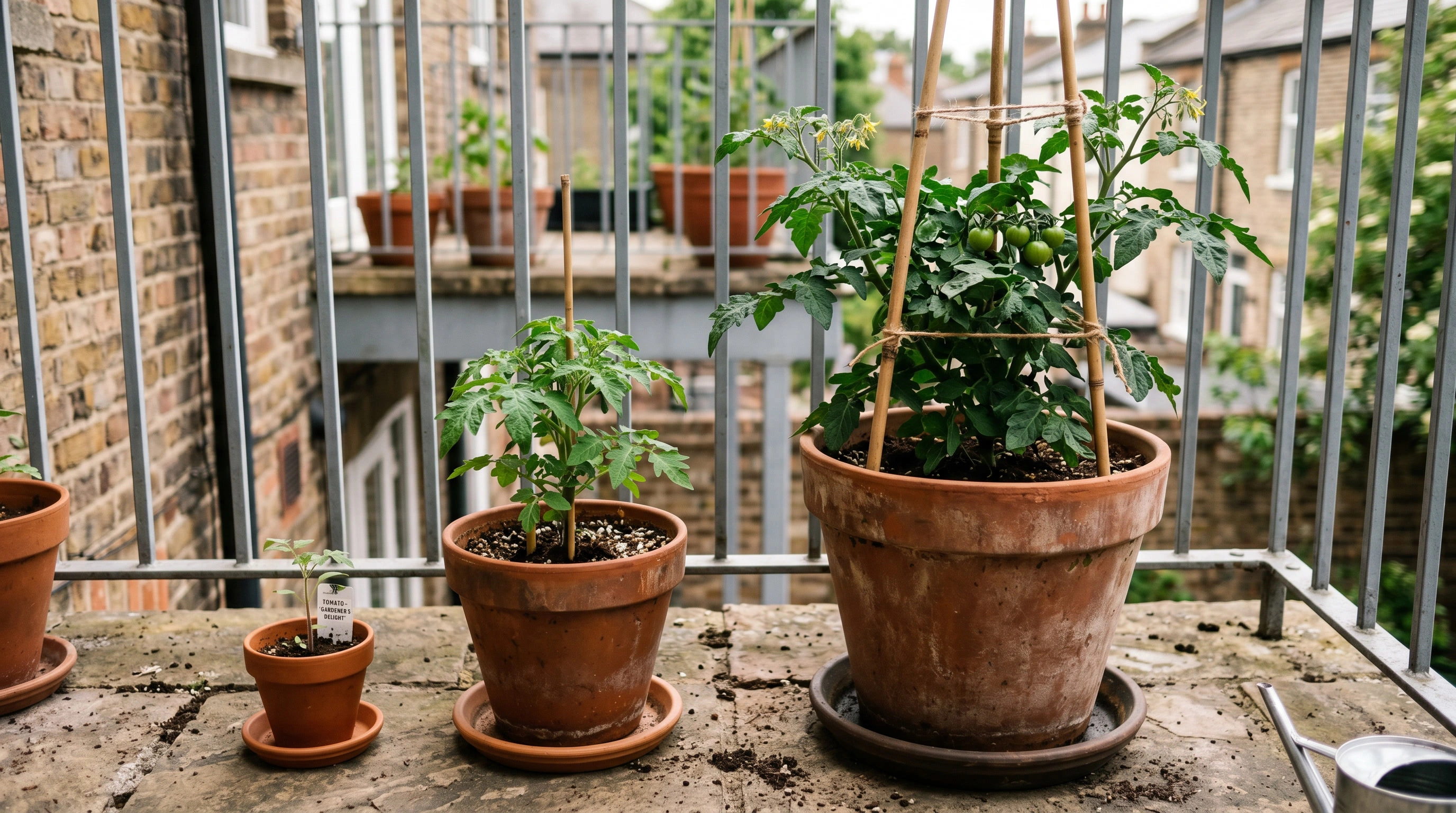
Tomatoes do not need to start in their final pot. In fact, it is usually easier to pot them on in stages.
- Start seedlings in small pots or modules.
- Move young plants into a 9 to 12 cm pot once they have strong growth.
- Pot on again if roots fill the small pot before outdoor conditions are ready.
- Move to the final container once the plant is ready for its main outdoor position.
Do not leave a strong tomato plant sitting too long in a tiny pot. If it dries constantly or roots fill the pot, growth can stall.
Best pot type for small spaces
For balconies and patios, choose a pot that is wide, stable and has drainage holes. Plastic pots are often practical because they are lighter than terracotta and hold moisture longer. Terracotta can look good, but it dries faster and becomes heavy when large.
Useful pot features include:
- Drainage holes.
- A wide base for stability.
- Enough depth for roots.
- Room for a support cane or small frame.
- A matching saucer or tray if runoff could cause problems.
Avoid narrow, top-heavy pots for tomatoes. Once the plant grows and catches wind, stability becomes more important.
For general container choice, read How to Choose Pots for Balcony and Windowsill Gardening.
Grow bags vs pots for tomatoes
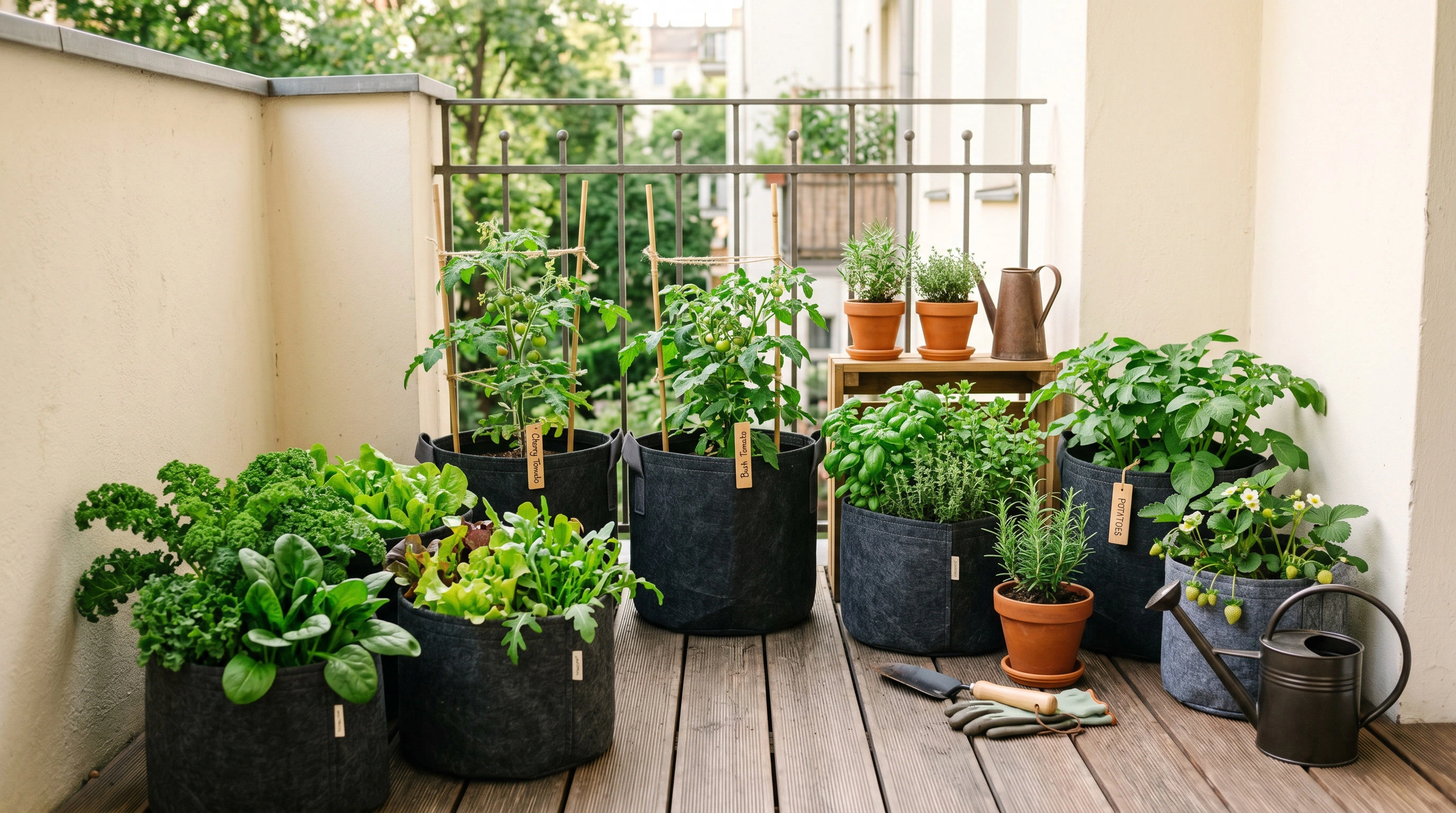
Both can work. Pots are usually easier to position, move and support. Grow bags can work well on patios, but they need steady watering and enough space.
For a small balcony, a large stable pot is often easier than a soft grow bag. For a patio with more floor space, a grow bag can be useful if you can water it easily and support the plants properly.
If you are comparing container types, read Grow Bags vs Pots: Which Is Better for Renters?.
Balcony and patio placement
Tomatoes need strong light and warmth. Choose the sunniest sheltered spot you have. South and west-facing spaces usually give the best chance of fruiting, while shaded balconies are harder for tomatoes.
Wind is another issue. Tall tomato plants in pots can rock, dry out or snap in exposed places. Use a sheltered corner where possible and add support early rather than waiting until the plant is heavy.
If your balcony is windy, read How to Protect Balcony Plants from Wind. If light is uncertain, use How Much Sunlight Do Herbs and Vegetables Need?.
Watering in tomato pots
Tomatoes in pots need consistent watering. Letting the compost swing between bone dry and soaking wet can stress the plant and make fruiting less reliable.
Check the compost by touch. If the top few centimetres are drying and the pot feels light, water thoroughly. In warm summer weather, tomato pots may need daily checks, especially on balconies and patios.
Water the compost rather than soaking the leaves. Water slowly so moisture reaches the root zone instead of running straight down the sides.
For a wider guide, read How Often Should You Water Plants in Pots in the UK?.
Feeding tomatoes in pots
Tomatoes use a lot of nutrients once they start growing strongly and forming fruit. Start with fresh compost, then feed during the flowering and fruiting period using a suitable tomato feed according to the product instructions.
Do not rely on a tiny pot and extra feed to make up for lack of compost volume. Feeding helps, but it does not replace root space, moisture stability and light.
Common mistakes
Using too small a final pot
A tiny pot dries quickly and gives roots little space. Use a larger final pot than you think you need, especially for bush or cordon tomatoes.
Choosing a tall variety for a windy balcony
Tall tomatoes need support and shelter. Compact bush or patio types are usually easier in exposed small spaces.
Watering on a fixed schedule
Weather changes quickly in the UK. Check compost condition rather than watering only because it is a certain day.
Forgetting supports
Add supports early. It is harder to support a large, leaning tomato plant once it is already heavy with growth.
Placing the pot in too much shade
Tomatoes need strong light. In shaded spaces, choose leafy crops instead of forcing tomatoes to perform poorly.
Keep tomato containers stable and away from balcony edges. Wet compost, tall plants and wind can make pots heavier and less predictable than they look.
FAQ
What size pot do tomatoes need?
Most compact or bush tomatoes need at least a 20 litre final pot. Larger cordon tomatoes are better in 30 litres or more. Dwarf patio varieties can manage in smaller pots if watering is consistent.
Can tomatoes grow in 10 litre pots?
Some dwarf patio tomatoes can grow in 10 litre pots, but most tomatoes will be easier in larger containers. A bigger pot gives more moisture stability.
Are grow bags good for tomatoes?
They can be, especially on patios with easy watering access. On small or windy balconies, a large stable pot may be simpler.
Do tomato pots need drainage?
Yes. Tomato pots need drainage holes so excess water can escape. Use a tray or saucer if runoff could mark surfaces.
Can I grow tomatoes on a balcony?
Yes, if the balcony is sunny, sheltered and suitable for stable containers. Compact tomato varieties are usually easiest.
What is the best tomato for small pots?
Choose dwarf patio or compact bush varieties. They stay smaller and are easier to support, water and manage in small spaces.
Related guides
- Beginner’s Guide to Small-Space Gardening for UK Renters
- Container Gardening for Beginners: A UK Small-Space Guide
- How to Choose Pots for Balcony and Windowsill Gardening
- Growing Cherry Tomatoes in Pots in the UK
- How Often Should You Water Plants in Pots in the UK?
Next step
Choose your tomato type before choosing the pot. For the easiest first attempt, pick a compact bush or patio tomato and use a stable final pot with drainage. If you want more tomato-specific help, read Growing Cherry Tomatoes in Pots in the UK.