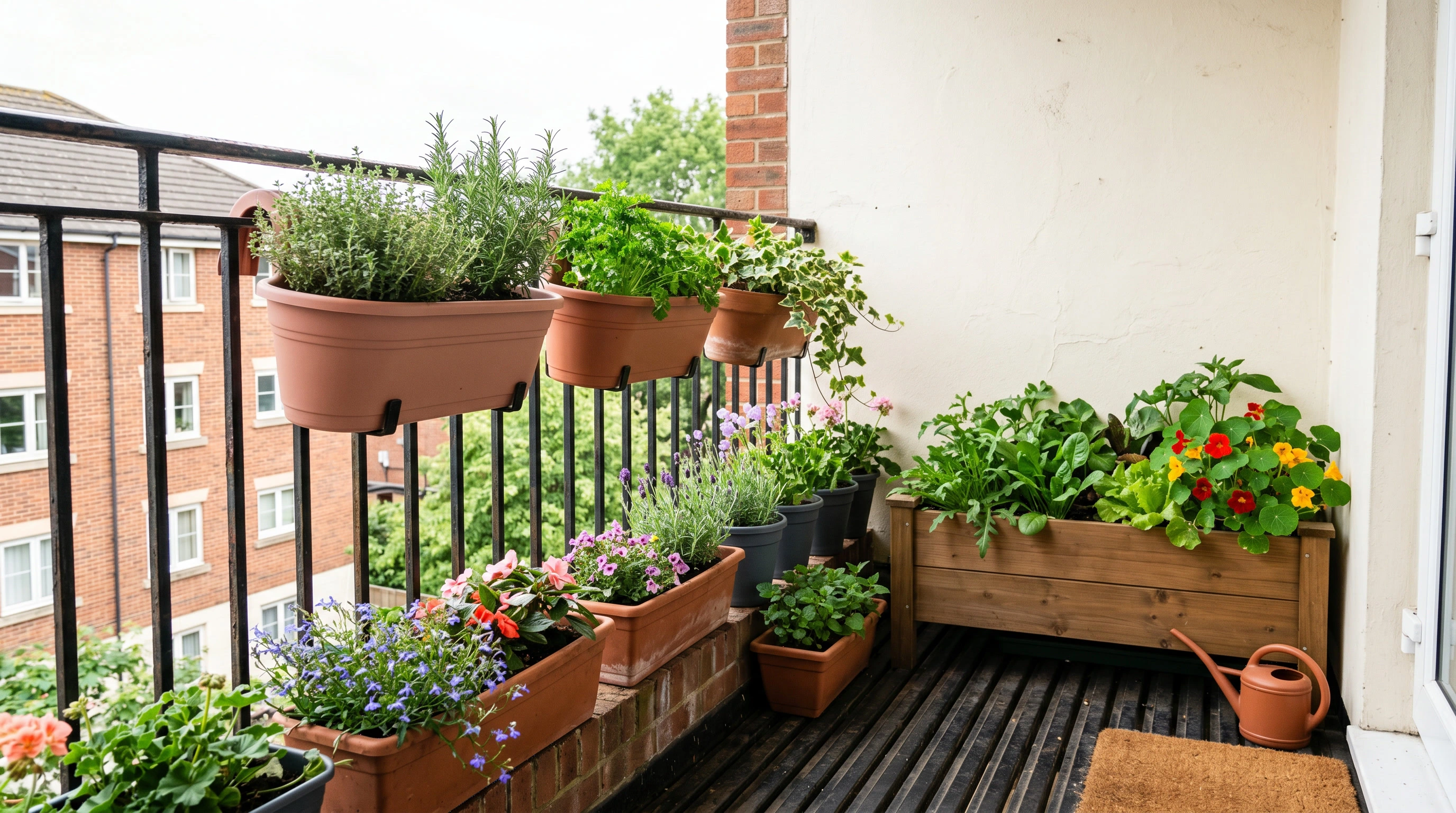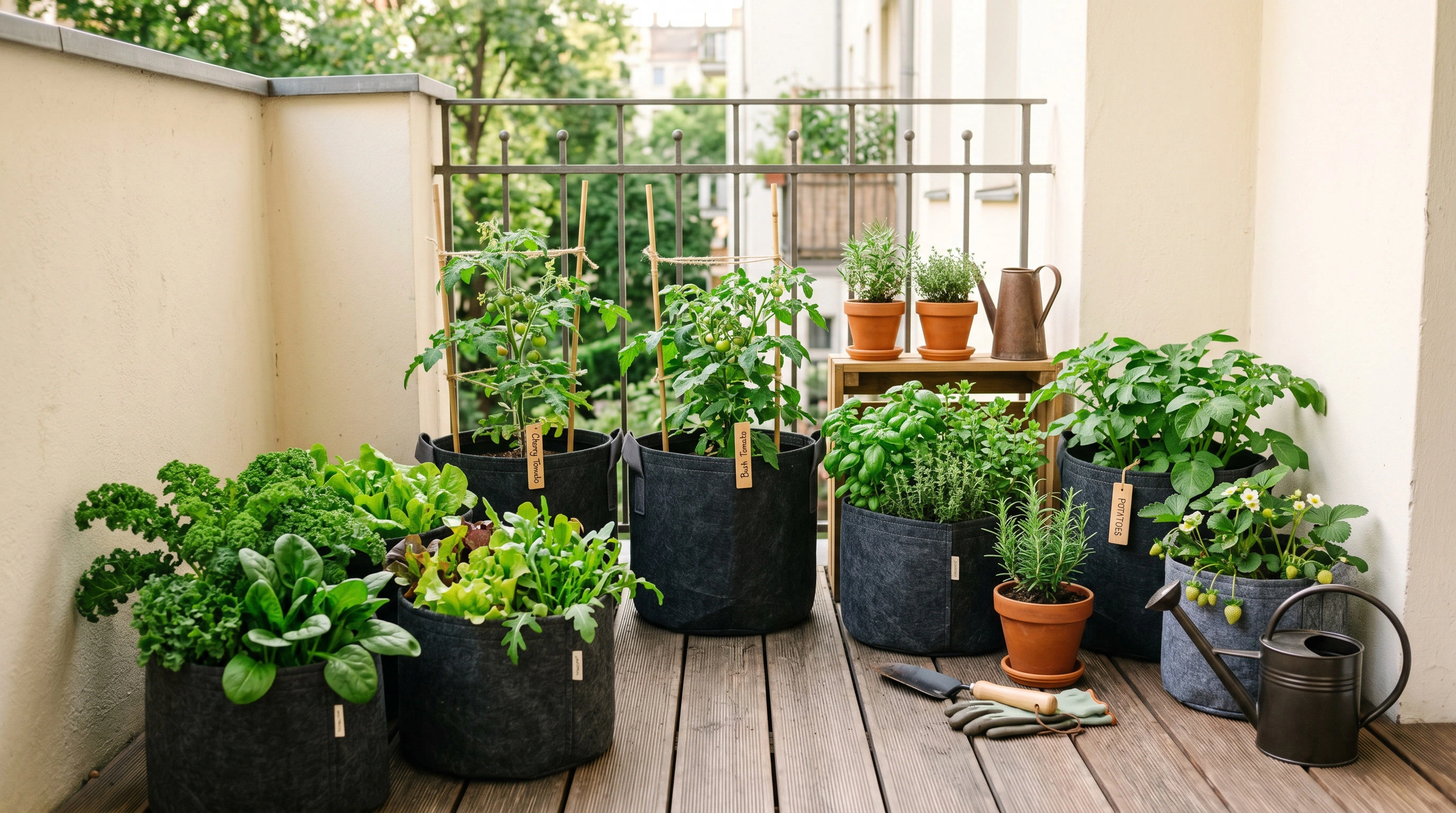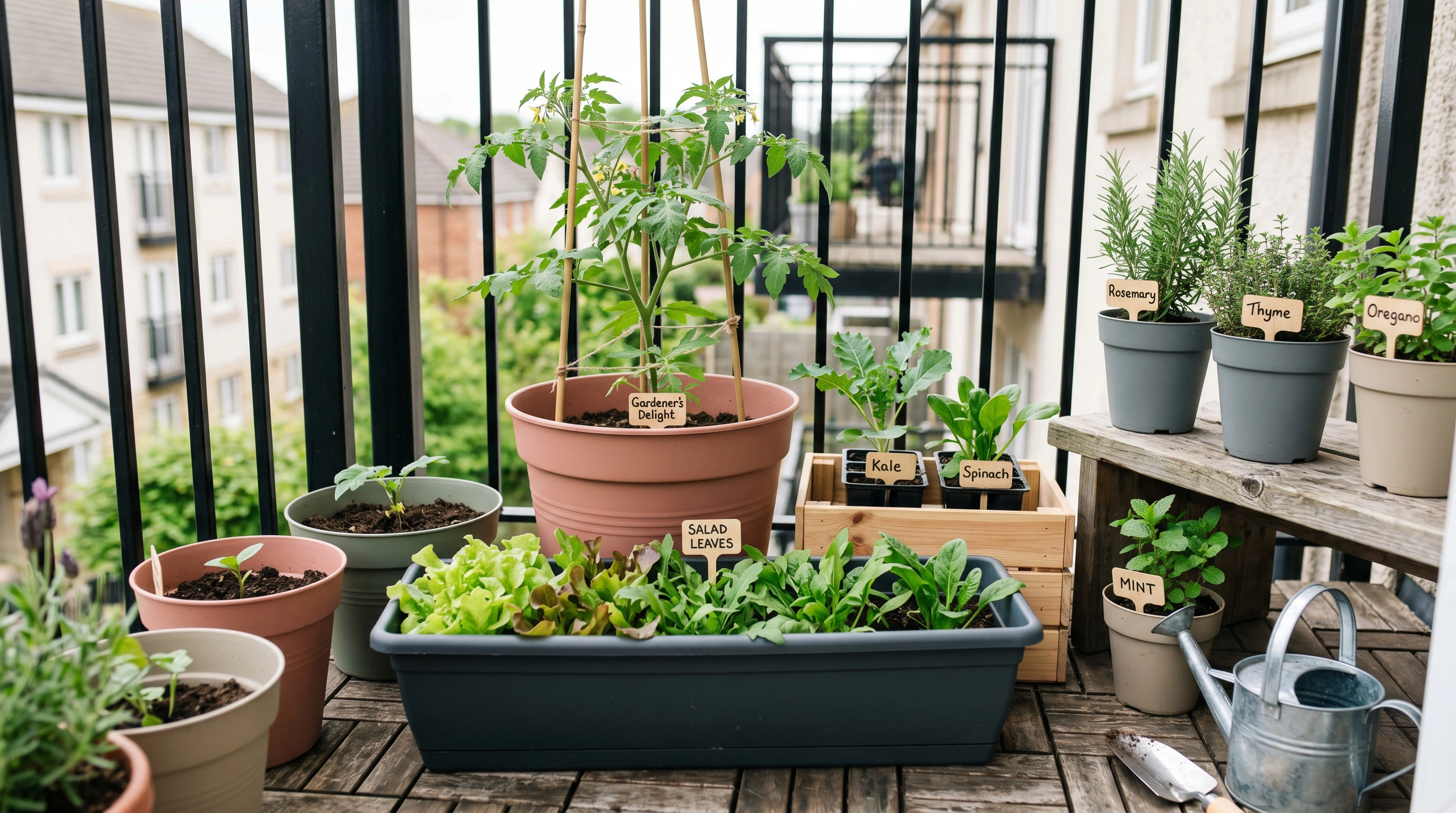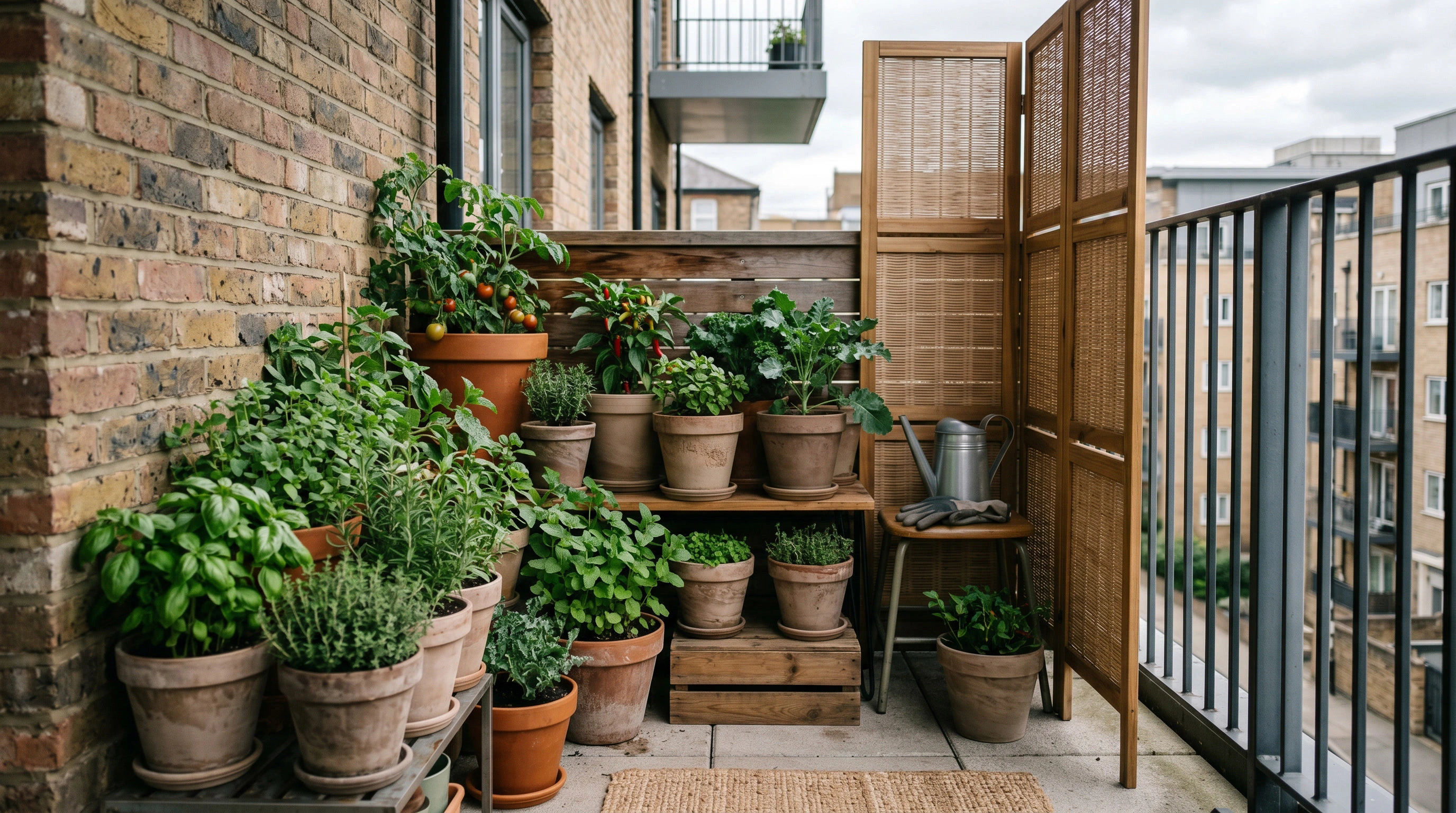
Wind is one of the main reasons balcony plants struggle. It dries compost faster, rocks containers, chills young plants and can snap tall stems. A balcony can also be windier than the ground-level garden or street below, especially on upper floors and exposed corners.
The good news is that you usually do not need permanent screens, drilling or complicated equipment. For most renters, the best approach is simple: choose tougher plants, use stable containers, group pots together and place them in the calmest part of the balcony.
Why balcony wind is a problem
Wind affects balcony plants in several ways at once. It can physically damage leaves and stems, but it also increases water loss from both the plant and the compost. That is why a plant may wilt on a windy day even when the temperature does not feel especially hot.
Common wind-related problems include:
- Compost drying much faster than expected.
- Leaves curling, tearing or crisping at the edges.
- Tall plants leaning or snapping.
- Small pots tipping or moving around.
- Young seedlings becoming weak or stressed.
- Flowers dropping before fruit can form.
If you are growing food in pots, wind protection is not just about stopping visible damage. It is also about making watering and plant care more predictable.
Start by finding the calmest spot
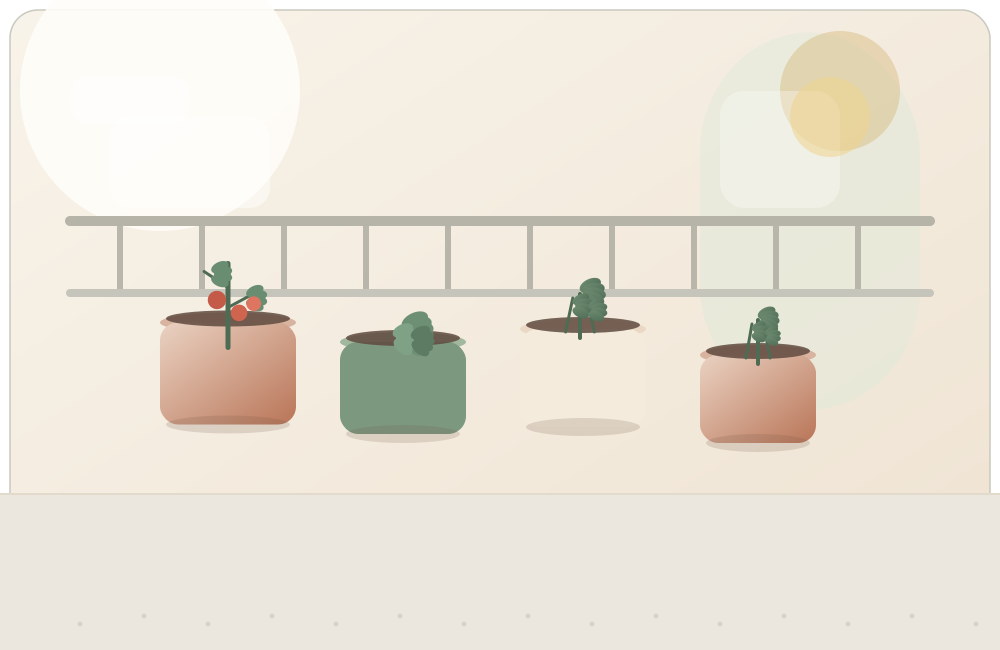
Most balconies have more than one microclimate. The rail edge is often the most exposed. Corners, side walls and lower areas are usually calmer. Before buying screens or moving every plant, spend a few breezy days noticing where the wind actually hits hardest.
Move one pot to a calmer position for a week and compare it with a pot left in the exposed area. If the sheltered plant stays happier and dries out more slowly, placement is part of the solution.
Choose compact plants first
The easiest plants to protect are the ones that do not catch much wind. Low, compact crops are usually better for exposed balconies than tall, top-heavy plants.
Good options for windy balconies include:
- Chives, parsley, mint and thyme in sturdy pots.
- Cut-and-come-again salad leaves in low troughs.
- Strawberries in stable containers.
- Dwarf beans with support in a sheltered spot.
- Compact bush tomatoes only where the balcony is sunny and reasonably sheltered.
Be careful with tall tomatoes, climbing beans, large courgettes and anything in a narrow pot. These can work in the right place, but they are not the easiest first choice for a windy balcony.
Use stable pots
Pot shape matters. Tall narrow pots tip more easily, especially once plants grow above the rim. Choose wider, heavier-bottomed containers for exposed spaces. A broad base is usually better than extra height.
Useful features include:
- A wide base.
- Drainage holes.
- Enough compost volume to hold moisture.
- A shape that does not become top-heavy.
- A tray or saucer where runoff could cause problems.
For more detail on container choice, read How to Choose Pots for Balcony and Windowsill Gardening.
Group pots together
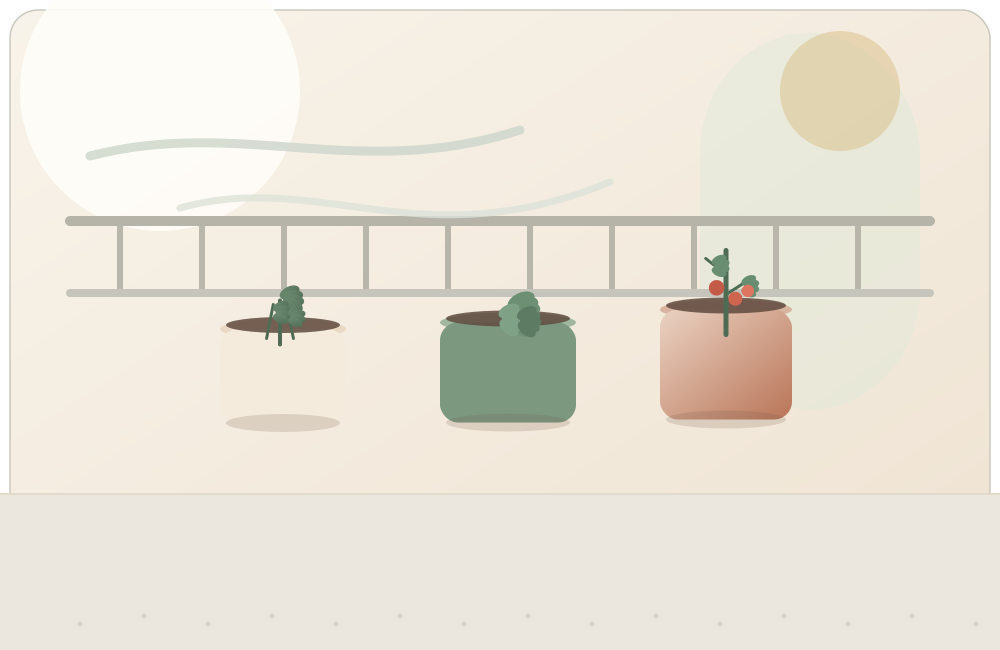
Grouped pots can shelter each other slightly and are easier to water. Place sturdier or taller containers behind smaller plants, then keep delicate crops in the calmer middle of the group.
Do not pack everything so tightly that airflow disappears. Leaves still need space to dry after rain or watering. Aim for a tidy cluster, not a crowded wall of plants.
Grouping also helps with routine. If all your pots are scattered across the balcony, you are more likely to miss one during a busy week.
Water more carefully in windy weather
Wind can dry compost quickly even when the day feels cool. Check pots more often during breezy periods, especially small containers, hanging baskets and fabric grow bags.
Use your finger to check the top few centimetres of compost. If it feels dry and the pot feels light, water thoroughly. If it is still damp, wait. Watering by touch is better than watering by the calendar.
This is covered in more detail in How Often Should You Water Plants in Pots in the UK?.
Support taller plants early
If you grow tomatoes, beans or taller herbs on a balcony, add support before the plant needs it. A cane, small frame or tie is easier to add while the plant is still upright.
Check supports after windy weather. A loose cane can rub stems or damage the plant it is meant to protect. If a plant is already leaning badly, move it to a calmer spot before adding more height or weight.
Be careful with windbreaks and screens
Removable windbreaks can help, but they can also become a problem if they catch the wind. Anything that acts like a sail can put extra force on railings, fixings or lightweight furniture.
For renters, the safest options are usually low, removable and freestanding. Avoid drilling, bolting or fixing screens to railings unless you have permission and know the setup is suitable.
This is practical gardening guidance, not structural advice. Check tenancy, building and balcony rules before attaching screens, planters or heavy items to railings, walls or shared structures.
What to do before strong winds
If strong wind is forecast, do a quick balcony check before it arrives.
- Move small pots lower or closer to a wall.
- Take lightweight trays, labels and loose items indoors.
- Water dry pots so plants are not already stressed.
- Check tomato canes, bean supports and hanging baskets.
- Move vulnerable seedlings away from the rail edge.
- Remove anything that could blow into plants.
After the wind passes, check compost moisture again. Balcony pots can dry out surprisingly fast during windy weather.
Signs wind is damaging your plants
Wind stress can look like underwatering, cold damage or general plant weakness. Look for patterns rather than one symptom.
Wind may be part of the problem if:
- The most exposed pots dry faster than the sheltered ones.
- Leaves are torn, curled or crispy on the wind-facing side.
- Plants lean in one direction.
- Flowers drop after breezy weather.
- Young plants look stressed even though compost is not fully dry.
Test one change at a time. Move a plant to a calmer position, improve watering, or group pots differently, then watch what happens over the next few days.
Best plants for windy balconies
For exposed balconies, start with plants that stay compact and recover well from imperfect conditions.
- Chives: compact, useful and fairly tough.
- Parsley: a good herb for pots if kept watered.
- Mint: tough, but keep it in its own pot.
- Thyme: handles drier conditions better than many soft herbs.
- Salad leaves: best in low troughs away from the strongest gusts.
- Strawberries: manageable in stable containers.
- Dwarf beans: possible in sheltered spots with sensible support.
For crop ideas by balcony direction, compare Best Vegetables for North-Facing Balconies in the UK and Best Vegetables for South-Facing Balconies in the UK.
Common mistakes
Putting tall plants on the rail edge
The rail edge is often the windiest part of the balcony. Keep taller plants lower and closer to shelter.
Using tiny pots
Small pots dry quickly and move around more easily. Use enough compost volume for stable moisture.
Adding a screen that catches too much wind
A poorly chosen screen can create more risk than it solves. Keep wind protection removable, low and safe.
Forgetting to water after windy weather
Wind can dry containers even on cool days. Check moisture after breezy spells.
Choosing the wrong crops
If a balcony is exposed most of the year, compact herbs and leafy crops are usually more realistic than tall vegetables.
FAQ
Why is my balcony so windy?
Wind moves around buildings and can be stronger on upper floors, corners and exposed railings. A balcony may be much windier than the street or garden below.
Can herbs grow on a windy balcony?
Yes, some herbs can cope if they are in sturdy pots and not left to dry out. Chives, parsley, mint and thyme are sensible options to try first.
Do windbreaks work for balcony plants?
They can work, but they must be safe, removable and suitable for the balcony. Avoid heavy or fixed screens unless you have permission and suitable fixings.
What vegetables cope best with wind?
Low leafy crops, herbs, strawberries and compact plants usually cope better than tall, top-heavy vegetables.
Should I move plants before windy weather?
Yes, if they are small, top-heavy or close to the rail edge. Move them lower, closer to a wall, or into the calmest part of the balcony.
Related guides
- Beginner’s Guide to Small-Space Gardening for UK Renters
- How to Choose Pots for Balcony and Windowsill Gardening
- How Often Should You Water Plants in Pots in the UK?
- Best Vegetables for North-Facing Balconies in the UK
- Lightweight Vertical Planters for Small Spaces in the UK
Next step
Move your most vulnerable plant away from the rail edge and watch it for a week. If wind is only one problem and light is also limited, read Best Vegetables for North-Facing Balconies in the UK. If pots are drying too quickly, read How Often Should You Water Plants in Pots in the UK?.