The best vegetables to grow in pots are not always the most exciting ones on seed packets. For small UK balconies, patios and rented spaces, the best choices are crops that match your light, fit the container, and give useful harvests without creating too much watering work.
This guide focuses on practical vegetables for pots, troughs, grow bags and compact containers. It is written for beginners who want realistic crops for small spaces, not an allotment squeezed onto a balcony.
Who this guide is for
This article is for beginners growing vegetables in pots on balconies, patios, doorsteps or compact shared spaces. It assumes you want practical harvests, moveable containers and a setup that can survive normal busy weeks.
If you are completely new, start with Beginner’s Guide to Small-Space Gardening for UK Renters. If your main question is pot size, drainage or layout, use Container Gardening for Beginners: A UK Small-Space Guide alongside this page.
Quick comparison
| Vegetable | Best for | Container need | Difficulty |
|---|---|---|---|
| Salad leaves | Fast small harvests | Shallow trough or wide pot | Easy |
| Radishes | Quick results | Shallow to medium pot | Easy |
| Spring onions | Small useful harvests | Medium pot or trough | Easy |
| Spinach and chard | Leafy harvests | Medium pot | Easy to moderate |
| Dwarf French beans | Summer balcony crops | Medium to deep pot | Moderate |
| Short-root carrots | Root crop practice | Deeper pot | Moderate |
| Beetroot | Leaves and roots | Medium to deep pot | Moderate |
| Pea shoots | Indoor or windowsill crops | Shallow tray or pot | Easy |
| Compact tomatoes | Sunny summer spaces | Large pot or grow bag | Moderate |
| Chillies | Warm sunny spots | Medium pot | Moderate |
Before you choose what to grow
Vegetable choice depends on three things: light, container size and watering. A crop that works well on a sunny patio may struggle on a shaded balcony. A vegetable that grows well in the ground may be awkward in a small pot.
Before buying seeds or plants, check:
- How many hours of direct sun your space gets in spring and summer.
- Whether the spot is windy or sheltered.
- How much container depth you can realistically use.
- Whether you can water easily in warm weather.
- Whether the setup needs to stay moveable because you rent.
If your balcony is exposed, read How to Protect Balcony Plants from Wind. If light is your main concern, use How Much Sunlight Do Herbs and Vegetables Need?.
Salad leaves
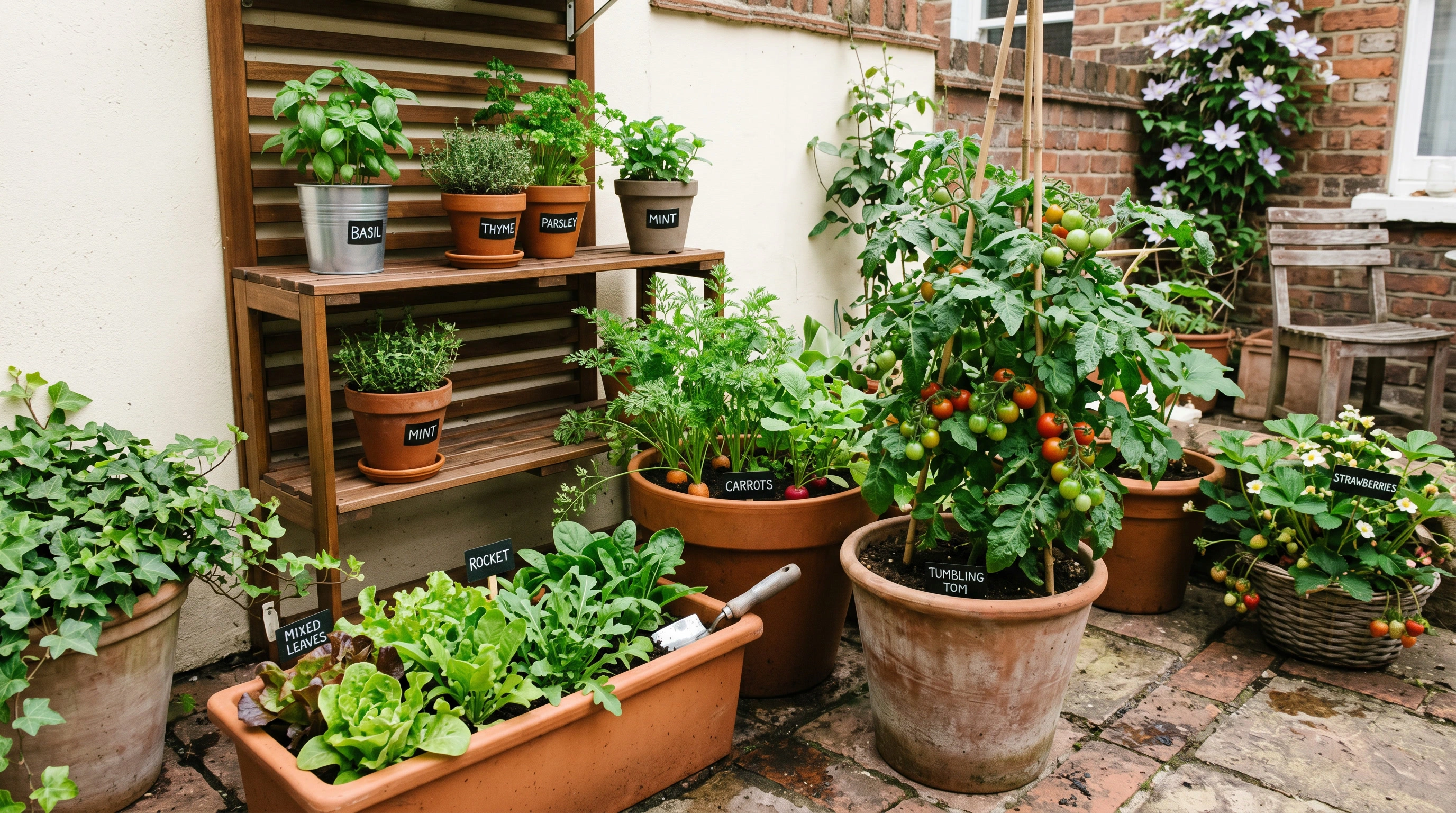
Salad leaves are one of the best first vegetables for pots because they grow quickly, do not need deep containers, and can be harvested a few leaves at a time. They are useful even when you only have a small balcony or bright outdoor corner.
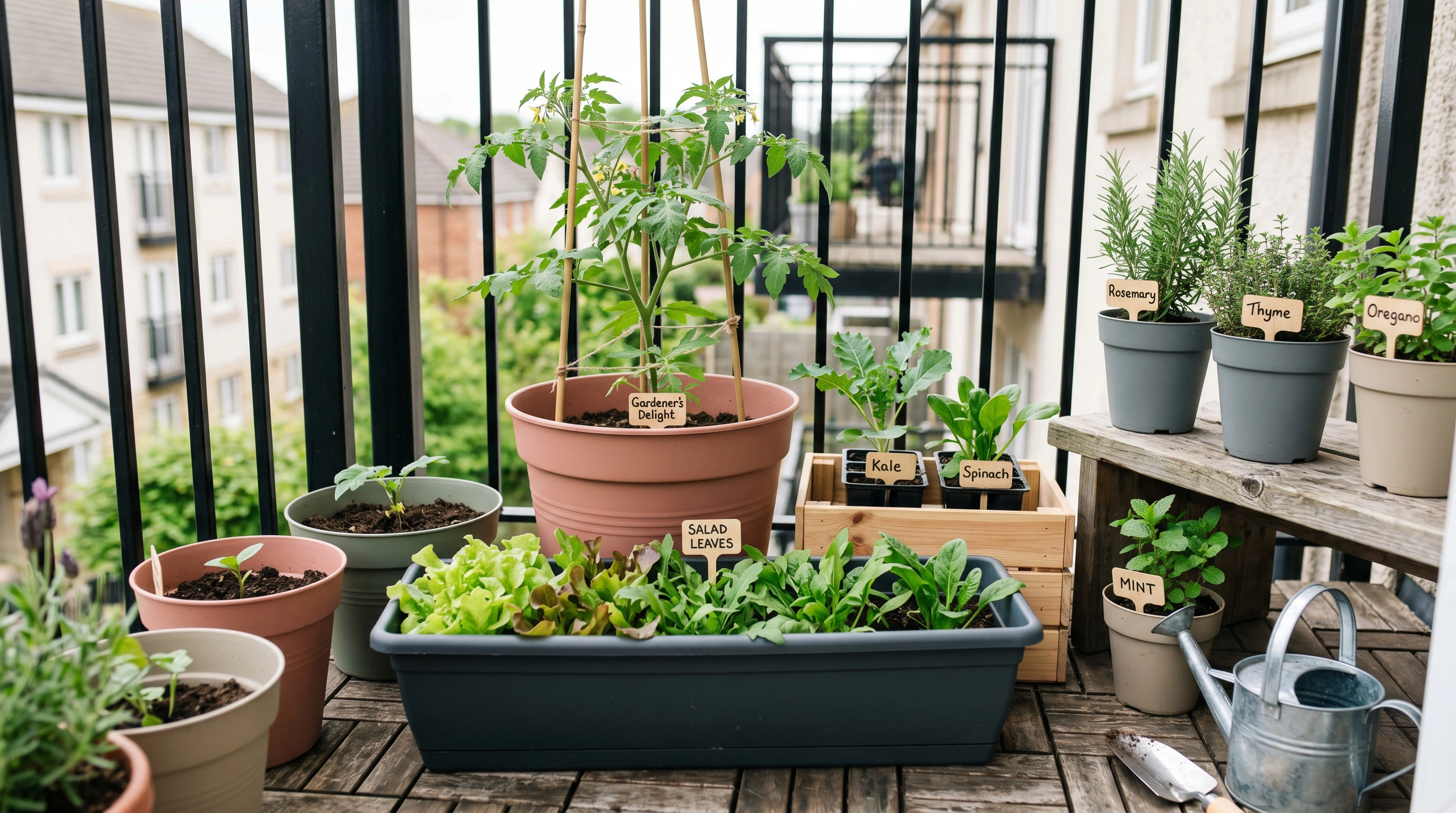
Use a wide shallow container, trough or window box with drainage. Sow thinly and repeat small sowings every few weeks instead of planting everything at once. This gives you a steadier supply and reduces the chance of a crowded tray turning weak and leggy.
Best fit: balconies, patios, doorsteps and bright outdoor ledges.
Radishes
Radishes are quick, compact and satisfying for beginners. They are good for learning watering because they respond quickly to stress. If they dry out repeatedly or stay in the pot too long, they can become woody, hot or split.
Use a shallow to medium container and sow small batches. Keep the compost evenly moist but not waterlogged. Harvest young rather than waiting for them to become large.
Best fit: spring and autumn pots, especially where you want fast results.
Spring onions
Spring onions suit containers well because they are narrow, useful and do not need the same space as full onions. They can be grown in troughs or medium pots and harvested as needed.
Sow in rows or small clusters, then thin if needed. They are a good choice for renters because they give useful kitchen harvests without taking over the space.
Best fit: troughs, small balcony containers and mixed vegetable pots.
Spinach and chard
Spinach and chard are good leafy options for pots, especially if you want something more substantial than salad leaves. Chard is often more forgiving in containers and can keep producing leaves over a longer period.
Use a medium pot with enough compost to hold moisture steadily. In hot weather, spinach can bolt quickly, so it is often better in cooler parts of spring, early summer or autumn. Chard can be more tolerant, but it still needs regular watering.
Best fit: medium pots, cooler seasons and balconies with decent light.
Dwarf French beans
Dwarf French beans are a good step up once you have managed easier crops. They do not need tall supports like climbing beans, but they still need a reasonably deep container, warmth and steady watering.
Use a medium to deep pot or grow bag. Keep them sheltered from strong wind and avoid overcrowding the plants. They are best for outdoor spaces with good summer light.
Best fit: sunny balconies, patios and sheltered outdoor corners.
Short-root carrots
Carrots can grow in containers if you choose short or round varieties and use a deep enough pot. They are not always the easiest first crop, but they are worth trying once you understand watering.
Use a deeper container with fine compost and remove stones or large lumps. Sow thinly to avoid too much disturbance later. Keep moisture steady while seedlings establish.
Best fit: deeper pots, patios and stable balcony corners.
Beetroot
Beetroot is useful in pots because both leaves and roots can be harvested. It needs more space than salad leaves, but it is still realistic in a medium to deep container.
Sow lightly and thin plants so each one has room to develop. You can harvest some leaves young, but avoid removing too many if you want the roots to size up.
Best fit: medium containers and spring to summer outdoor growing.
Peas and pea shoots
Pea shoots are one of the easiest edible crops for a bright windowsill or sheltered outdoor spot. They are fast, compact and useful in small quantities.
Full pea plants need more support and space, but pea shoots can be grown in shallow trays or pots. Harvest when young and sow again for repeat crops.
Best fit: windowsills, small trays, beginner indoor growing and quick harvests.
Compact tomatoes
Tomatoes are popular, but they are not the easiest vegetable-style crop for a beginner pot garden. They need strong light, warmth, steady watering, feeding and enough compost volume.
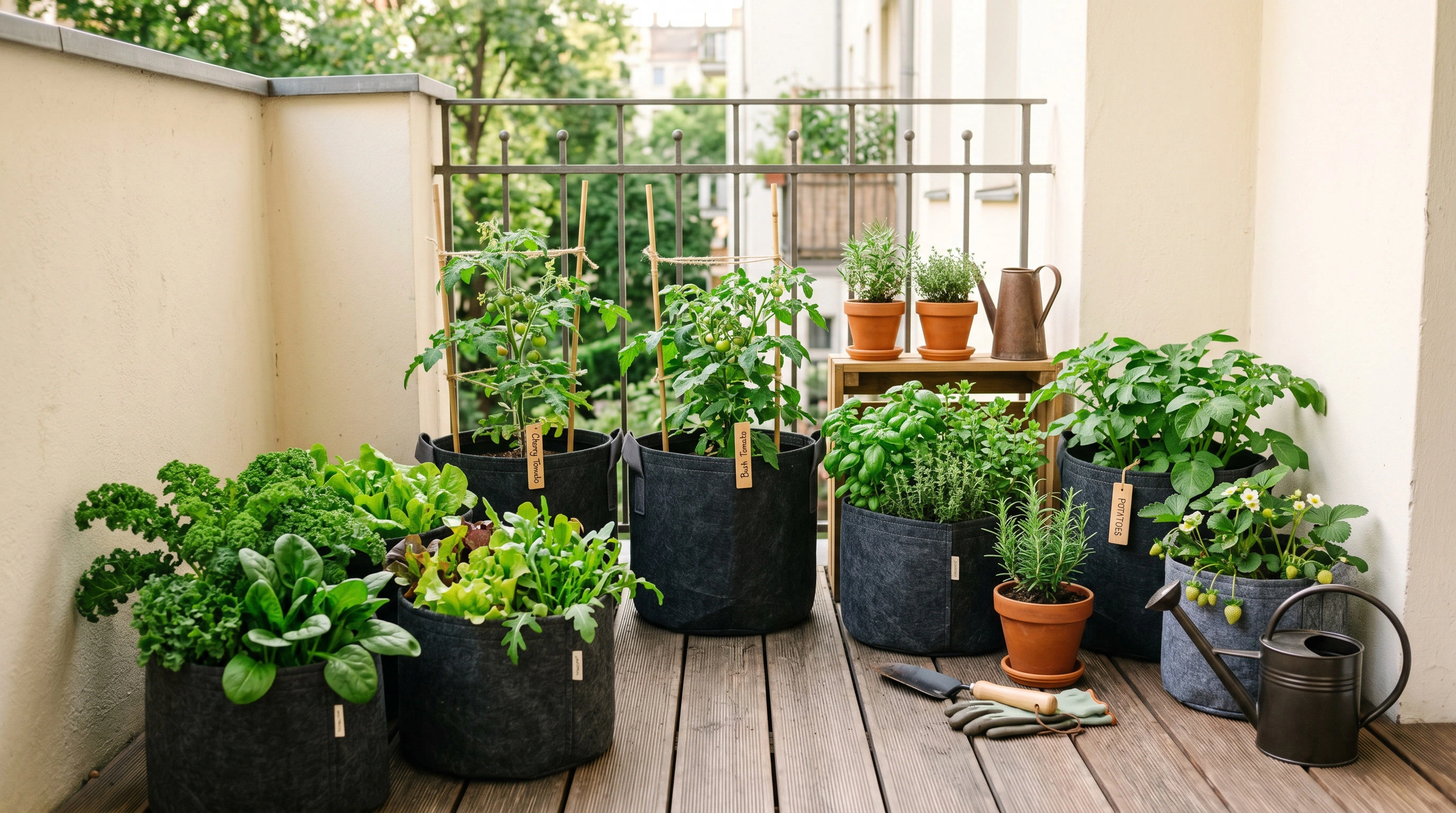
If you want to try tomatoes, choose compact or bush varieties rather than large cordon types. Use a larger pot or suitable grow bag, and expect to water more often in warm weather.
Best fit: sunny balconies, patios and south or west-facing outdoor spaces.
Chillies
Chillies can work well in pots because the plants are compact and productive in the right conditions. They need warmth and good light, so they are better for sunny windowsills, sheltered balconies or patios than shaded spaces.
Use a medium pot and avoid overwatering. Chillies dislike sitting in cold wet compost, especially early in the season.
Best fit: sunny windowsills, warm patios and sheltered balconies.
What not to grow first
Some vegetables are possible in containers but can be frustrating in small spaces. Large courgettes, pumpkins, sweetcorn, maincrop potatoes, large cabbages and full-size climbing beans can take more room, compost and watering than most beginners expect.
They are not impossible, but they are usually better once you know your space and have a steady watering routine. For a first season, choose vegetables that give useful results without dominating the balcony.
Choosing pots for vegetables
Match the pot to the crop. Shallow crops such as salad leaves can use troughs. Fruiting crops such as tomatoes need larger containers. Root crops need enough depth for the edible root to develop properly.
- Use drainage holes for all vegetable containers.
- Use trays or saucers where water runoff could cause problems.
- Choose stable pots for windy balconies.
- Avoid tiny decorative pots for thirsty crops.
- Keep containers moveable if you rent.
For more detail, read How to Choose Pots for Balcony and Windowsill Gardening.
Watering and feeding
Vegetables in pots depend on you for moisture and nutrients. Compost volume is limited, so containers dry faster than garden soil and nutrients can run down over time.
Check the compost by touch before watering. In warm, windy weather, pots may need checking every day. In cool or dull spells, watering too often can cause problems.
Leafy crops and quick roots can start simply with multipurpose compost. Fruiting crops such as tomatoes and chillies usually need feeding once they are actively growing and producing.
For watering routines, see How Often Should You Water Plants in Pots in the UK?.
Seasonal tips
In spring, start with salad leaves, radishes, spring onions, spinach and young plants. In summer, grow beans, tomatoes and chillies where light and warmth are strong enough. In autumn, return to leafy crops and quick sowings. In winter, focus on pea shoots, microgreens and maintenance rather than expecting summer-style growth.
Use Year-Round Balcony Planting Calendar for the UK to plan crops through the year without overloading your space.
Common mistakes and fixes
Mistake: choosing by popularity, not conditions
Fix: choose vegetables that match your actual light, wind and container size.
Mistake: tiny decorative containers for long-season crops
Fix: use enough compost volume for roots and steady moisture.
Mistake: watering on fixed days regardless of weather
Fix: check the compost and container weight before watering.
Mistake: expanding too quickly
Fix: grow one or two crops well before adding more.
Mistake: ignoring renter practicalities
Fix: keep pots free-standing, tidy, removable and easy to move.
One reliable pot of salad leaves teaches more than a crowded collection of struggling vegetables.
Worked examples for different small-space setups
Example 1: Bright kitchen windowsill in a rented flat
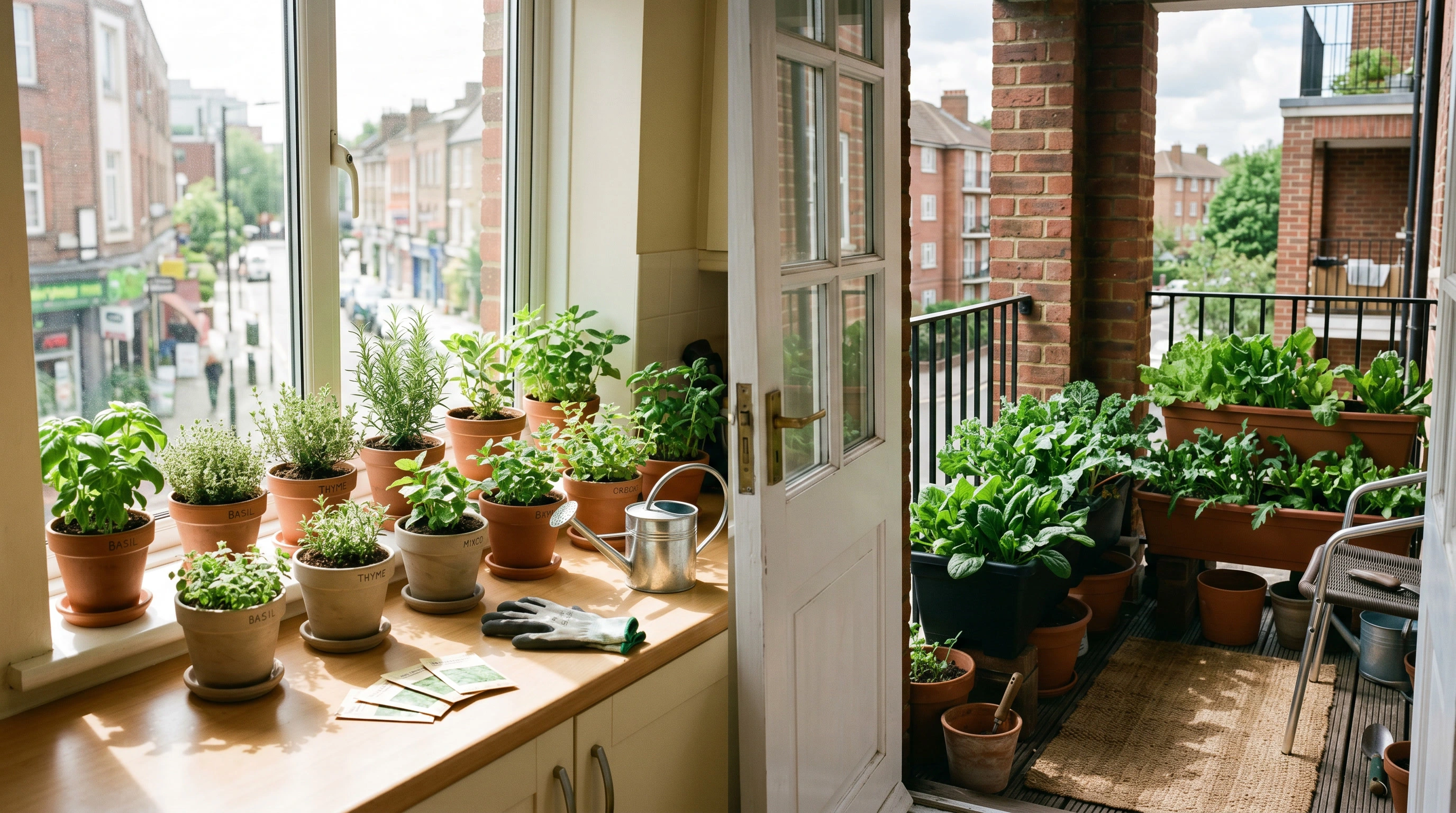
Choose pea shoots, microgreens, spring onions or compact chillies if the sill is warm and bright. Keep containers small enough to move and use trays to protect the surface. Do not expect tomatoes or large vegetables to perform well on a weak winter windowsill.
Example 2: Exposed balcony with inconsistent wind
Choose low, stable containers and compact crops. Salad leaves, spring onions, chard and dwarf beans can work better than tall, top-heavy plants. If you grow tomatoes, use a sheltered corner and a large stable container.
Example 3: Small patio with mixed sun and shade
Use the brightest spot for tomatoes, beans or chillies. Use cooler or partly shaded areas for leafy crops. Keep watering groups together so you are not managing five different moisture routines at once.
Your first month
Week 1: check light, wind and access, then choose one easy crop.
Week 2: set up the container with drainage, compost and a tray if needed.
Week 3: learn how quickly the pot dries and adjust watering by condition.
Week 4: add one more crop only if the first pot feels manageable.
By the end of the first month, you should know more about your own space than a general crop list can tell you. Use that information to choose the next vegetable carefully.
FAQ
What is the easiest vegetable to grow in pots?
Salad leaves, radishes, spring onions and pea shoots are among the easiest. They grow quickly and do not need very large containers.
Can I grow vegetables in pots on a balcony?
Yes. Choose crops that fit your light level and use containers with drainage. Wind and watering are usually the main challenges on balconies.
What vegetables grow well in small pots?
Salad leaves, radishes, spring onions, pea shoots and some herbs are good for smaller pots. Fruiting crops usually need larger containers.
Can I grow tomatoes in pots in the UK?
Yes, especially compact varieties in sunny, sheltered spots. They need warmth, steady watering, feeding and enough compost volume.
What vegetables grow in shade?
Lower-light spaces are better for leafy crops, shoots and some herbs than tomatoes, chillies or beans. Growth will usually be slower.
Related guides
- Beginner’s Guide to Small-Space Gardening for UK Renters
- Container Gardening for Beginners: A UK Small-Space Guide
- Growing Vegetables in Pots: A Beginner Guide for Small Spaces
- Best Vegetables for North-Facing Balconies in the UK
- Best Vegetables for South-Facing Balconies in the UK
Next step
Choose one easy crop from this list and match it to the pot and light you actually have. If you need help with container choice, continue with How to Choose Pots for Balcony and Windowsill Gardening. If watering is your biggest concern, read How Often Should You Water Plants in Pots in the UK?.