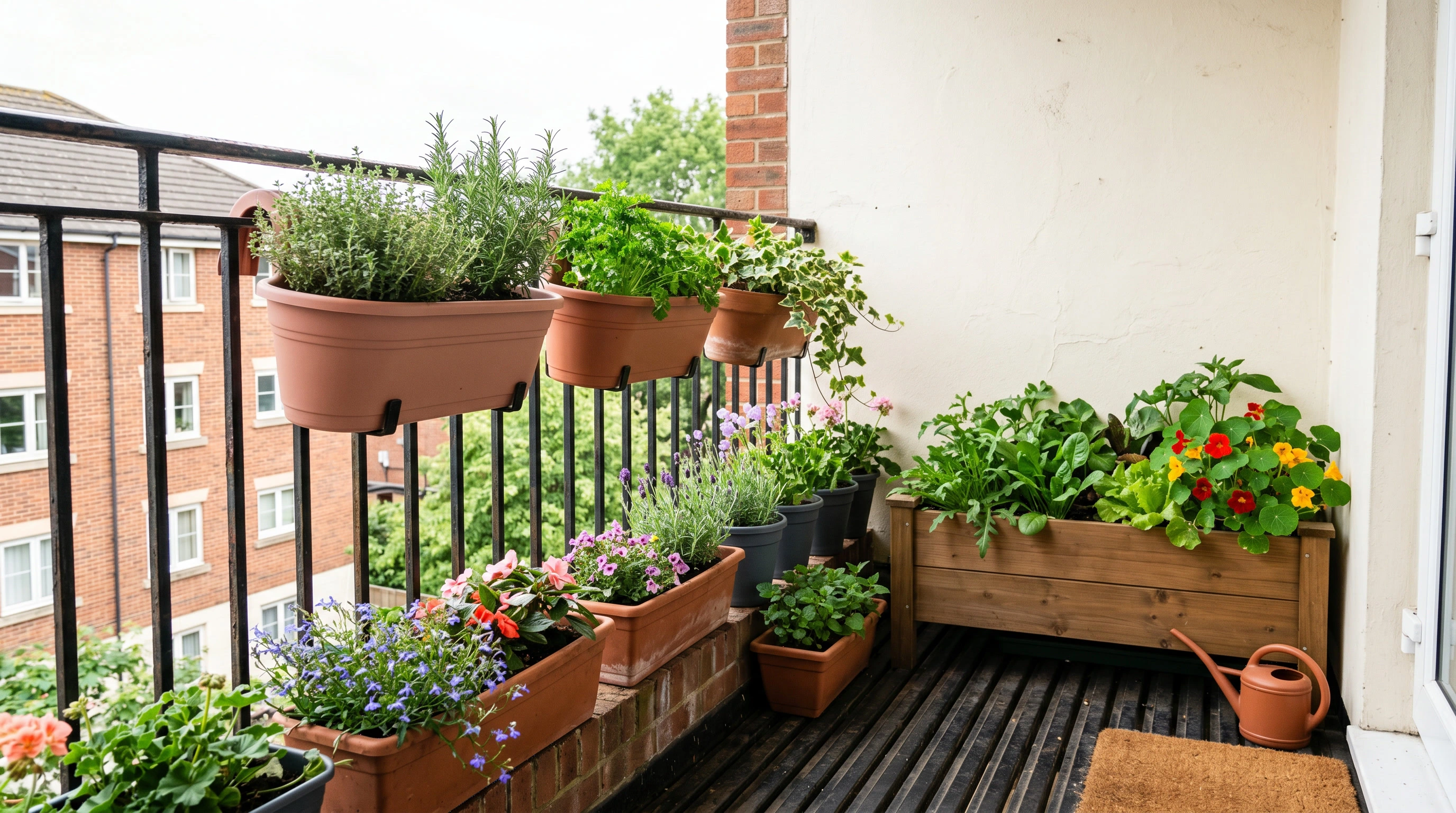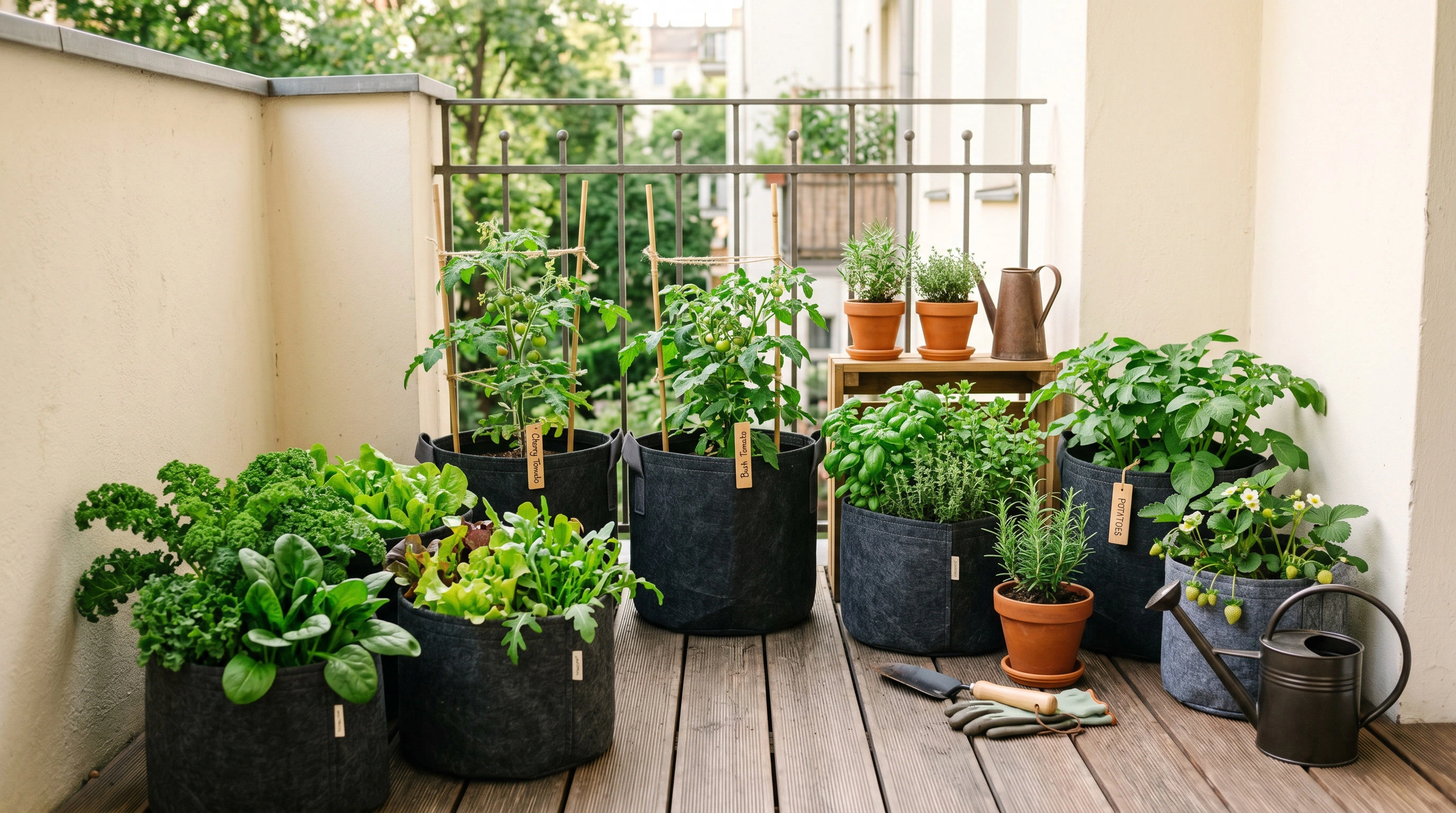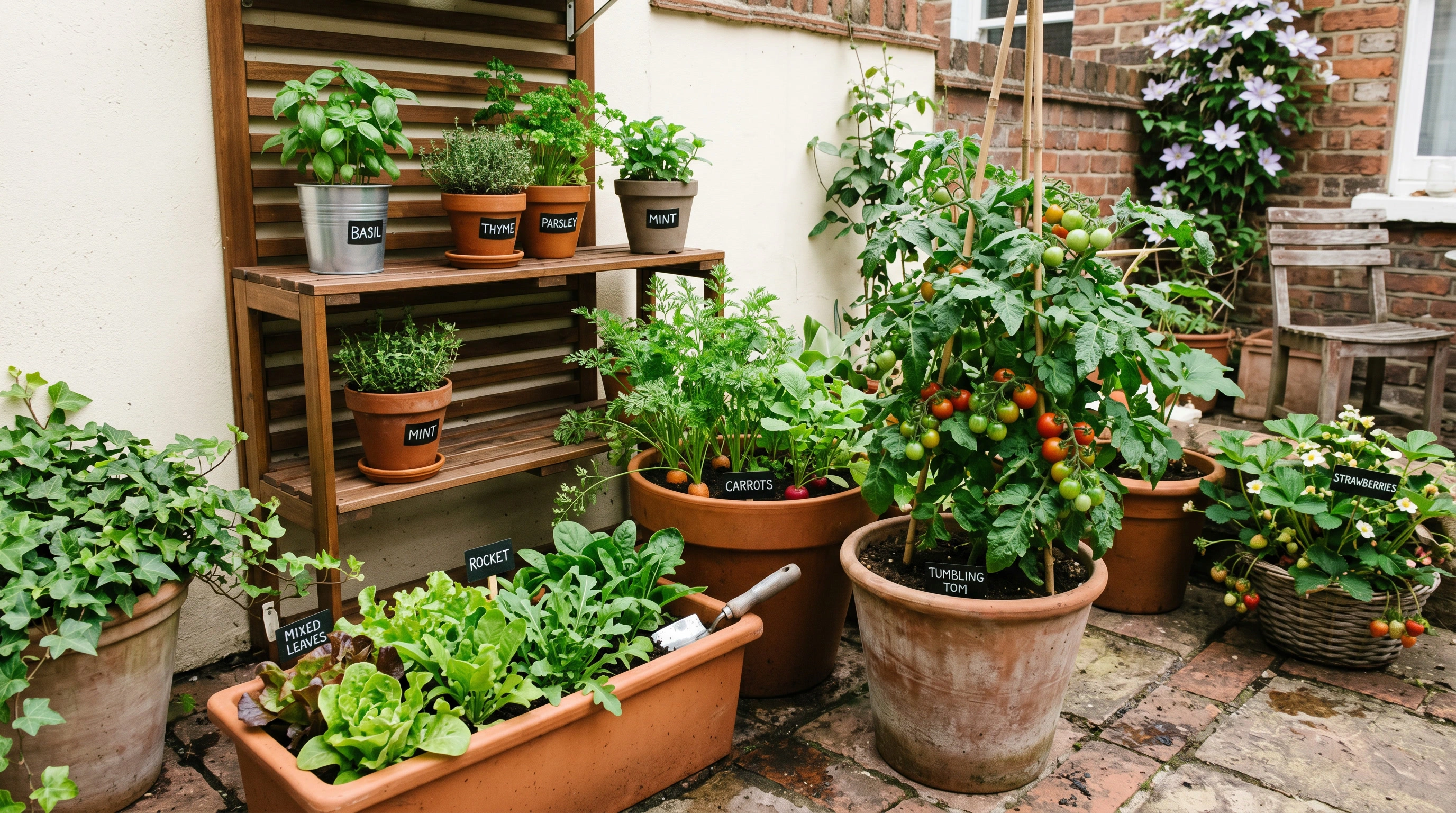
Growing vegetables in pots works best when you match the crop to your space, rather than trying to copy a full garden in containers. In small UK homes, balconies, patios and rented spaces, the most reliable results usually come from simple crops, sensible pot sizes and a watering routine you can actually keep up with.
This guide explains how to start growing vegetables in pots without overbuying, overcrowding or taking on more than your space can handle.
Who this guide is for
This article is for beginners growing vegetables in pots on balconies, patios, doorsteps, windowsills or compact shared spaces. It assumes you want practical harvests, moveable containers and a setup that can survive normal busy weeks.
If you are completely new, start with Beginner's Guide to Small-Space Gardening for UK Renters. If your main question is pot size, drainage or layout, use Container Gardening for Beginners: A UK Small-Space Guide alongside this page.
Before you choose what to grow
Vegetable choice depends on three things: light, container size and watering. A crop that works well on a sunny patio may struggle on a shaded balcony. A vegetable that grows well in the ground may be awkward in a small pot.
Before buying seeds or plants, check:
- How many hours of direct sun your space gets in spring and summer.
- Whether the spot is windy or sheltered.
- How much container depth you can realistically use.
- Whether you can water easily in warm weather.
- Whether the setup needs to stay moveable because you rent.
If your balcony is exposed, read How to Protect Balcony Plants from Wind. If light is your main concern, use How Much Sunlight Do Herbs and Vegetables Need?.
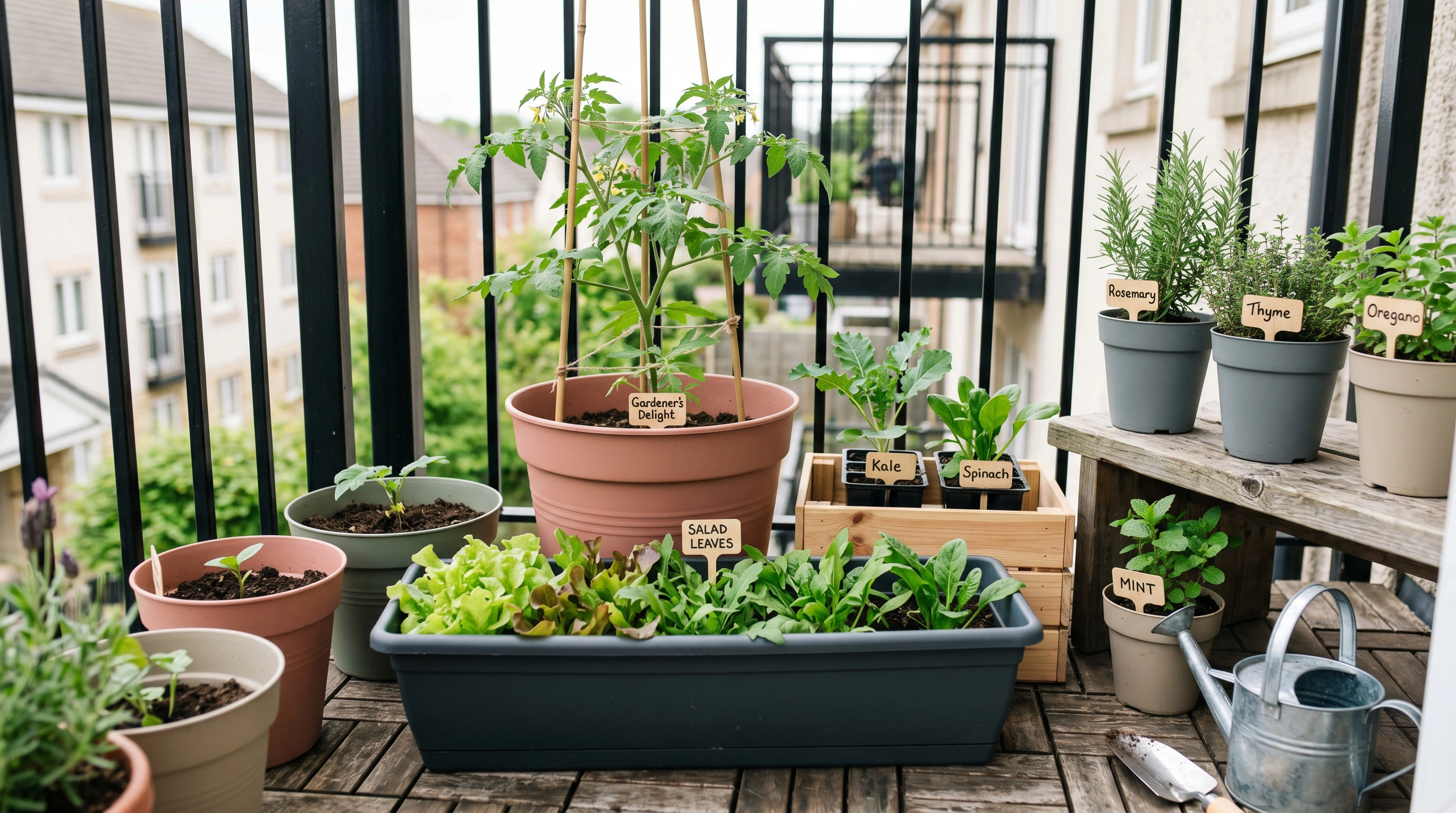
Best vegetables to start with
The best beginner vegetables for pots are not always the most exciting ones on seed packets. Start with crops that are compact, useful, forgiving and realistic for your light level.
Salad leaves
Salad leaves are one of the best first vegetables for pots because they grow quickly, do not need deep containers, and can be harvested a few leaves at a time. They are useful even when you only have a small balcony, patio or bright outdoor corner.
Use a wide shallow container, trough or window box with drainage. Sow thinly and repeat small sowings every few weeks instead of planting everything at once. This gives you a steadier supply and reduces the chance of a crowded tray turning weak and leggy.
Radishes
Radishes are quick, compact and satisfying for beginners. They are good for learning watering because they respond quickly to stress. If they dry out repeatedly or stay in the pot too long, they can become woody, hot or split.
Use a shallow to medium container and sow small batches. Keep the compost evenly moist but not waterlogged. Harvest young rather than waiting for them to become large.
Spring onions
Spring onions suit containers well because they are narrow, useful and do not need the same space as full onions. They can be grown in troughs or medium pots and harvested as needed.
Sow in rows or small clusters, then thin if needed. They are a good choice for renters because they give useful kitchen harvests without taking over the space.
Spinach and chard
Spinach and chard are good leafy options for pots, especially if you want something more substantial than salad leaves. Chard is often more forgiving in containers and can keep producing leaves over a longer period.
Use a medium pot with enough compost to hold moisture steadily. In hot weather, spinach can bolt quickly, so it is often better in cooler parts of spring, early summer or autumn. Chard can be more tolerant, but it still needs regular watering.
Dwarf French beans
Dwarf French beans are a good step up once you have managed easier crops. They do not need tall supports like climbing beans, but they still need a reasonably deep container, warmth and steady watering.
Use a medium to deep pot or grow bag. Keep them sheltered from strong wind and avoid overcrowding the plants. They are best for outdoor spaces with good summer light.
Short-root carrots
Carrots can grow in containers if you choose short or round varieties and use a deep enough pot. They are not always the easiest first crop, but they are worth trying once you understand watering.
Use a deeper container with fine compost and remove stones or large lumps. Sow thinly to avoid too much disturbance later. Keep moisture steady while seedlings establish.
Pea shoots
Pea shoots are one of the easiest edible crops for a bright windowsill or sheltered outdoor spot. They are fast, compact and useful in small quantities.
Full pea plants need more support and space, but pea shoots can be grown in shallow trays or pots. Harvest when young and sow again for repeat crops.
Compact tomatoes and chillies
Tomatoes and chillies can work well in pots, but they are more demanding than leaves and quick roots. They need strong light, warmth, enough compost volume, steady watering and feeding once they are established.
Choose compact or bush varieties for small spaces. If your balcony is shaded or windy, start with easier vegetables first and try fruiting crops later.
A simple setup plan
1. Choose one main crop
Pick one easy crop for your first setup, such as salad leaves, radishes, spring onions or pea shoots. Learn how that crop behaves in your space before adding more.
2. Match the pot to the plant
Shallow crops can use troughs or wide shallow pots. Root crops need enough depth. Fruiting crops such as tomatoes need larger containers with more compost volume.
3. Use drainage from the start
Use containers with drainage holes. Add trays or saucers where water runoff could cause problems, especially on balconies, patios and windowsills.
4. Build a watering rhythm
Check compost moisture by touch and adjust with the weather. Warm, windy days dry pots faster than cool, dull days.
5. Scale slowly
After two stable weeks, add one extra pot or one extra crop. Do not turn a simple setup into a full balcony garden before you know how much care it needs.
Choosing pots for vegetables
Match the pot to the crop. Salad leaves can grow in shallow troughs. Spring onions and leafy greens need a medium container. Beans, carrots, beetroot, tomatoes and chillies need more depth or volume.
- Use drainage holes for all vegetable containers.
- Use trays or saucers where water runoff could cause problems.
- Choose stable pots for windy balconies.
- Avoid tiny decorative pots for thirsty crops.
- Keep containers moveable if you rent.
For more detail, read How to Choose Pots for Balcony and Windowsill Gardening.
Watering and feeding
Vegetables in pots depend on you for moisture and nutrients. Compost volume is limited, so containers dry faster than garden soil and nutrients can reduce over time.
Check the compost by touch before watering. In warm, windy weather, pots may need checking every day. In cool or dull spells, watering too often can cause problems.
Leafy crops and quick roots can start simply with multipurpose compost. Fruiting crops such as tomatoes and chillies usually need feeding once they are actively growing and producing.
For watering routines, see How Often Should You Water Plants in Pots in the UK?.
Seasonal tips
In spring, start with salad leaves, radishes, spring onions, spinach and young plants. In summer, grow beans, tomatoes and chillies where light and warmth are strong enough. In autumn, return to leafy crops and quick sowings. In winter, focus on pea shoots, microgreens and maintenance rather than expecting summer-style growth.
Use Year-Round Balcony Planting Calendar for the UK to plan crops through the year without overloading your space.
Common mistakes and fixes
Mistake: choosing by popularity, not conditions
Fix: choose vegetables that match your actual light, wind and container size.
Mistake: tiny decorative containers for long-season crops
Fix: use enough compost volume for roots and steady moisture.
Mistake: watering on fixed days regardless of weather
Fix: check the compost and container weight before watering.
Mistake: expanding too quickly
Fix: grow one or two crops well before adding more.
Mistake: ignoring renter practicalities
Fix: keep pots free-standing, tidy, removable and easy to move.
One reliable pot of salad leaves teaches more than a crowded collection of struggling vegetables.
Worked examples for different small-space setups
Example 1: Bright kitchen windowsill in a rented flat
Choose pea shoots, microgreens, spring onions or compact chillies if the sill is warm and bright. Keep containers small enough to move and use trays to protect the surface. Do not expect tomatoes or large vegetables to perform well on a weak winter windowsill.
Example 2: Exposed balcony with inconsistent wind
Choose low, stable containers and compact crops. Salad leaves, spring onions, chard and dwarf beans can work better than tall, top-heavy plants. If you grow tomatoes, use a sheltered corner and a large stable container.
Example 3: Small patio with mixed sun and shade
Use the brightest spot for tomatoes, beans or chillies. Use cooler or partly shaded areas for leafy crops. Keep watering groups together so you are not managing five different moisture routines at once.
Common problems and fixes
When results are inconsistent, identify the likely cause before changing everything.
- Fast drying plus drooping leaves usually points to small pots, exposed placement or inconsistent watering.
- Slow, weak growth with damp compost often points to poor light or overwatering.
- Repeated yellowing in wet compost usually means drainage or watering needs adjusting.
- Lots of leaves but poor fruiting usually means the crop needs more light, warmth, feeding balance or time.
- Ongoing mess or missed care often means the setup is too complex for your routine.
Fix one bottleneck, observe for at least a week, then decide whether a second change is needed. This gives clearer results than making five changes at once.
Your first month
Week 1: check light, wind and access, then choose one easy crop.
Week 2: set up the container with drainage, compost and a tray if needed.
Week 3: learn how quickly the pot dries and adjust watering by condition.
Week 4: add one more crop only if the first pot feels manageable.
By the end of the first month, you should know more about your own space than a general crop list can tell you. Use that information to choose the next vegetable carefully.
Before spending more
Start with the basics: one or two containers, multipurpose compost, seeds or one small plant, labels and a watering can. Add extra kit only when it solves a real problem.
A cheap setup can become frustrating if the containers are too small, awkward to water or difficult to move. A slightly larger, more practical pot often saves effort over the season.
If you are gathering containers, labels, compost or watering basics, the small-space gardening kit list separates useful beginner kit from extras that can wait.
Adapting this guide by space type
Flat with only windowsills
Prioritise pea shoots, microgreens, spring onions and herbs. Use trays to protect surfaces and avoid crops that need strong outdoor summer light.
Balcony-heavy setup
Prioritise wind management, stable containers and grouped watering zones. Choose compact crops before trying tall or top-heavy vegetables.
Small patio setup
Prioritise crop sequencing and access so you can water and harvest without moving everything. Use larger pots for thirsty crops and smaller containers for quick leaves.
Before adding more pots
Ask yourself: am I keeping plants alive through normal busy weeks, not just good weeks? Are surfaces staying clean and dry? Are crops being used in meals? Can I water everything without moving half the setup?
If yes, scale by one container at a time. If no, stabilise the current setup before adding more.
FAQ
What is the easiest vegetable to grow in pots?
Salad leaves, radishes, spring onions and pea shoots are among the easiest. They grow quickly and do not need very large containers.
Can I grow vegetables in pots on a balcony?
Yes. Choose crops that fit your light level and use containers with drainage. Wind and watering are usually the main challenges on balconies.
What vegetables grow well in small pots?
Salad leaves, radishes, spring onions, pea shoots and some herbs are good for smaller pots. Fruiting crops usually need larger containers.
Can I grow tomatoes in pots in the UK?
Yes, especially compact varieties in sunny, sheltered spots. They need warmth, steady watering, feeding and enough compost volume.
What vegetables grow in shade?
Lower-light spaces are better for leafy crops, shoots and some herbs than tomatoes, chillies or beans. Growth will usually be slower.
Keep the setup manageable
Keep the setup manageable. If care starts feeling rushed, reduce container count before adding complexity again. Sustainable small-space vegetable growing is built on routines you can repeat through ordinary weeks.
A final practical check: if your current setup already feels hard to maintain, simplify before expanding. Stable routines usually produce better outcomes than ambitious but fragile plans.
Related guides
- Beginner's Guide to Small-Space Gardening for UK Renters
- Container Gardening for Beginners: A UK Small-Space Guide
- How to Choose Pots for Balcony and Windowsill Gardening
- How Often Should You Water Plants in Pots in the UK?
- Best Vegetables to Grow in Pots in the UK
Next step
Choose one easy crop from this guide and match it to the pot and light you actually have. If you need help with container choice, continue with How to Choose Pots for Balcony and Windowsill Gardening. If watering is your biggest concern, read How Often Should You Water Plants in Pots in the UK?.