* Some links may be affiliate links. See the footer disclosure.
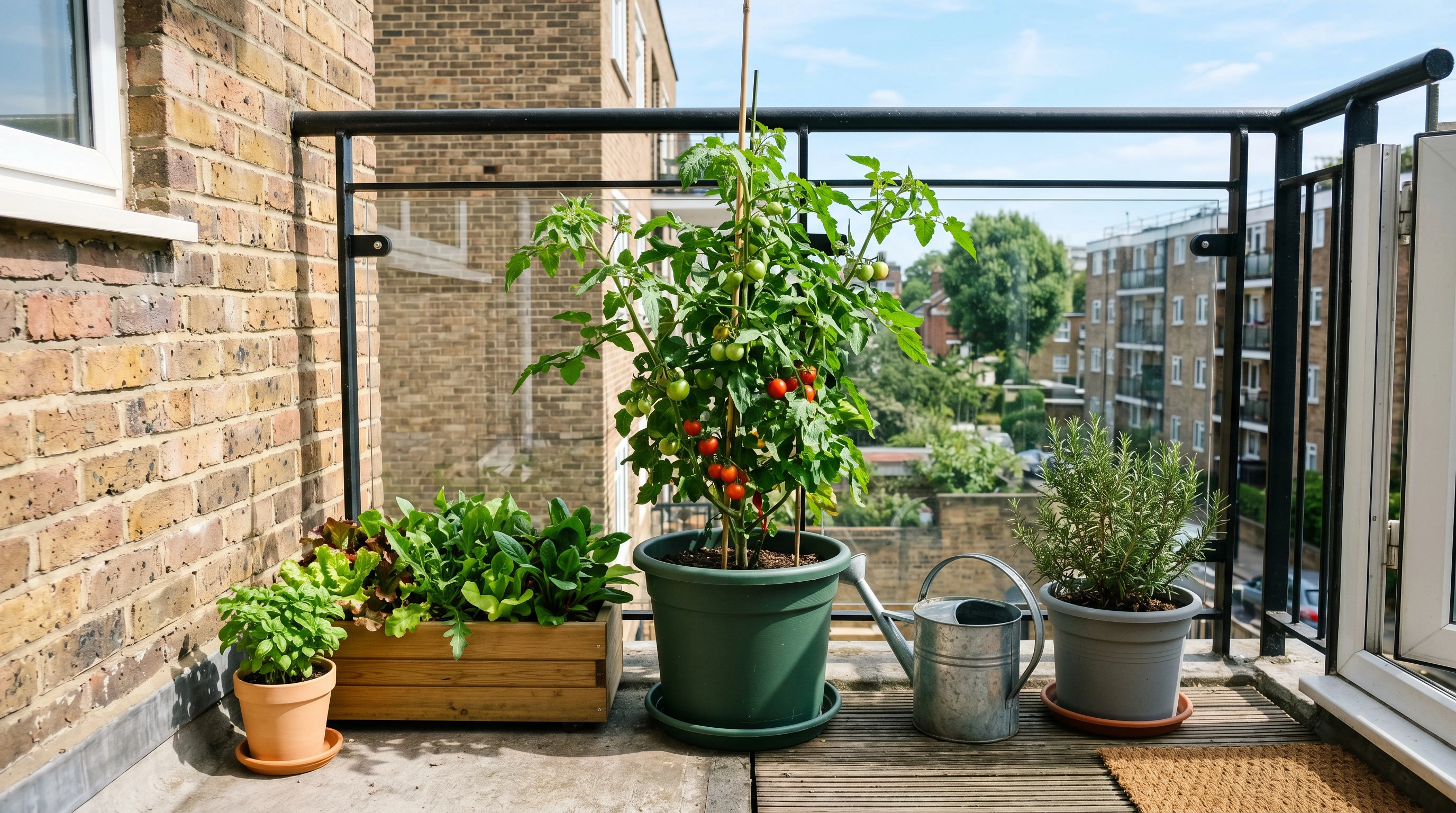
You do not need a shed full of tools to start growing herbs, salad leaves or vegetables in a small space. For most UK renters and flat dwellers, the useful kit is simple: a few containers, suitable compost, labels, a small watering can, and one or two tools that make the work less messy.
The trick is not buying everything at once. It is choosing the pieces that solve the problems you actually have: limited space, indoor mess, inconsistent watering, windowsill seed starting, balcony wind, or no place to keep bulky equipment.
Quick answer: Most beginners can start with containers, peat-free multi-purpose compost or seed compost, plant labels, a small watering can, and one easy crop. Add seed trays, grow lights, self-watering pots, grow bags or composting kit only when they solve a real problem in your space.
Use this as a practical checklist, not a shopping order. If you are still deciding what to grow first, start with the Beginner’s Guide to Small-Space Gardening for UK Renters and the Container Gardening for Beginners guide before buying much kit.
Needed for most beginners
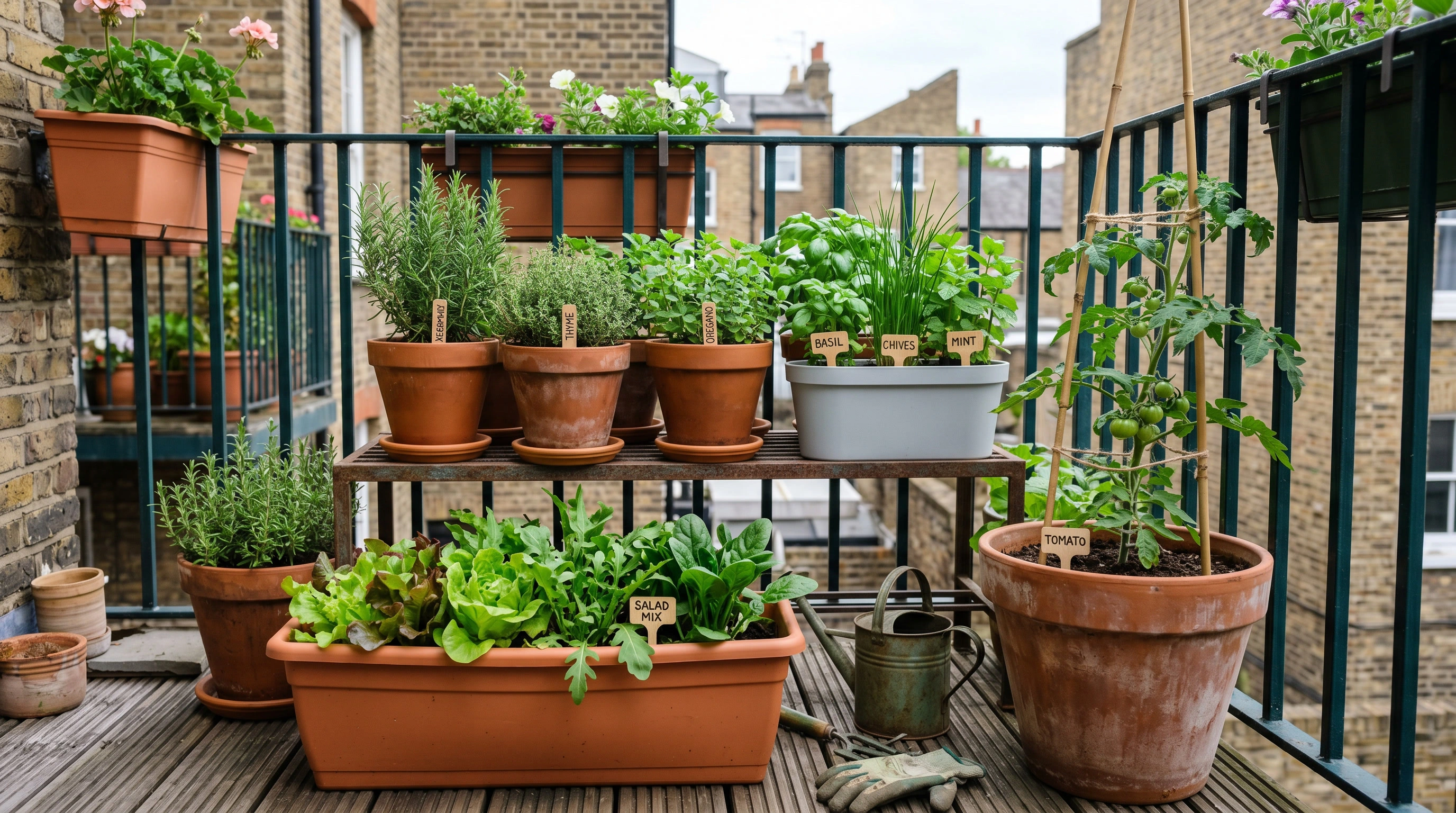
These are the items most small-space growers will use often, whether they grow on a windowsill, patio, balcony or outside step. You can start with very little, but these basics make the process cleaner and easier.
Small hand trowel
A small hand trowel is useful for filling pots, moving compost, making planting holes and tidying containers. For flats and balconies, choose something compact rather than a long-handled tool. A narrow trowel is easier to use in troughs, windowsill planters and small pots.
Gardening gloves
Gloves are not essential for every job, but they help when handling compost, rough pots, grow bags or thorny plants. Thin, flexible gloves are usually better for container gardening than heavy-duty gloves because you still need to handle small labels, seedlings and pots.
Small watering can
A small watering can is easier to manage indoors and on balconies than a large garden can. Look for one you can fill in a kitchen sink and lift comfortably when full. A narrow spout helps avoid splashing compost out of small pots.
Plant labels
Labels are easy to underestimate until you forget which pot contains basil, parsley, lettuce or tomato seedlings. They are especially useful if you sow several varieties at once or reuse similar-looking pots.
Potting tray
A potting tray helps contain compost indoors, on a balcony table or on a kitchen counter. It is not glamorous, but it can reduce mess a lot if you do not have a garden bench or outdoor work area.
Seed compost
Seed compost is finer and usually easier for small seedlings than chunky multi-purpose compost. You do not need a huge bag if you are starting a few herbs or salad leaves indoors. For larger containers, you can use suitable peat-free multi-purpose compost instead.
Useful for pots and containers
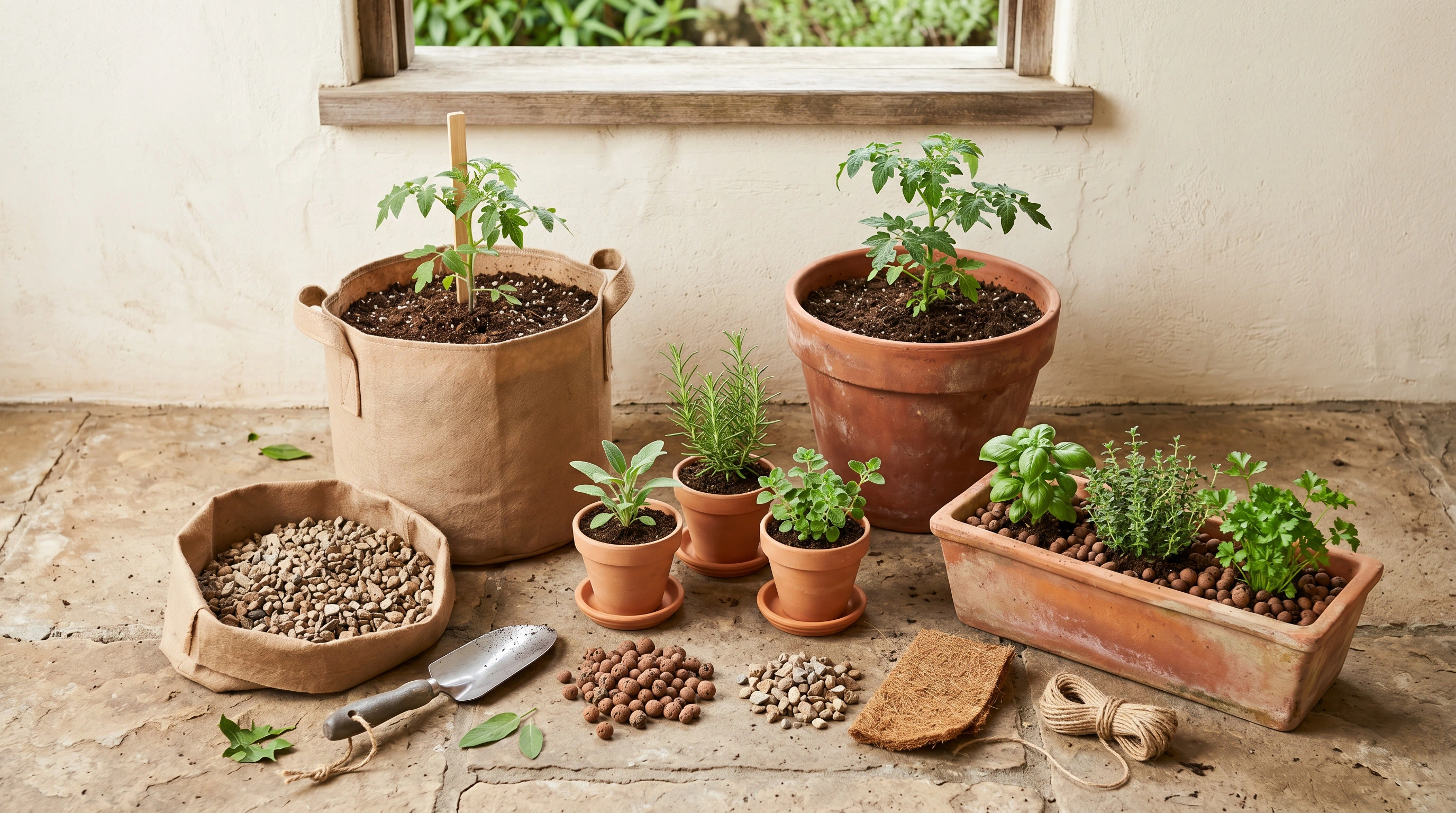
Most Grow No Garden readers are using pots, troughs, grow bags or containers instead of beds. The right extras can help with drainage, leaks and watering, especially indoors or on balconies.
If you are choosing containers for the first time, read How to Choose Pots for Balcony and Windowsill Gardening before buying a matching set.
Plant pot saucers
Saucers catch drips and help protect floors, shelves and balcony surfaces. Indoors, they are close to essential. Outdoors, they can be useful in summer but should not leave pots sitting in water for long periods after rain.
- Plant pot saucers
Plant pot feet
Pot feet lift outdoor pots slightly off the ground, which can help drainage and airflow. They are most useful for heavier patio pots or containers that sit on hard surfaces. On balconies, keep everything stable and avoid anything that makes a pot wobble.
Drainage mesh
Drainage mesh can stop compost falling through larger drainage holes while still letting water escape. It is useful when reusing containers, troughs or pots with wide holes. Avoid blocking drainage entirely.
Moisture meter
A moisture meter is optional, but it may help beginners who are unsure whether compost is wet below the surface. It should not replace checking the plant, compost and pot weight, but it can be a useful learning aid.
Vegetable grow bags, fabric grow bags and potato grow bags
Grow bags can be useful for renters because they are light before filling, often fold away, and work well for temporary growing. They still need compost, drainage and a stable place to sit. Fabric grow bags can dry out faster in warm or windy weather, while potato grow bags suit deeper crops better than shallow troughs.
- Vegetable grow bags
- Fabric grow bags
- Potato grow bags
For more detail, see Grow Bags vs Pots: Which Is Better for Renters? and How to Choose Grow Bags for Vegetables in Small Spaces.
Useful for seed starting
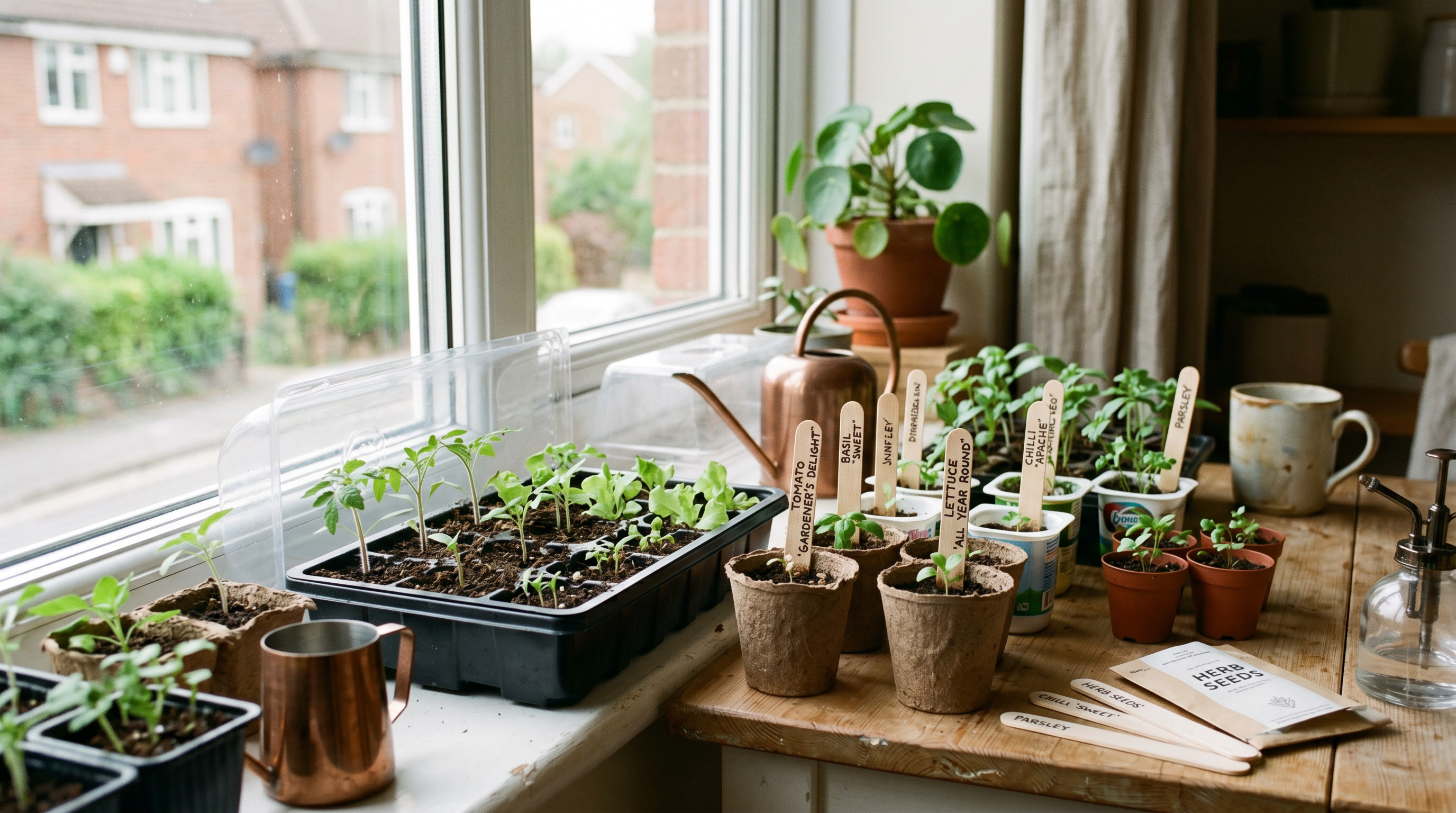
Seed starting is not required. Many beginners are better off buying one or two small herb plants first. But if you want to grow salad leaves, basil, tomatoes or other plants from seed, a few low-cost items make the process easier.
Seed trays with lids
Seed trays with clear lids help keep compost moist while seeds germinate. They are useful on windowsills where the surface can dry quickly. Remove or vent the lid once seedlings are growing well so air can circulate.
- Seed trays with lids
Windowsill propagator
A windowsill propagator is a compact tray and cover designed to fit narrow indoor spaces. It can be useful if you want a tidy setup rather than several loose pots and trays.
Spray bottle
A spray bottle can help moisten seed compost gently without washing tiny seeds into one corner of the tray. It is also useful for cleaning up small compost spills. Do not rely on misting alone once seedlings are larger; roots need proper watering.
- Spray bottle
Seed dibber and plant labels
A dibber helps make small holes at a consistent depth, though a pencil or chopstick can also work. Labels are more important, especially if you sow several trays at once.
- Plant labels
For a fuller setup guide, read Starting Seeds Indoors Without a Greenhouse.
Useful for watering
Watering is one of the biggest small-space gardening skills because pots dry differently from garden beds. Small pots, windy balconies, terracotta containers and fabric grow bags can all dry quickly, while indoor pots can suffer if water collects underneath.
Moisture meter
A moisture meter may help if you regularly overwater or underwater. Treat it as one clue, not the only answer. Plant size, weather, pot material and compost type still matter.
Watering spikes and drip irrigation kits
Watering spikes and small drip kits may help during hot spells or short trips away, but they are not magic. Test them before relying on them, and make sure overflow will not damage indoor surfaces or run onto a neighbour’s balcony.
Self-watering herb pots and window boxes
Self-watering planters can be helpful for herbs and salad leaves, especially if your pots dry out quickly. They still need checking, cleaning and topping up. They are not a reason to ignore plants for weeks.
- Self-watering herb pots
See How Often Should You Water Plants in Pots in the UK? for practical watering judgement.
Optional for indoor growing
Indoor growing can work well for herbs and seed starting, but light is often the limiting factor. A sunny windowsill may be enough for some herbs in spring and summer. In darker flats, a small grow light can help, especially outside the brightest months.
Small LED grow light for indoor plants
A small LED grow light can support herbs or seedlings where natural light is weak. Look for a compact setup that fits your shelf or windowsill safely, without cables trailing across wet areas.
Clip-on grow light
A clip-on grow light may suit a desk, shelf or counter where you only have a few pots. Check that it can be positioned securely and that the light can sit close enough to the plants without getting in the way.
Read Indoor Grow Lights for Herbs: When Do You Actually Need Them? before buying one.
Optional for composting
Composting in a flat is possible, but it is not essential for starting a small-space garden. It also depends on storage, smell tolerance, collection options and how much food waste you produce.
Kitchen compost caddy
A kitchen caddy is mainly for collecting scraps before they go to council food waste, a compost system or an outdoor bin. Choose something easy to clean and small enough for your kitchen.
- Kitchen compost caddy
Bokashi bin
Bokashi systems can suit some flats because they are sealed, but they require bran and a plan for what happens afterwards. They do not create finished compost by themselves.
Indoor compost bin and compost scoop
Indoor compost bins vary widely. Some are caddies, some are wormeries, and some are small processing systems. Read the product instructions carefully and think about where the material will go after processing.
- Indoor compost bin
For a realistic overview, read Composting in a Flat: What Are the Realistic Options? and Indoor Compost Bins: What to Know Before Buying One.
What to buy first
If you are starting from nothing, keep it simple. Choose one growing place, one container setup and one easy crop. A windowsill herb pot, a trough of salad leaves, or a balcony tomato in a large container is enough to learn from.
A sensible first setup might be:
- One or two containers with drainage holes
- Saucers or trays if growing indoors
- Suitable compost
- Plant labels
- A small watering can
- A trowel or scoop
- One packet of seeds or one young plant
Then wait. Add seed trays only if you want to start from seed. Add grow lights only if your indoor light is genuinely weak. Add self-watering kit only if watering is becoming a problem. Add composting kit only if you have a clear way to manage it.
For most beginners, the best kit is the kit that lets you grow one thing well without making your flat, balcony or patio harder to live with.
FAQ
Do I need all of this to start?
No. You can start with a pot, compost, a plant or seeds, labels and a way to water. The rest is optional. Buy extra kit when it solves a clear problem, such as messy potting indoors, poor light, irregular watering or seed trays drying out.
What should I buy first?
Start with containers, compost, labels, a small watering can and one easy crop. Herbs, salad leaves and compact tomatoes are common beginner choices, depending on light and space.
Are grow bags better than pots?
Not always. Grow bags can be useful for temporary, renter-friendly setups and larger crops, but pots are usually easier to move, reuse and fit into tight spaces. The better choice depends on your crop, watering routine and available floor space.
Do I need a grow light?
Only if your plants are not getting enough useful light. Many herbs and seedlings can manage on a bright windowsill at the right time of year. A grow light is more useful in darker flats, winter seed starting, or rooms where seedlings become pale and stretched.
Is composting in a flat worth it?
It can be, but it is not essential. A kitchen caddy, bokashi bin or indoor compost bin may help if you have the space and a plan for the material afterwards. If you are just starting to grow, focus on plants first and composting later.
What to read next
If you are choosing your first setup, read the Beginner’s Guide to Small-Space Gardening for UK Renters. If containers are your main growing method, move on to Container Gardening for Beginners: A UK Small-Space Guide. For practical container choices, read How to Choose Pots for Balcony and Windowsill Gardening.