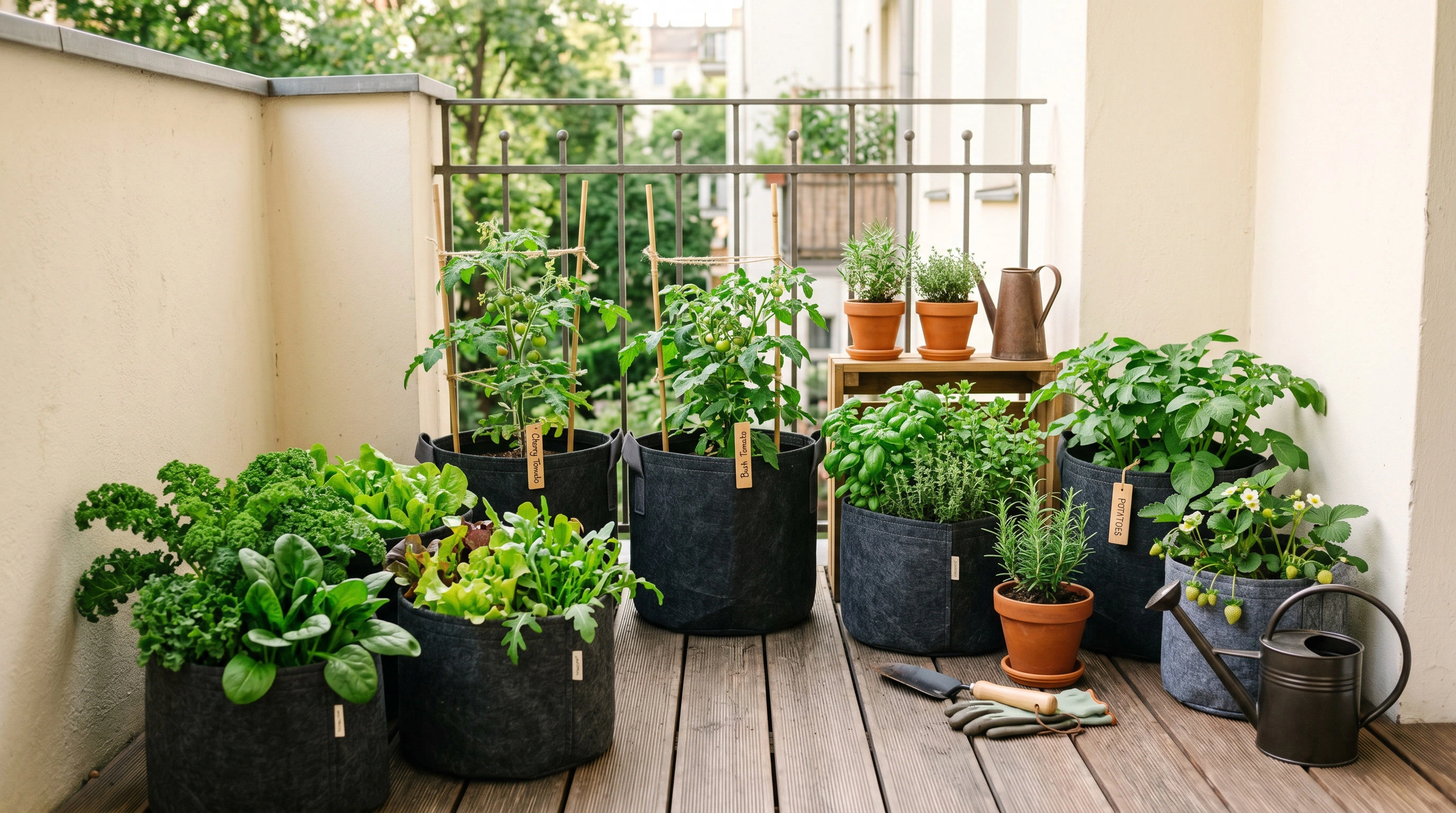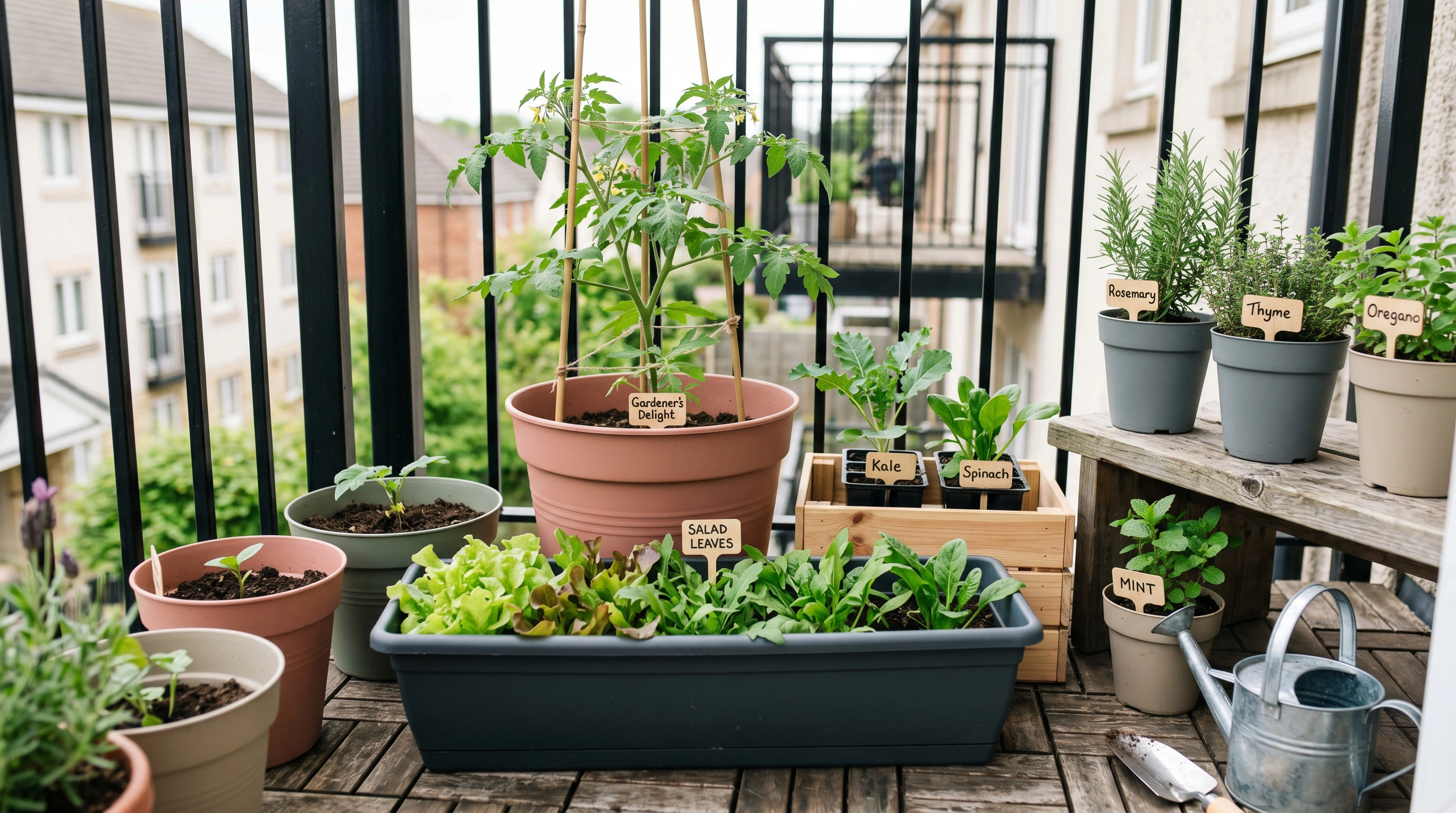
Choosing balcony planters is not just about finding something that looks nice. In a small UK outdoor space, the right planter affects drainage, watering, wind resistance, root room, weight, crop choice and how easy the setup is to maintain.
That matters even more if you rent or live in a flat. A planter may need to stay removable, avoid damaging surfaces, fit through doors, cope with wind and hold enough compost to keep plants alive during warm spells.
This guide explains how to choose a practical balcony planter for herbs, salad leaves, strawberries, compact vegetables and other small-space crops without making the setup too heavy, messy or difficult to look after.
Who this guide is for
This article is for beginners growing in pots on balconies, patios or compact outdoor spaces. It assumes you want practical results without permanent installations, large budgets or unrealistic harvest claims.
Start from Beginner’s Guide to Small-Space Gardening for UK Renters if you need a full beginner overview, then use Container Gardening for Beginners: A UK Small-Space Guide if you want a wider container-growing guide.
Define success before you start
Before choosing a planter, decide what you want it to do. For a small balcony, success usually means one of three things:
- Reliable weekly harvests from herbs, leaves or compact crops.
- Fewer plant losses from drying out, wind or poor drainage.
- A setup that is easy to water, clean and move if needed.
Beginners often judge success by how full the balcony looks. In rented small spaces, reliability and manageability are usually better early measures.
Check the space before you buy
Light, wind and access determine which planter type will work. Take a week to observe direct sun hours, where wind hits hardest, how water drains, and whether you can reach every pot easily.
If your space is exposed, use How to Protect Balcony Plants from Wind to reduce stress on plants and watering demand. If your space is shaded, choose crops that tolerate lower light instead of forcing tomatoes or chillies into a poor position.

Types of balcony planters
Free-standing pots
Free-standing pots are the safest starting point for most renters. They are easy to move, widely available and suitable for herbs, strawberries, compact vegetables and small shrubs if the size is right.
Choose pots with drainage holes. Use trays or saucers where water could mark surfaces or drip below. Avoid going too small for plants that need steady moisture.
Troughs and window-box style planters
Troughs are useful for salad leaves, herbs, spring onions and other shallow-rooted crops. They make good use of narrow balcony edges or walls, but they can dry quickly if shallow or exposed.
They work best when you grow crops with similar watering needs together. Mixing thirsty plants with drought-tolerant herbs in one trough can make watering harder.
Raised balcony planters
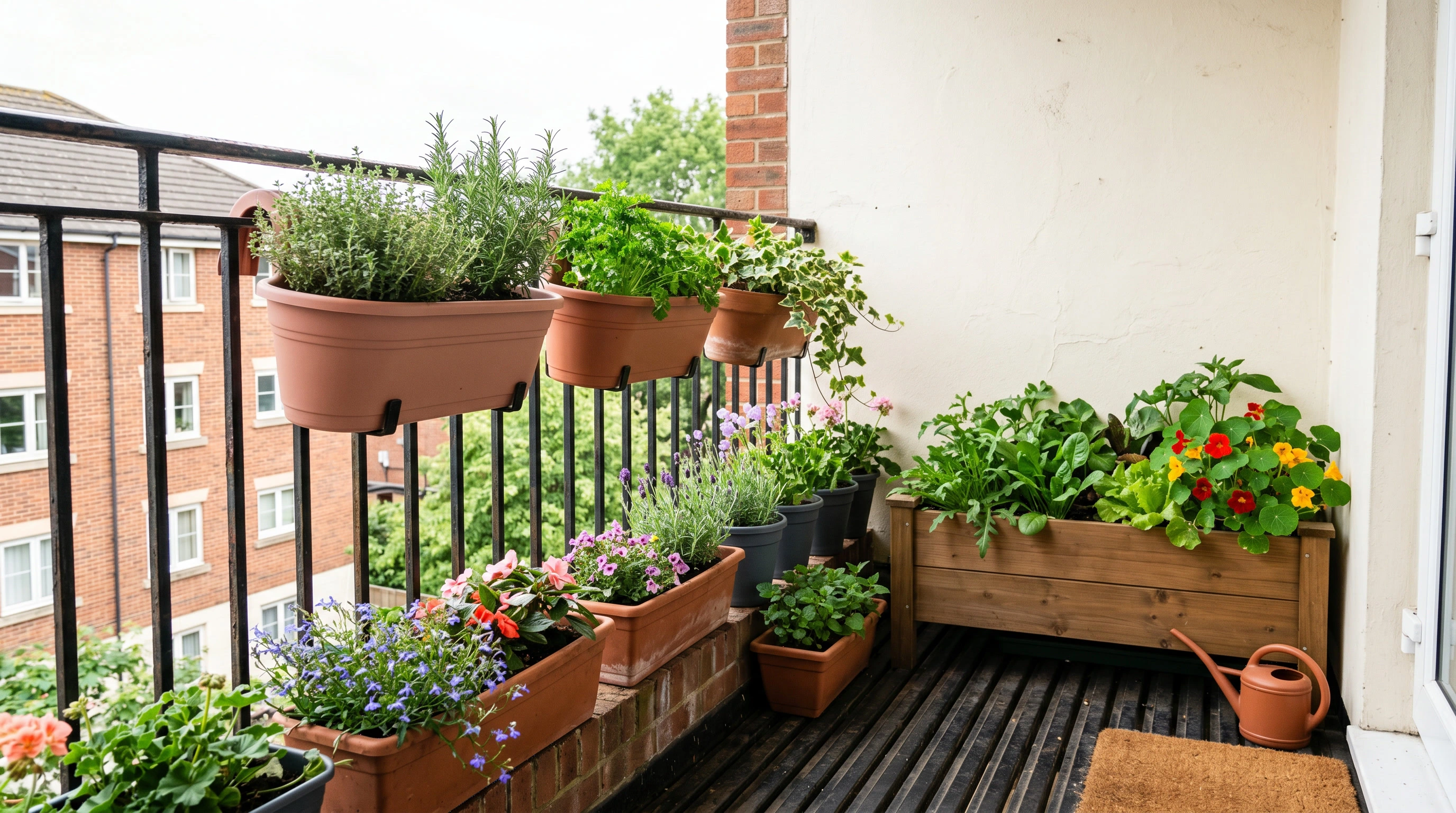
Raised planters can be easier to work with because you do not have to bend as much. They can suit herbs, leaves and compact vegetables, but they also take up more floor space and may become heavy once filled.
Check the filled weight before choosing a large raised planter for a balcony. Compost, water and mature plants add more weight than many beginners expect.
Railing planters
Railing planters can save floor space, but they need more caution. They must be secure, suitable for the rail design, allowed by your building rules and positioned so they do not drip onto neighbours or shared areas.
For renters, they are usually better for lighter crops such as herbs and flowers than for heavy, thirsty vegetable plants.
Hanging planters
Hanging planters can work for strawberries, trailing herbs or compact decorative planting, but they dry quickly and need secure fixing. They are not ideal if you are unsure about building rules or cannot water them safely.
If in doubt, start with floor-standing containers first.
A simple setup plan
1. Choose crop priority
Pick one main crop type for this setup cycle: leaves, herbs, strawberries, compact vegetables or a small mixed arrangement.
2. Choose container volume and drainage
Match planter depth to crop duration and root demand. Use drainage holes, and add trays or saucers where spills matter.
3. Build watering rhythm
Check moisture by touch, not just by timetable. Adjust frequency with season, wind, sun and planter size.
4. Protect manageability
Leave access paths, keep containers movable where possible, and avoid overloading your balcony with too many varieties at once.
5. Scale deliberately
After two stable weeks, add one additional planter or crop rather than rebuilding the whole space.
Decision checklist
- Is this crop realistic for my light level this season?
- Does the planter have enough depth and compost volume?
- Can excess water drain without causing damage or dripping below?
- Can I water this reliably in warm and windy spells?
- Is the setup removable and renter-friendly?
- Can I maintain this without buying specialist equipment immediately?
If you answer no to several points, simplify before buying more planters.
Common mistakes and fixes
Mistake: choosing by popularity, not conditions
Fix: match the planter and crop to your actual light, wind and access.
Mistake: tiny decorative containers for long-season crops
Fix: use enough compost volume for stable moisture and roots.
Mistake: watering on fixed days regardless of weather
Fix: check compost and container weight before watering.
Mistake: expanding too quickly
Fix: build one reliable routine, then add one new planter at a time.
Mistake: ignoring renter practicalities
Fix: keep setups free-standing, clean, removable and easy to move.
When in doubt, reduce complexity. One healthy planter with a stable routine teaches more than five struggling pots.
Seasonal tips
In spring, build the core setup and begin with forgiving crops. In summer, focus on watering consistency and wind management during hot spells. In autumn, shift toward leafy crops and herbs that can handle cooler conditions. In winter, keep expectations practical and focus on maintenance, not maximum output.
Use Year-Round Balcony Planting Calendar for the UK to sequence crops without overloading your space.

Choosing the right planter for your space
For most beginners, the best balcony planter is the one that makes watering and access easy. A narrow trough may be perfect for salad leaves, while a deeper pot may be better for tomatoes, strawberries or dwarf beans. A raised planter may make care easier, but only if the filled weight and footprint are realistic.
Use planter type as a practical decision, not a style decision. Ask what the plant needs, what the balcony can handle, and how easy the setup will be to maintain through a normal week.
FAQ
Can beginners use balcony planters as a first project?
Yes. Start with one or two planters, choose forgiving crops, and learn your watering routine before adding more.
Are railing planters safe for renters?
They can be, but only if they are secure, allowed by your building rules, suitable for the railing and positioned so they do not drip or fall. Free-standing pots are usually the simpler first choice.
What planters work best for north-facing balconies?
Use planters for leafy crops, herbs and shoots rather than sun-hungry fruiting crops. Choose containers that hold moisture steadily without staying waterlogged.
Do I need premium pots or tools?
No. Good drainage, sensible sizing and consistency matter more than premium kit.
What if I miss watering sometimes?
Choose forgiving crops, use slightly larger practical containers, group plants by watering needs, and avoid very small pots that dry out quickly.
Worked examples for different small-space setups
Example 1: Bright kitchen windowsill in a rented flat
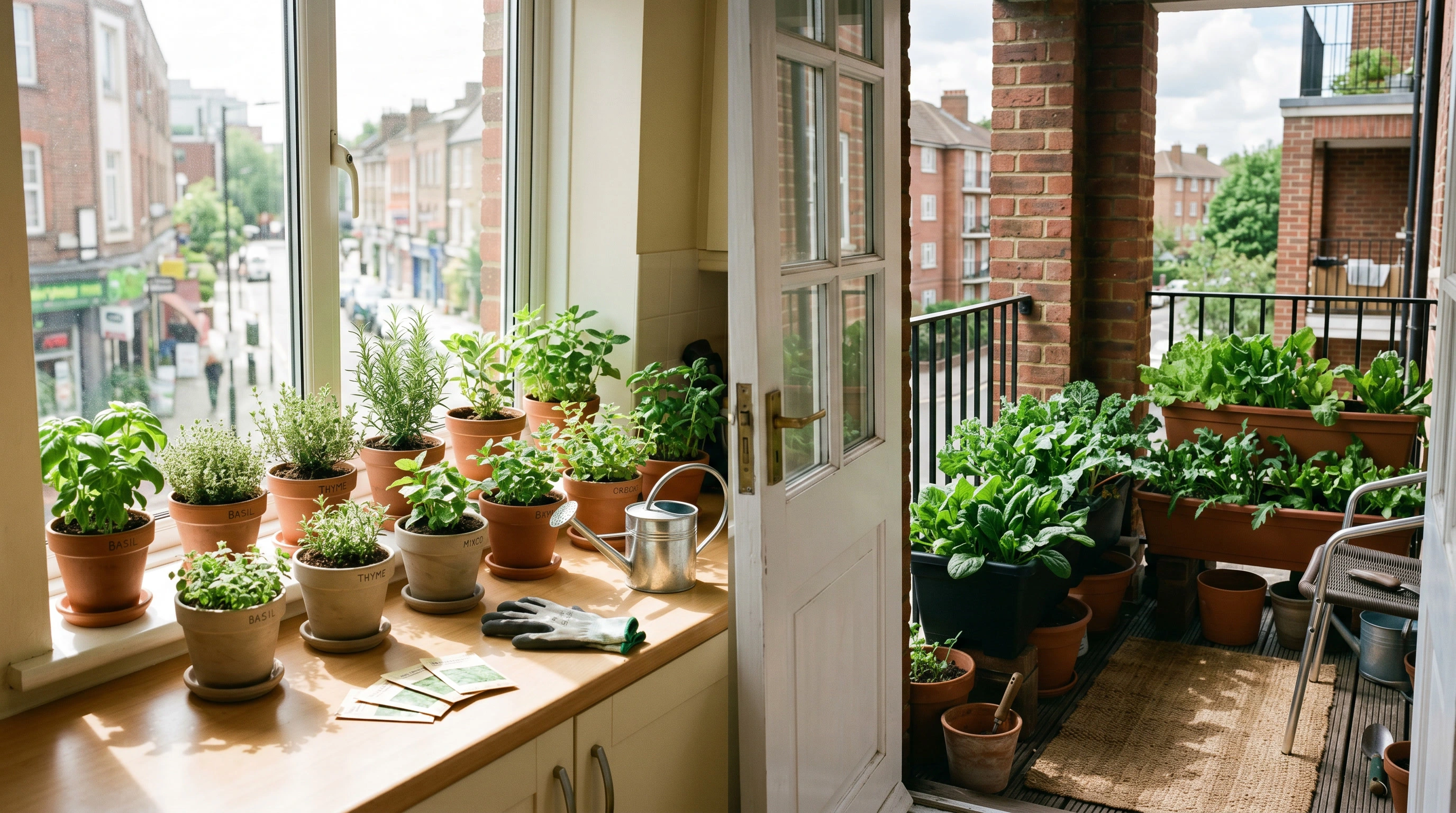
A bright south or west-facing sill can support a useful mix of herbs and quick leafy crops, but only if container choices and watering habits are realistic. Use separate pots for vigorous plants, keep trays tidy, and avoid crowding too many seedlings into one small area. If growth slows in winter, reduce expectations and focus on maintenance rather than constant harvesting. This pattern is normal in UK light conditions.
Example 2: Exposed balcony with inconsistent wind
On a windy balcony, the same crop can behave very differently week to week. Larger practical containers, grouped placement and a simpler plant mix usually outperform decorative arrangements with many small pots. If wind stress is recurring, move tall plants to sheltered corners and prioritise compact crops until the system is stable.
Example 3: Small patio with mixed sun and shade
Patios often have micro-zones created by walls, fences and paving. Treat each zone differently: thirsty and sun-tolerant crops in brighter areas, steady leafy crops in cooler sections. Grouping plants by moisture demand reduces the number of conflicting watering decisions you make each day.
Common problems and fixes
When results are inconsistent, identify the bottleneck before changing everything.
- Fast drying plus drooping leaves usually points to container volume or exposure mismatch.
- Slow, weak growth with healthy-looking compost often indicates low-light crop mismatch.
- Repeated yellowing in wet compost usually means drainage or overwatering issues.
- Ongoing mess or missed care often means the setup is too complex for your routine.
Fix one bottleneck, observe for at least a week, then decide whether a second change is needed. This is slower than making five changes at once, but it gives clearer results and fewer setbacks.
Your first month
Week 1: confirm light and access patterns, then choose one core crop.
Week 2: set up the planter, tray and compost with cleanliness and drainage in mind.
Week 3: run a steady watering rhythm and record how quickly the compost dries.
Week 4: add one supporting crop only if the first setup is stable.
By the end of 30 days, you should know much more about your own balcony than any generic checklist can tell you. Use that information to refine the setup rather than restarting from scratch.
Before spending more
Before expanding, estimate the weekly cost and time of your current setup. Containers that look cheap can become expensive if they dry too quickly, crack easily or need replacing. Adding more crops only helps if your weekly care time can absorb them.
A useful planning split is:
- Core spend: compost, planters with drainage, trays where needed and basic tools.
- Optional spend: upgrades that solve a confirmed problem.
For a compact checklist of useful planter setup extras, see the small-space gardening kit list and keep any purchases tied to a real problem.
Adapting this guide by space type
Flat with only windowsills
Prioritise herbs and leafy crops with compact containers and careful drainage management.
Balcony-heavy setup
Prioritise wind management, larger practical containers and grouped watering zones.
Small patio setup
Prioritise crop sequencing and access so you can water and harvest without moving everything.
Before adding more planters
Ask yourself: am I keeping plants alive through normal busy weeks, not just good weeks? Are surfaces staying clean and dry? Are crops being used in meals? If yes, scale by one container at a time. If no, stabilise the current setup first.
Weekly notes that help
Many beginners improve fastest when they write short weekly notes: what grew well, what struggled, and what changed in weather or routine. These notes reveal patterns that are easy to miss day to day. For example, you might notice that one balcony corner dries out quickly during windy evenings, or that a windowsill gets strong light in spring but much less by late autumn.
Use notes to make conservative adjustments rather than full resets. If one container repeatedly underperforms, swap crop type before replacing all equipment. If watering becomes stressful, reduce plant count until the routine feels sustainable again. This is not a setback; it is a systems improvement.
For renters, stability and portability are long-term advantages. A setup you can maintain through ordinary weeks, bad weather and busy schedules will outperform a high-maintenance setup that only works when conditions are perfect.
Keep the setup manageable
Keep this setup manageable. If care starts feeling rushed, reduce container count before adding complexity again. Sustainable small-space gardening is built on routines you can repeat through ordinary weeks.
A final practical check: if your current setup already feels hard to maintain, simplify before expanding. Stable routines usually produce better outcomes than ambitious but fragile plans.
Related guides
- Beginner’s Guide to Small-Space Gardening for UK Renters
- Container Gardening for Beginners: A UK Small-Space Guide
- How to Choose Pots for Balcony and Windowsill Gardening
- Are Vertical Planters Worth It for Small Gardens and Balconies?
- How to Protect Balcony Plants from Wind
Next step
Pick one planter decision from this guide and apply it this week. Then continue with How to Choose Pots for Balcony and Windowsill Gardening or How Often Should You Water Plants in Pots in the UK? depending on your biggest bottleneck.