* Some links may be affiliate links. See the footer disclosure.
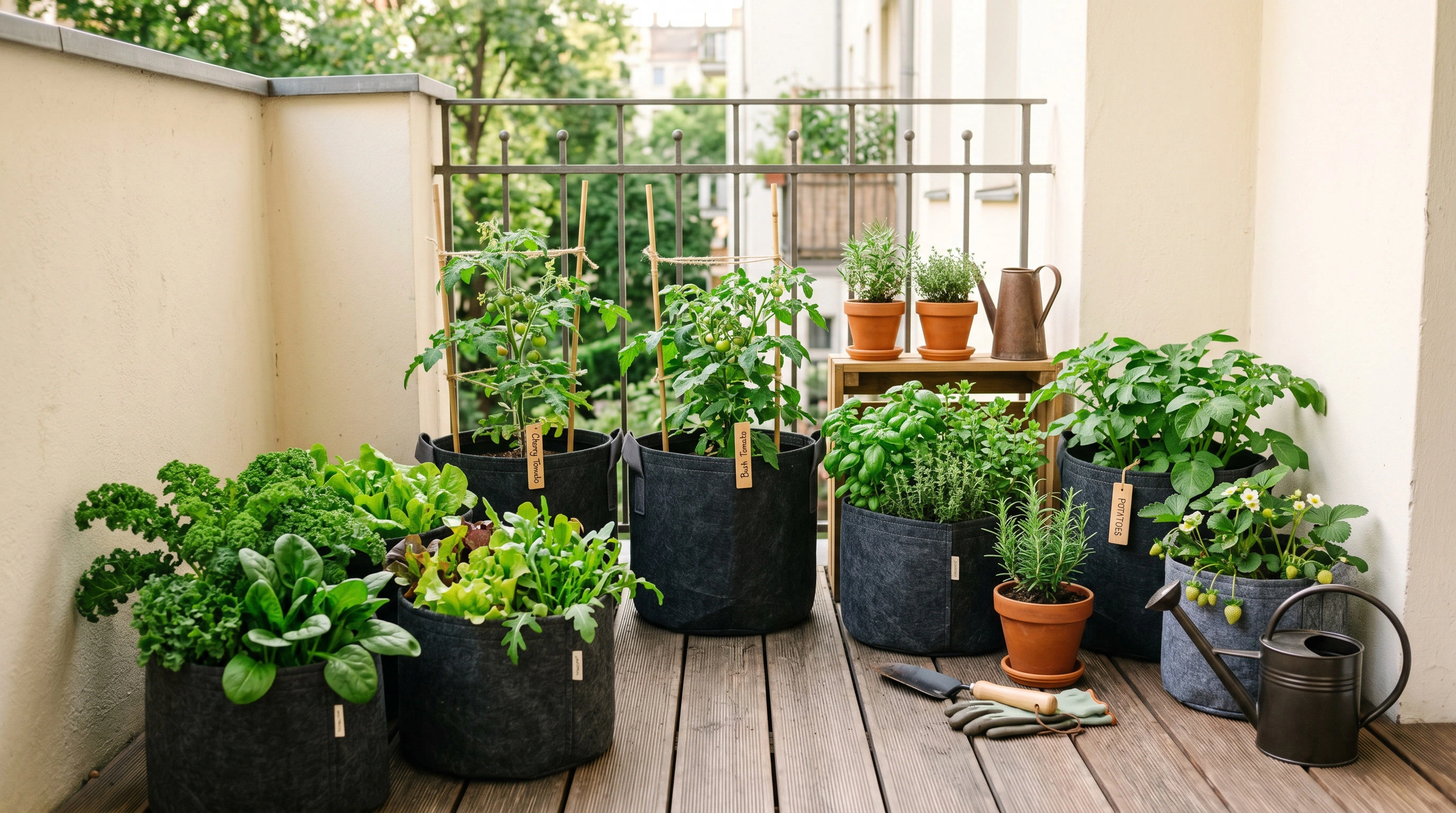
Grow bags can be a good fit for renters because they are lighter than many rigid pots and easy to store when empty. But not every grow bag is practical for balconies, patios, or small outdoor corners.
This guide focuses on what to check before buying, where grow bags work well, and when standard pots may be a better choice for a small-space setup.
Who should use grow bags
Grow bags are often strongest for:
- Renters who want portable setups
- Patios where storage space is limited
- Seasonal crops where containers may be packed away later
- Growers testing vegetables before investing in rigid planters
They are less ideal where:
- Daily watering access is difficult
- Surfaces need strict leak control
- You need highly decorative permanent displays
What to compare before buying
1. Volume and dimensions
Choose bag size by crop root demand, not by generic “vegetable grow bag” labels.
- Smaller bags: herbs, quick leaves, trial plantings
- Medium bags: compact tomatoes, chillies, dwarf beans
- Larger bags: higher-volume fruiting crops or mixed plantings
2. Material thickness
Thin material can lose shape quickly and dry faster in wind. Very thick material can hold moisture longer but may be heavier when wet.
3. Handle strength
Handles matter for renters. Look for reinforced stitching and clear load expectations from the manufacturer.
4. Drainage behaviour
Good drainage is essential, but excessive runoff can be messy on balconies. Pair bags with suitable trays or positioning where practical.
5. Stability
Some tall narrow bags tip more easily in wind. Wider bases are usually safer in exposed spaces.
Shortlist checks before buying
Use this quick shortlist:
- Remove any option without clear dimensions.
- Remove any option with weak handle feedback.
- Keep only options with drainage details and solid stitching notes.
- Choose final size based on your target crop and watering routine.
This avoids buying purely by price or photos.
Grow bag options to compare
If you are ready to compare products, focus on size, stitching, drainage and whether the bag suits the crop rather than choosing by photos alone. The small-space gardening kit list gives a wider beginner equipment overview.
- Vegetable grow bags: See examples
- Fabric grow bags: See examples
- Potato grow bags: See examples
Crop suitability overview
| Crop type | Typical grow bag fit | Main caution |
|---|---|---|
| Herbs | Small to medium | Can dry quickly in warm spells |
| Salad leaves | Medium/wide shallow styles | Keep sowing density sensible |
| Compact tomatoes | Medium to large | Needs consistent watering and support |
| Strawberries | Medium | Watch drainage and runner spread |
| Dwarf beans | Medium to large | Wind exposure can stress stems |
Use Growing Vegetables in Pots: A Beginner Guide for Small Spaces if you are still choosing crops.
Grow bags vs pots in real life
Grow bags are often easier to store and move when empty. Pots often look tidier, hold shape better over time, and can be easier to position on tight ledges.
Read Grow Bags vs Pots: Which Is Better for Renters? for a full side-by-side breakdown.
Watering and maintenance realities
Grow bags can dry faster than expected in warm, breezy weather. Build your routine around checks, not assumptions.
- Check moisture by touch
- Water thoroughly when needed
- Avoid letting bags cycle from bone-dry to saturated repeatedly
- Use sensible spacing to improve airflow and access
For watering routines, see How Often Should You Water Plants in Pots in the UK?.
Common buying mistakes
Buying by discount alone
Very cheap bags can be false economy if stitching fails early.
Choosing oversized bags for tiny spaces
Large bags are hard to manage when wet and can overcrowd access.
Ignoring wind exposure
Top-heavy crop choices in unstable bags can become frustrating fast.
Expecting low-maintenance without routine
Grow bags still need consistent checks and seasonal adjustments.
Use general safety judgement in rented spaces: avoid blocking walkways, keep drainage from causing nuisance, and avoid overloading edges or railings.
FAQ
Are grow bags better than pots?
It depends on your space and routine. Grow bags are often more portable; pots are often more stable long-term.
What size grow bag is best for tomatoes?
Use crop-specific sizing guidance and avoid undersized bags for fruiting plants.
Do grow bags need trays?
Sometimes. On sensitive surfaces or balconies, trays can help manage runoff.
Can I reuse grow bags?
Many can be reused if cleaned and still structurally sound.
Should beginners start with many grow bags?
Usually no. Start with a small number and scale once maintenance is stable.
Related guides
- Container Gardening for Beginners: A UK Small-Space Guide
- Grow Bags vs Pots: Which Is Better for Renters?
- How to Choose Pots for Balcony and Windowsill Gardening
- Growing Vegetables in Pots: A Beginner Guide for Small Spaces
Next step
If you are deciding between container types, compare this guide with Grow Bags vs Pots: Which Is Better for Renters? before buying.