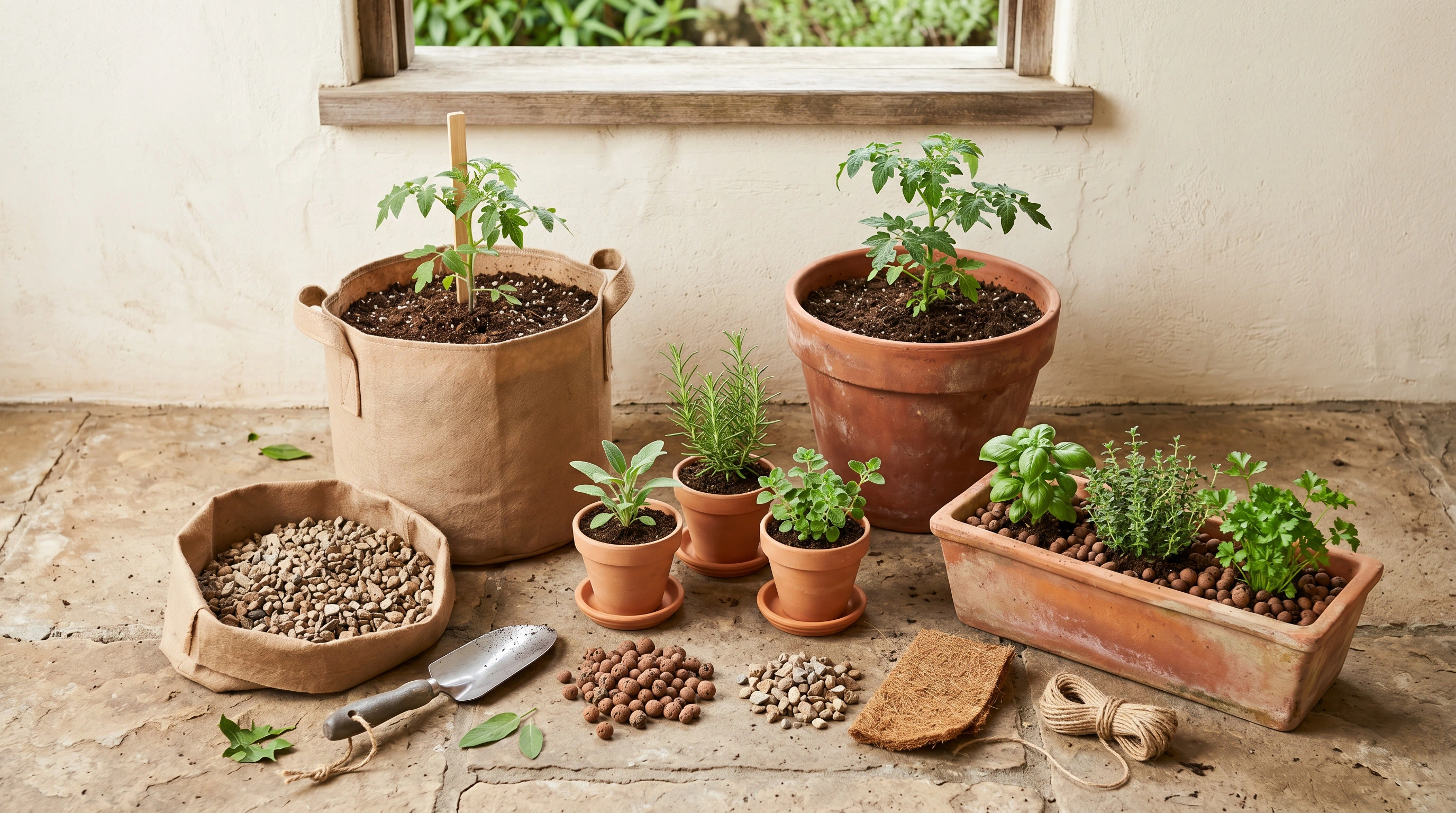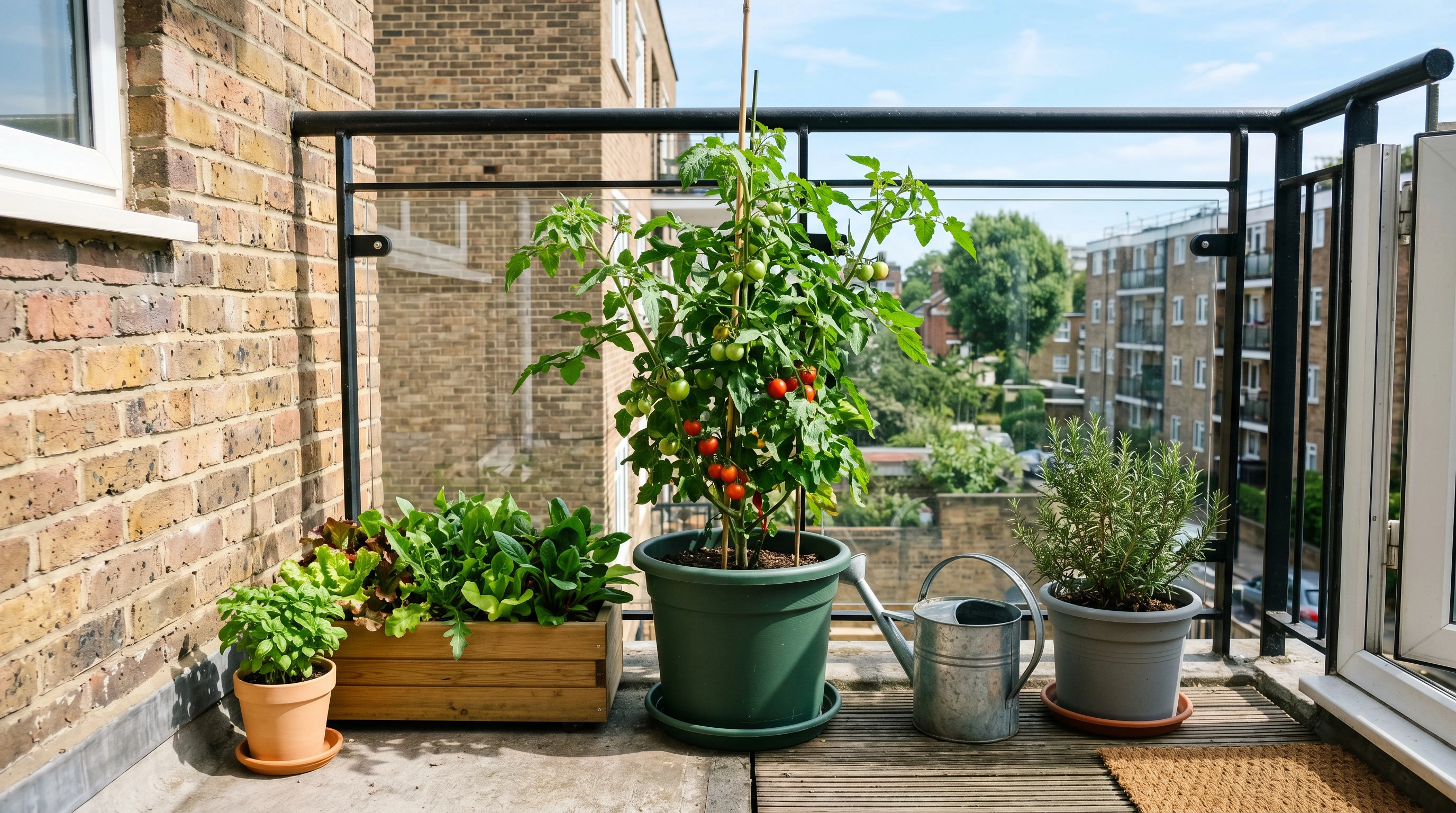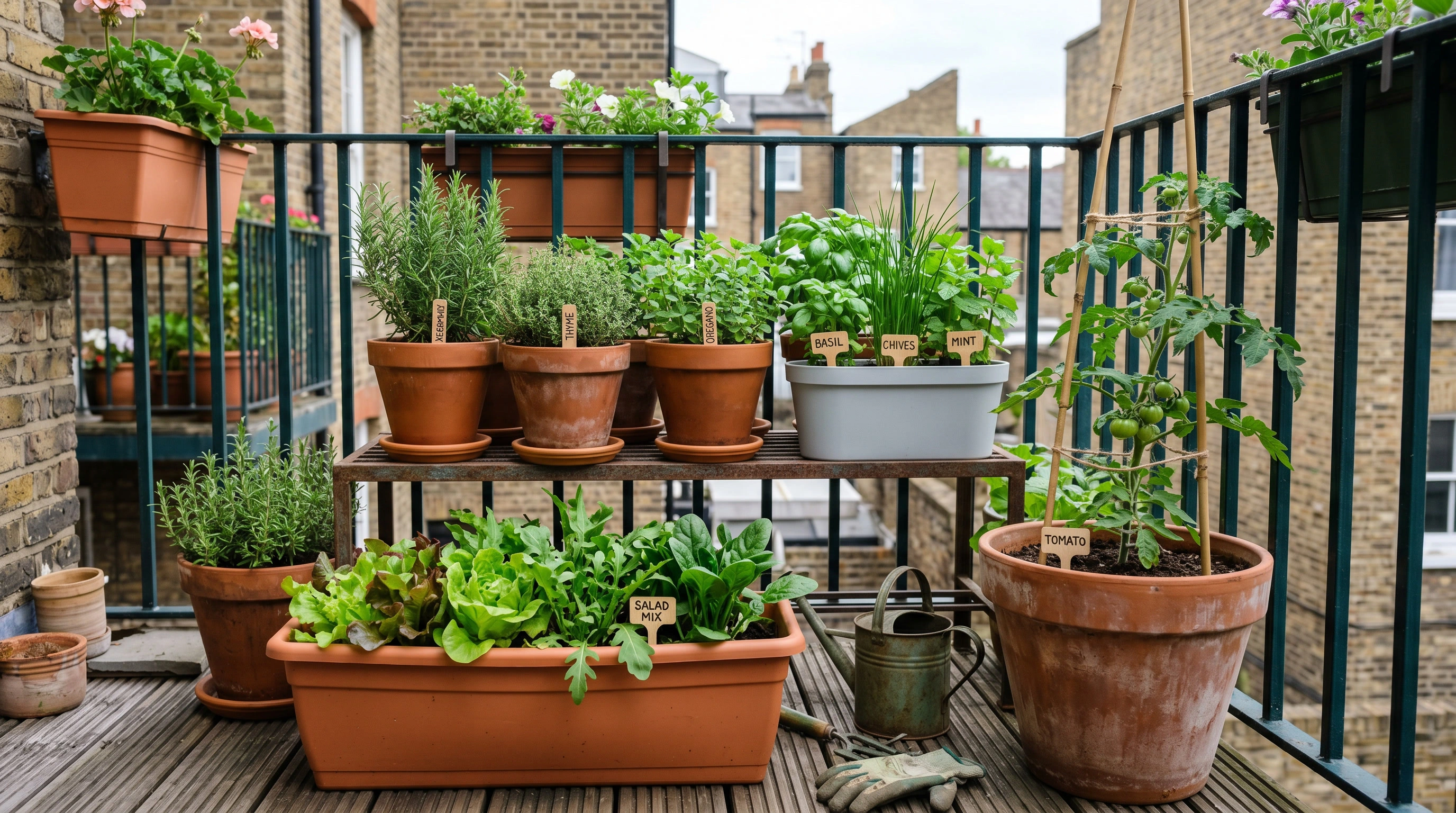
Container gardening is often described as the easy version of traditional gardening. In a small UK home, it can actually need more thought. The container you choose affects watering, root health, crop choice, drainage, stability and how much effort the setup takes to maintain.
That matters if you rent, live in a flat, share outdoor space, or only have a balcony, patio or windowsill. You may need everything to stay removable, tidy and light enough to manage. You may also have limited storage, limited direct sun and no easy outdoor tap.
This guide walks through container gardening from the ground up: how to choose a practical spot, match crops to containers, avoid watering problems, and build a small setup you can actually keep going.
Start with the part you need
If you are brand new, read this in order once. After that, come back to the part that matches your current problem:
- Crop choice not clear: use the crop selection section.
- Containers confusing: go to the shape and sizing sections.
- Watering inconsistent: use the watering consistency section.
- Setup feels overwhelming: use the Your first month.
When to use this guide
If you are still deciding whether small-space gardening is realistic for your home, start with the Beginner’s Guide to Small-Space Gardening for UK Renters. That guide covers the bigger picture: light, rented-home limitations, budget, mess, storage and what to grow without a garden.
Use this guide when you are ready to plan the containers themselves. It focuses on pots, compost volume, drainage, crop fit, watering and how to expand without creating too much work.
Why containers need extra thought
In a garden bed, soil volume, drainage and insulation are already part of the space. In container gardening, you create those conditions yourself. That is why a small pot in the wrong place can dry out too quickly, stay wet for too long, or restrict roots before the plant has a chance to settle.
Good container systems are built around daily reality:
- Can you reach each container quickly?
- Can you water without causing leaks or drips?
- Can roots grow without becoming cramped straight away?
- Can you move pots if weather changes?
- Can you keep the setup going during a busy week?
If the answer to several of these is no, simplify before adding more plants.
Step 1: Check light, wind and access
Before buying containers, spend a week observing light and exposure. Check the space in the morning, around midday and later in the afternoon. Make a note of direct sun, bright shade, deep shade and wind exposure.
For UK flats and balconies, three problems come up often:
- Less direct sun than expected because of nearby buildings, fences or balcony rails.
- More wind than expected on exposed balconies.
- Faster drying in small, dark or exposed containers during warm spells.
Use How Much Sunlight Do Herbs and Vegetables Need? to match crops to the light you actually have, not the light you hoped you had.
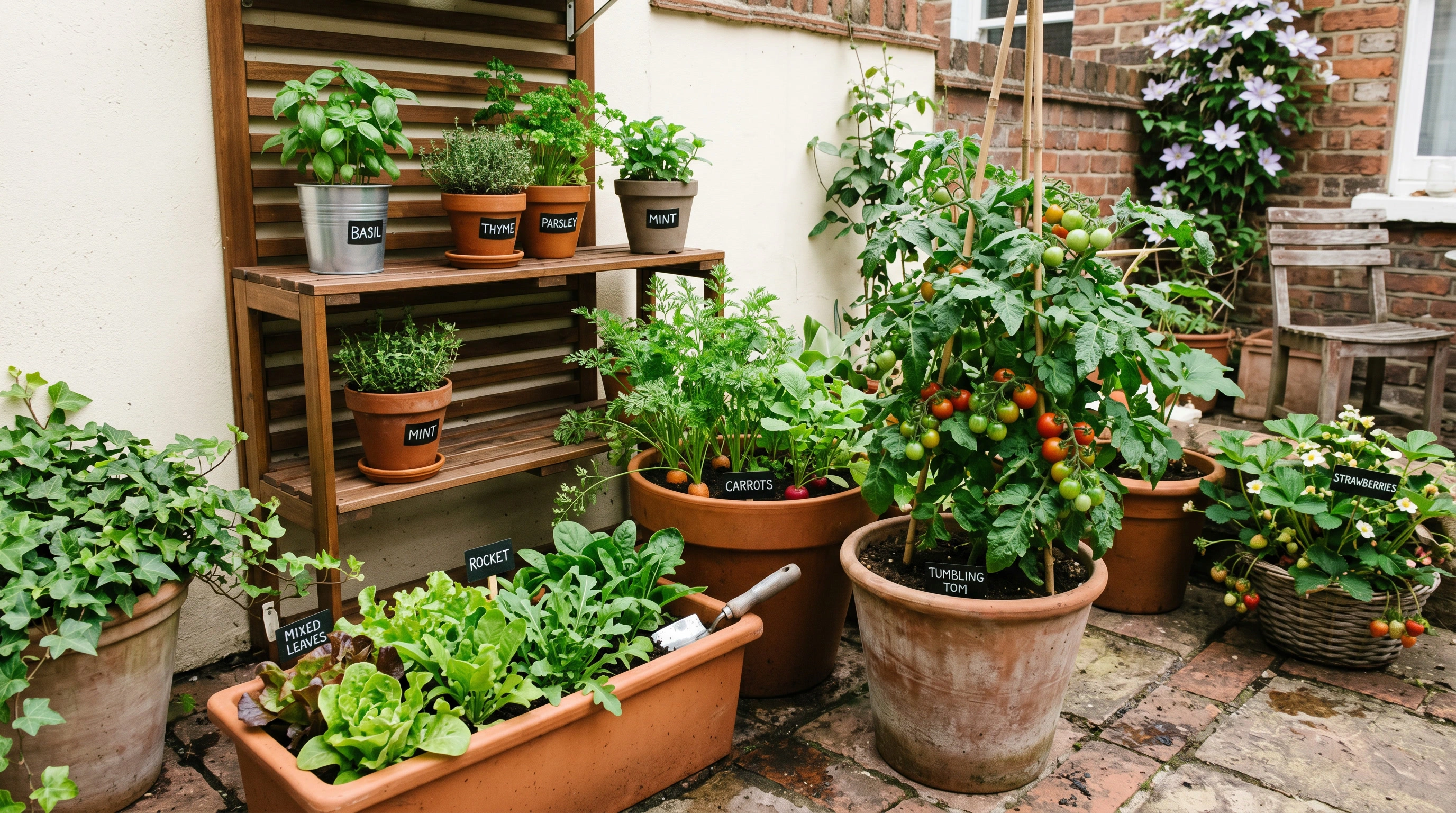
Step 2: Group containers by need
Most small-space growers do better with two simple zones rather than one crowded cluster of mixed pots.
- Zone A: quick-harvest crops such as herbs, salad leaves and shoots near the easiest watering point.
- Zone B: longer-season crops such as tomatoes, beans, strawberries or larger herbs in containers with enough compost volume to hold moisture more steadily.
This keeps the daily routine short while still giving you room to grow more than one type of plant.
Step 3: Match pot shape to crop needs
Container gardening is not just about choosing small, medium or large pots. Width, depth, drainage speed, warmth and weight all affect results.
- Shallow wide containers suit salad leaves and other short-cycle crops.
- Medium-depth containers work for many herbs and compact leafy crops.
- Deeper containers help longer-season plants because they give roots more space and hold moisture for longer.
For a complete sizing reference, use How to Choose Pots for Balcony and Windowsill Gardening.
Step 4: Make watering easier
Watering is usually the main challenge in container gardening. A fixed schedule can be misleading because pots dry at different speeds depending on weather, light, wind, compost volume and plant size.
A practical rhythm:
- Check daily in warm, sunny or windy weather.
- Check less often in cool, dull or low-light periods.
- Group plants with similar moisture needs together.
- Use trays or saucers where needed, but do not leave plants sitting in water for long periods.
Deep dive: How Often Should You Water Plants in Pots in the UK?.
Step 5: Grow with the seasons
Container gardening becomes easier when you rotate crops through the year instead of trying to grow everything at once. A small setup can still be productive if each container has a clear purpose each season.
- Spring: establish herbs and fast-growing leaves.
- Summer: grow fruiting crops where light is strong enough.
- Autumn: shift to cooler-season leaves and tidy-up jobs.
- Winter: reduce complexity and protect the plants worth keeping.
For month-by-month direction, use Year-Round Balcony Planting Calendar for the UK.
Choose crops that suit containers
Use this order when choosing what to grow:
- Light suitability.
- Container volume needed for roots and moisture.
- Usefulness of the harvest in small quantities.
- Maintenance demand compared with your weekly routine.
- Seasonal fit for the current month.
If a crop fails on light or container size, leave it for later. That is not giving up. It is choosing a crop that fits the space you have.
Recommended beginner container crops
- Parsley, chives, mint in its own pot, and coriander.
- Loose-leaf lettuce and mixed salad leaves.
- Radish and spring onions.
- Dwarf beans in suitable containers.
- Compact tomatoes where sun is strong.
- Strawberries in containers or baskets where practical.
Compare options with What Can You Grow Without a Garden in the UK? and Best Vegetables to Grow in Pots in the UK.
Balcony container tips
Balconies need extra care around wind, access, drainage and weight. Start with free-standing containers. Keep the setup removable and avoid fixing anything to walls, rails or shared structures unless your building rules clearly allow it.
For directional crop matching:
- Best Vegetables for North-Facing Balconies in the UK
- Best Vegetables for South-Facing Balconies in the UK
For wind resilience, read How to Protect Balcony Plants from Wind.
Windowsill container tips
Windowsill growing fails most often when pots are too small, drainage is poor, or winter light is treated like summer light. Indoor containers need careful watering because there is usually less airflow and less direct sun than outside.
For indoor herbs, start with forgiving varieties and clear watering habits before adding more demanding herbs.
Supporting guides:
- Windowsill Herbs for Beginners: What Works Indoors?
- Best Herbs to Grow on a Windowsill in the UK
- How to Keep Supermarket Herbs Alive for Longer
Budget and when to add more
Container gardening can become expensive if you buy too much before you know what works in your space. Start small and add only when a clear problem or opportunity appears.
- Stage 1: two to three core containers, compost, labels and a small watering can.
- Stage 2: one extra crop group after your first routine feels stable.
- Stage 3: optional upgrades such as self-watering pots, supports or specialist compost only where they solve a real issue.
Budget support: Cheap Ways to Start Gardening as a Renter.
If you are deciding which basics are actually useful, compare the small-space gardening kit list before buying upgrades.
Troubleshooting common container problems
Treat problems as clues, not personal failure.
- Wilting in sun often means the pot is too small, too exposed or drying too quickly.
- Yellowing in wet compost often points to poor drainage or overwatering.
- Weak growth usually means the crop needs more light, more space or better timing.
- A setup that feels like constant work is often too complicated for the available space and time.
Fix one variable at a time, then observe for a week before changing another.
Common mistakes in container gardening for beginners
Mistake 1: treating all containers the same
Different crops and positions need different volumes, depths and watering behaviour.
Mistake 2: buying aesthetics first
Decorative containers are fine, but drainage, stability and usability need to come first.
Mistake 3: no seasonal plan
Without a rough seasonal plan, containers can become cluttered and hard to reset.
Mistake 4: expanding before stabilising
Add more containers only when your base routine survives normal busy weeks.
Mistake 5: ignoring renter constraints
In rented homes, removable, tidy and non-permanent setups are usually the safest starting point.
This site provides practical guidance, not legal or structural advice. Check tenancy and building rules before attaching anything permanent, heavy or overhanging.
Your first month with containers
Week 1: check and choose
Map the light, choose one main growing spot and pick one easy crop type.
Week 2: build base containers
Set up two or three containers with drainage, suitable compost and trays where needed.
Week 3: lock watering rhythm
Check how quickly the compost dries and adjust based on weather, not a fixed calendar.
Week 4: expand once
Add one more container only if the first setup feels easy to maintain.
This pacing gives you visible progress without creating too much work too quickly.
FAQ
Is container gardening enough for useful harvests?
Yes, if crop choice matches the light and your routine. Herbs and salad leaves can be genuinely useful even in small quantities.
How many containers should a beginner start with?
Usually two to three well-managed containers are better than a large mixed collection that becomes hard to water and maintain.
Are self-watering pots necessary?
No. They can help in some situations, but it is better to learn how your pots dry out before relying on upgrades.
Can I use this guide if I only have a windowsill?
Yes. Choose smaller crops, focus on drainage, and be realistic about light levels, especially in autumn and winter.
What if I only have a shaded balcony?
Choose crops that tolerate lower light, such as leafy greens and some herbs. Avoid relying on sun-hungry fruiting crops unless the light improves in summer.
Should I read the beginner renter guide as well?
Yes, especially if you are still working out where to grow, what rules might affect you, or how much space and budget to start with.
Renter checks for containers
The most useful container systems for renters are safe, tidy and removable. A setup can look perfect on day one and still become a problem if it leaks, blocks access, catches too much wind, damages surfaces or needs constant watering.
Avoiding problems in small-space gardening is mostly about preventing obvious problems before they build up. Use trays and saucers where appropriate, check drainage paths, avoid unstable placement, and keep every container reachable without moving furniture or climbing over other pots.
A practical system is one you can maintain in poor weather and low-energy weeks, not only when you have ideal time.
Choose a reliable crop mix
A resilient crop mix combines at least one dependable crop with one optional challenge crop. Dependable crops include many herbs, cut-and-come-again leaves and quick shoots. Challenge crops include sun-loving fruiting plants that need good light, enough compost volume and consistent watering.
This balance protects motivation. If a tomato plant struggles, your herbs or salad leaves can still produce useful harvests while you learn what went wrong.
How to tell what is working
Use a simple before-and-after method:
- Write down current pain points in one sentence each.
- Make one change per week.
- Track whether the problem happens less often.
- Keep changes that reduce effort and remove changes that do not help.
Useful signs of improvement include fewer wilted plants on warm days, less standing water in trays, less yellowing from overwatering and less time spent fixing small problems.
Add containers slowly
Once your base setup is stable, expand slowly. A useful rule is to add one new container for every two containers that already feel easy to manage. This limits watering shock and keeps the setup from taking over the space.
Expansion should also match the season. Adding several thirsty summer crops at once can create hidden watering work. Add one new crop type, then see how it behaves during warm, windy or busy weeks.
Next season: improve without overcomplicating
By your second growing year, it can help to group containers by purpose:
- Daily-use herbs.
- Fast leafy harvests.
- Seasonal fruiting crops.
- One small experiment at a time.
This gives you room to try new things without risking the whole setup. It also makes it easier to reduce or move the garden if your living situation changes.
Keep it simple over time
Sustainable small-space gardening is less about buying more products and more about keeping a setup that works through ordinary weeks. Keep equipment simple, keep only containers that earn their place, and prioritise crops you actually use.
A calm, repeatable setup is what builds practical confidence over time. Come back to this guide whenever the garden starts feeling cluttered, confusing or too demanding.
Common bottlenecks
Good light, poor consistency
If the light is strong but results vary, focus on the routine: container grouping, watering order and a simpler crop mix. The issue is often process, not the plant itself.
Limited light, high ambition
If light is weak, reduce expectations for fruiting crops and shift towards leaves, herbs and shoots until seasonal light improves.
Plenty of enthusiasm, little time
Use fewer containers, forgiving crops and a simple watering routine. Consistency beats variety when time is limited.
Balance reliable crops and experiments
Think of your crop mix in three groups:
- Reliable crops: the herbs or leaves you expect to use most weeks.
- Higher-effort crops: plants with more reward but more watering, feeding or support needs.
- Learning crops: small experiments that are useful even if they fail.
This keeps gardening enjoyable because not every container has to perform perfectly.
Keep improving slowly
When something feels off, diagnose the bottleneck first: light, container size, watering, crop choice or overall complexity. Then fix one issue before adding new crops or equipment.
If you keep notes, simplify regularly and scale only when the routine is stable, container gardening can stay productive and low-stress even as your space, time and confidence change.
Ongoing care
As your container garden grows, keep a dependable core that gives regular results, then leave a smaller amount of space for experiments. This protects momentum and keeps learning enjoyable.
Create a monthly review habit: remove containers that repeatedly cause problems, keep the ones that stay practical, and rotate crop choices based on seasonal light and your real household routine.
The strongest small-space growers are rarely the ones with the most containers. They are the ones with clear routines, good crop-to-light matching, and the discipline to simplify when a setup becomes harder to maintain than it is worth.
Final container check
Return to this guide whenever your setup feels scattered. Re-centre on light, container volume, watering rhythm and crop fit, then simplify. Consistency is the main advantage of a strong container system.
What to read next by goal
- I need crop ideas: What Can You Grow Without a Garden in the UK?
- I need container sizing help: How to Choose Pots for Balcony and Windowsill Gardening
- I keep struggling with watering: How Often Should You Water Plants in Pots in the UK?
- I want a practical vegetables plan: Growing Vegetables in Pots: A Beginner Guide for Small Spaces
- I mainly grow indoors: Windowsill Herbs for Beginners: What Works Indoors?
Related guides
- Beginner’s Guide to Small-Space Gardening for UK Renters
- How to Choose Pots for Balcony and Windowsill Gardening
- How Often Should You Water Plants in Pots in the UK?
- What Can You Grow Without a Garden in the UK?
- Growing Vegetables in Pots: A Beginner Guide for Small Spaces
Next step
Pick the biggest problem in your setup right now: crop choice, container size or watering. Then read the matching guide and make one change this week. One useful improvement is better than a long plan you never use.