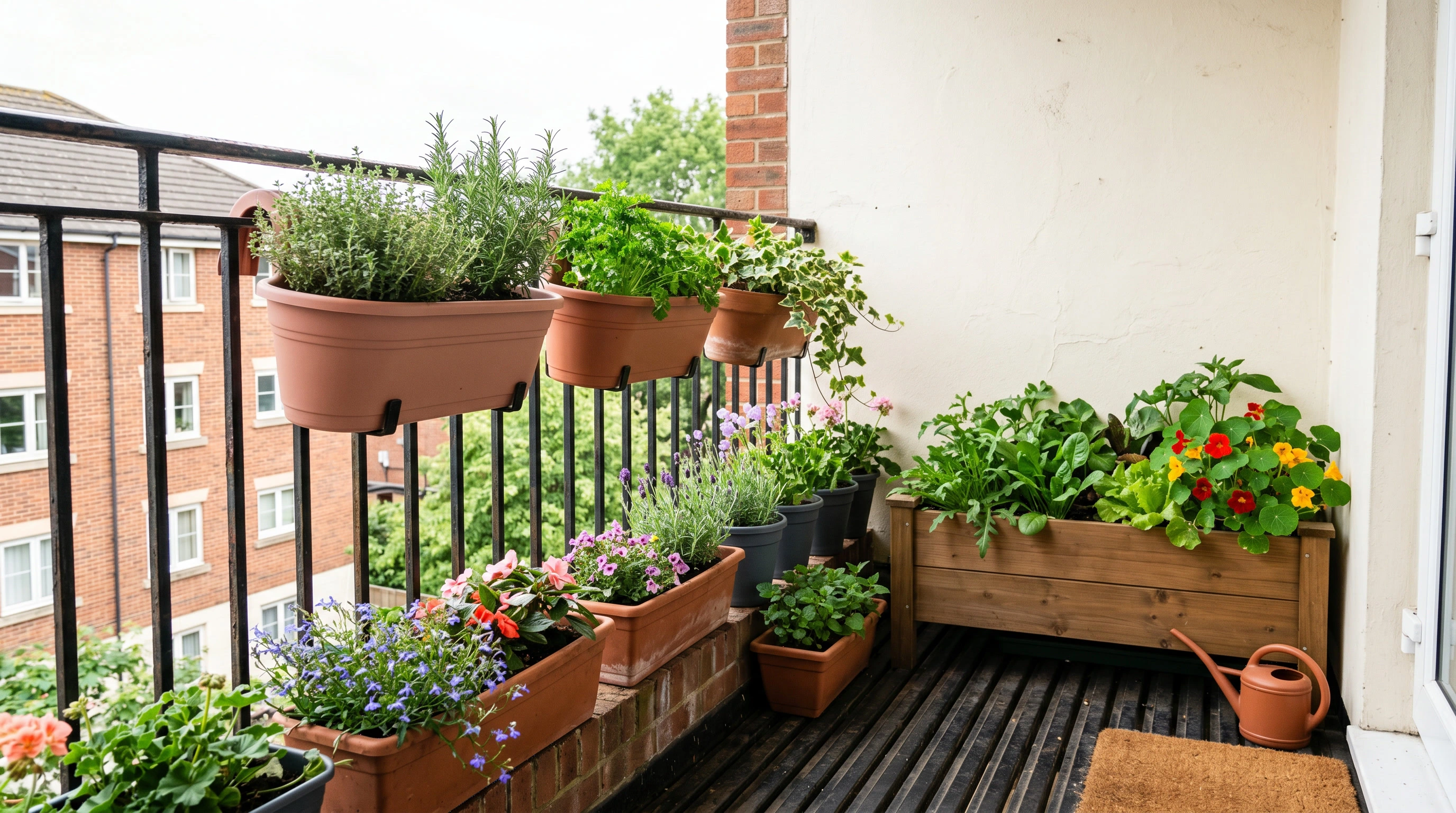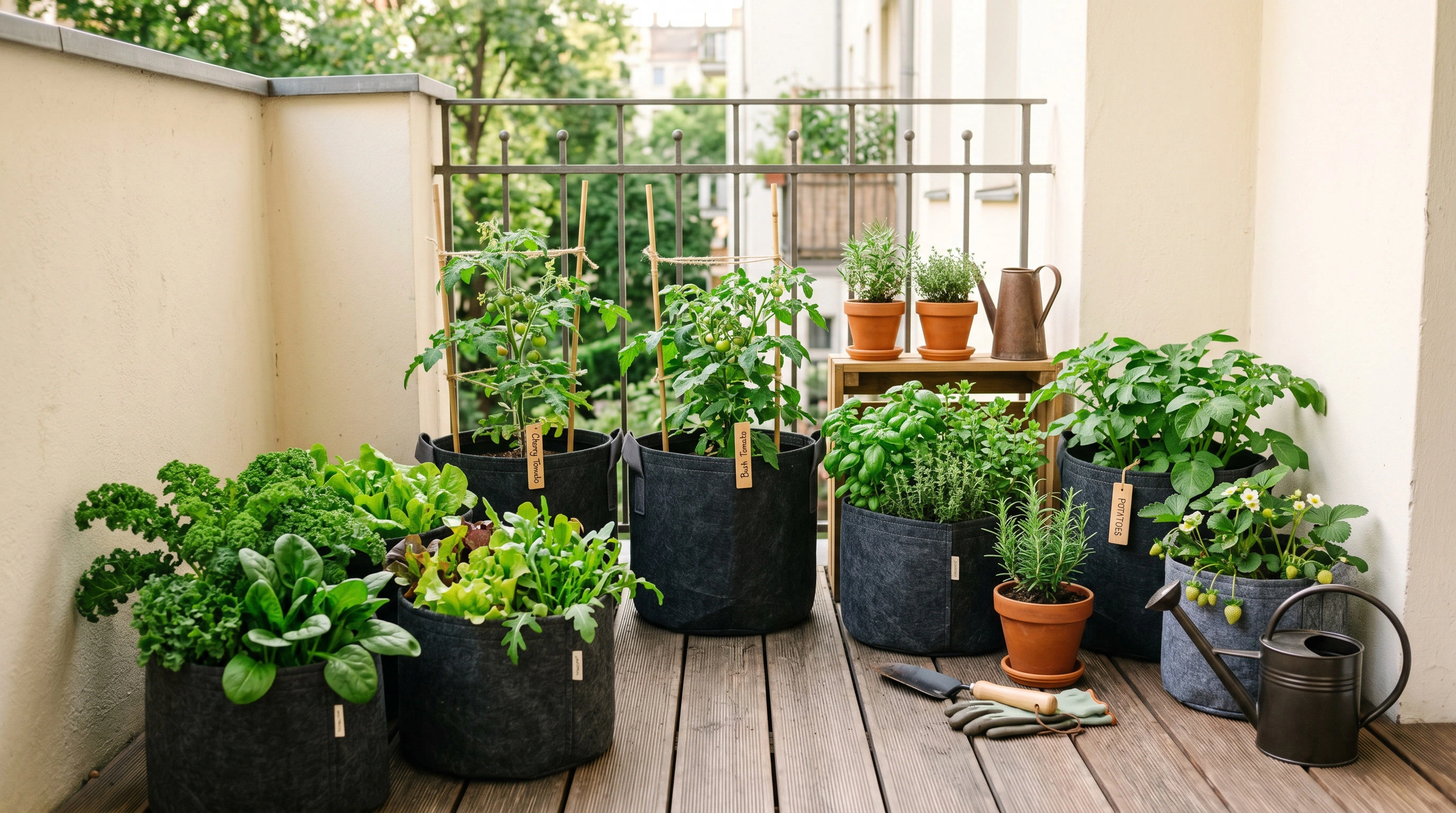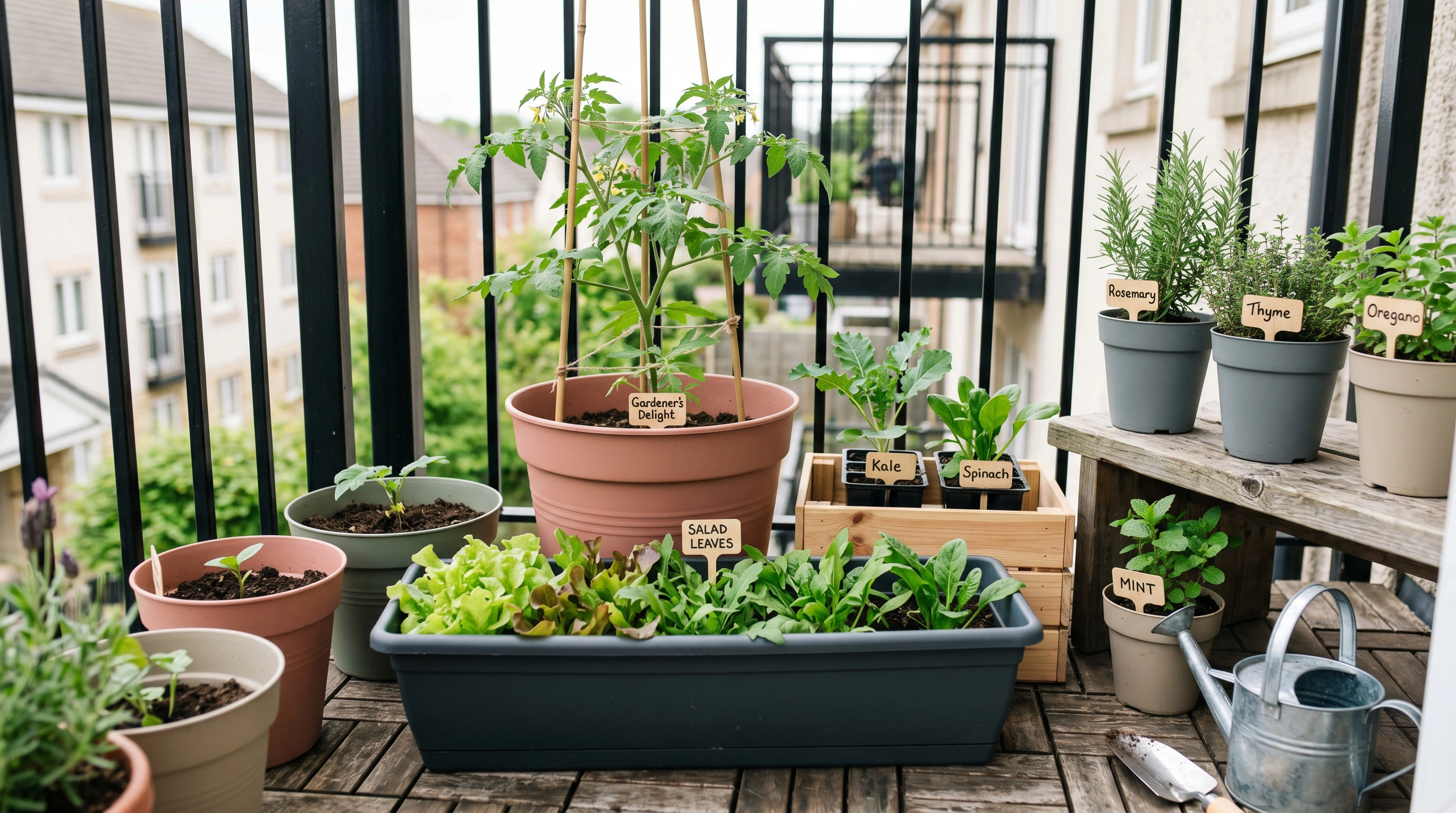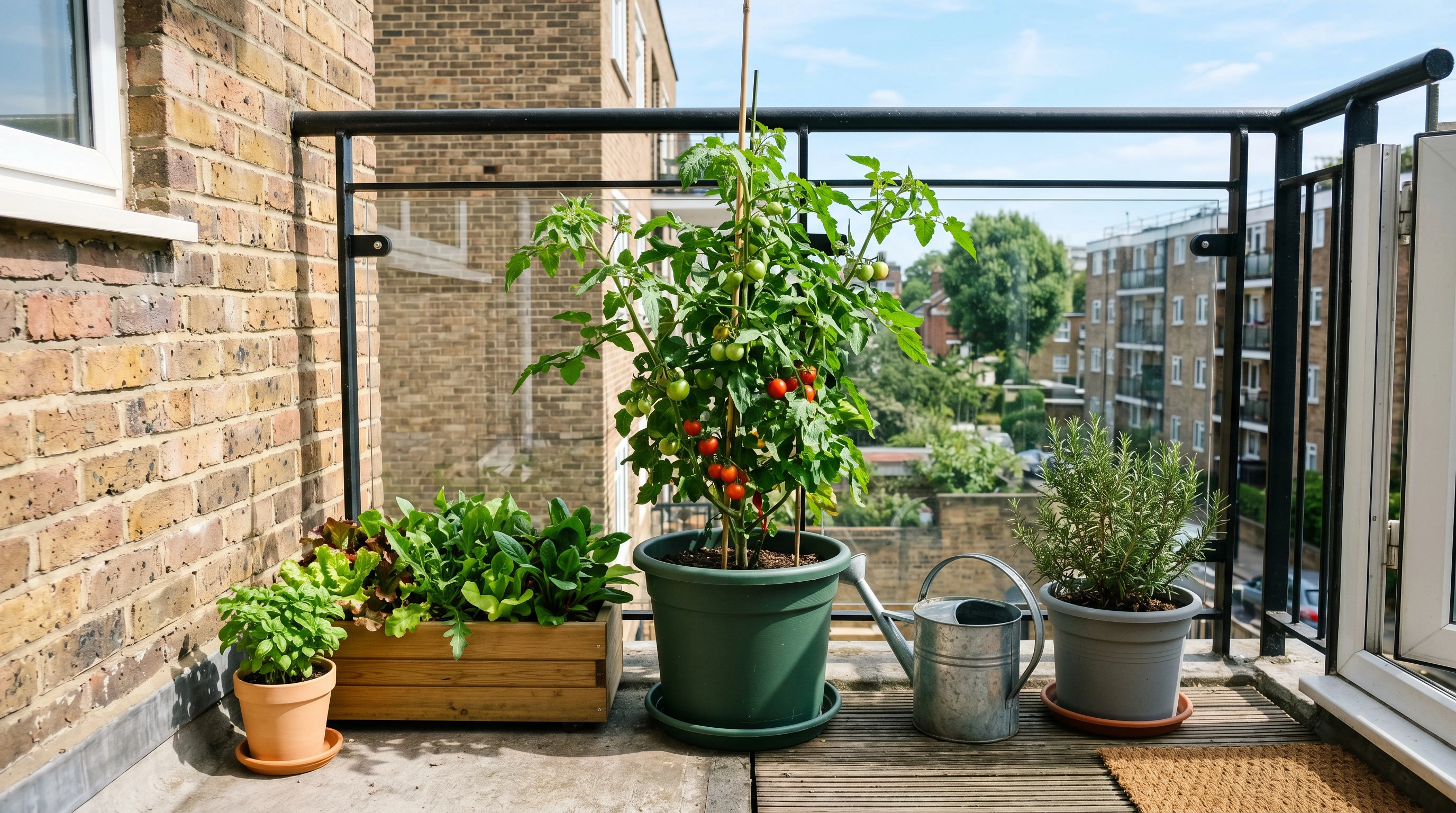
A south-facing balcony is one of the better small-space growing spots in the UK. It usually gives you more direct sun than a north or east-facing space, which means you can try warmer-season crops such as tomatoes, chillies, dwarf beans and strawberries.
That extra sun is useful, but it also creates its own problems. Pots dry quickly, leaves can scorch in hot spells, and wind plus sun can stress plants faster than you expect. The best crops are the ones that enjoy bright conditions but still fit the realities of balcony growing: limited space, containers, watering routines and renter-friendly setups.
What a south-facing balcony gives you
South-facing balconies usually get the strongest light. That makes them better for crops that need warmth and sun, especially in late spring and summer.
The main advantages are:
- More direct sun for fruiting crops.
- Warmer growing conditions than shaded balconies.
- Better chances with tomatoes, chillies and beans.
- Useful light for herbs and repeat sowings.
- A longer practical growing window in spring and autumn.
The main trade-off is watering. Strong sun, paving, walls, glass and railings can all increase heat around containers. Small pots dry quickly, so container size and placement matter.
If you have not checked your light properly yet, read How Much Sunlight Do Herbs and Vegetables Need?.
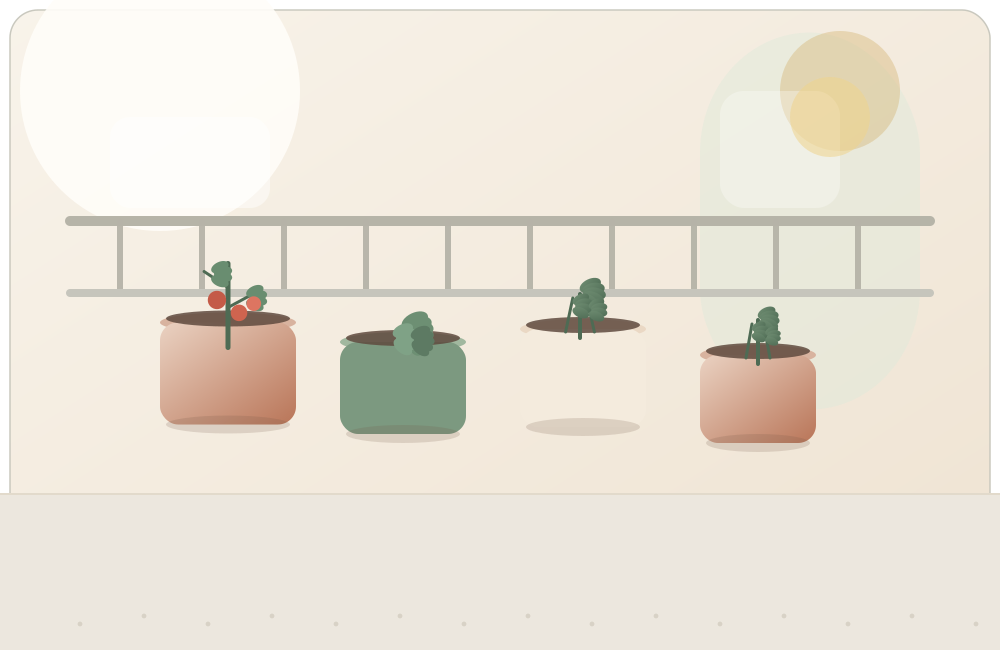
Best crops for a south-facing balcony
The best crops are not just the ones that like sun. They also need to fit containers, cope with balcony exposure and produce something useful from limited space.
For beginners, a good mix is one demanding crop, one herb pot and one fast crop. That gives variety without making the whole balcony depend on tomatoes or chillies.
Tomatoes
Tomatoes are one of the most popular crops for sunny balconies. Choose compact bush, patio or cherry varieties rather than large sprawling types. They need a good-sized final pot, drainage, support and regular watering.
Tomatoes are rewarding, but they are not low-maintenance. A single healthy tomato plant is usually better than several stressed plants in small pots.
Read Growing Tomatoes in Pots: Small-Space Beginner Guide and What Size Pot for Tomatoes? A Simple Guide for UK Growers before making tomatoes your main crop.
Dwarf beans
Dwarf French beans can work well on a sunny balcony. They need a reasonably deep pot, steady moisture and some shelter from wind. They are often easier than climbing beans because they do not need a tall frame.
Use dwarf beans where you have good light but do not want a plant that dominates the whole balcony. They can be a useful middle ground between leafy crops and more demanding fruiting crops.
Chillies
Chillies like warmth and strong light, so a sheltered south-facing balcony can suit them. They are slower than salad leaves or radishes, but they can be satisfying if you have a warm spot.
Choose compact varieties for pots. Keep them sheltered from strong wind and be ready to move young plants if nights turn cold early in the season.
Strawberries
Strawberries are a good fit for sunny balconies because they grow well in containers and do not need tall supports. They still need consistent watering, especially when flowering and fruiting.
Use stable pots, troughs or hanging baskets only where they are safe and easy to water. If watering hanging baskets is awkward, a normal pot or trough may be better.
For more detail, read Growing Strawberries in Pots: A UK Beginner Guide.
Herbs
Herbs are useful on sunny balconies, but they do not all want the same treatment.
- Basil: enjoys warmth, but dislikes cold and drying out.
- Thyme: suits sunny, freer-draining pots.
- Rosemary: likes sun and drainage, but needs space as it grows.
- Chives: reliable and useful in a container.
- Parsley: useful, but needs more consistent moisture than thyme.
- Mint: tough, but should stay in its own pot.
Do not treat all herbs like Mediterranean herbs. Basil, parsley, mint and thyme have different watering needs.
Salad leaves
Salad leaves can grow quickly on a sunny balcony, but they may bolt or turn bitter during hot spells. They are often best in spring, early summer and autumn rather than the hottest part of summer.
Use low troughs or shallow containers and harvest little and often. In midsummer, move them to the slightly cooler part of the balcony if you have one.
For a dedicated guide, read Growing Salad Leaves in Containers in the UK.
Radishes and spring onions
Radishes and spring onions are useful quick crops for containers. They do not need the same long season as tomatoes or chillies, and they can help fill gaps before or after summer crops.
Radishes prefer not to dry out badly. Spring onions are slower, but they fit small spaces well and can be grown in narrow containers.
How to manage heat and watering
Watering is the main job on a sunny balcony. Check pots by touch rather than relying on a fixed schedule. In warm or windy weather, small pots may need daily checks.
Use larger containers for thirsty crops such as tomatoes, chillies, beans and strawberries. Larger pots hold more compost, which helps keep moisture steadier.
Helpful habits include:
- Water slowly so compost absorbs moisture.
- Check the sunniest pots most often.
- Group containers so they are easier to inspect.
- Avoid tiny pots for thirsty crops.
- Use trays where surfaces need protection, but avoid leaving roots in standing water.
For a full watering guide, read How Often Should You Water Plants in Pots in the UK?.
Choosing containers for a sunny balcony
Choose containers based on crop needs, not just appearance. Fruiting crops need more compost volume than herbs and salad leaves. A pot that looks tidy on day one may dry too quickly by July.
For sunny balconies, look for:
- Drainage holes.
- Enough volume for the crop.
- A stable base if the balcony is breezy.
- A manageable weight when filled and watered.
- A tray or saucer if water runoff could cause problems.
Dark pots can warm quickly in sun. That can help early in the season, but it may also increase drying in summer. Lightweight pots are useful for renters, but they still need to be stable.
For more detail, read How to Choose Pots for Balcony and Windowsill Gardening.
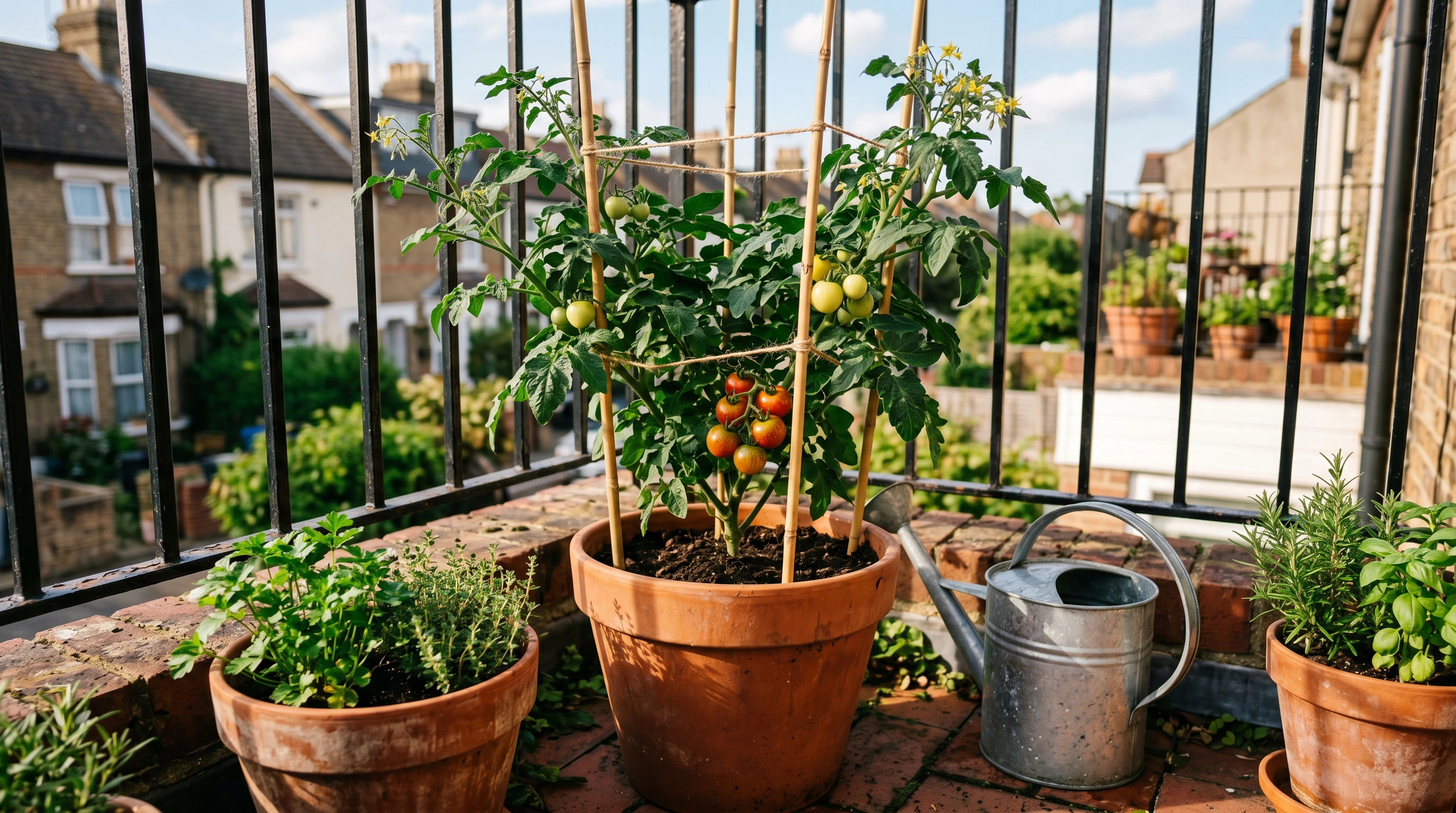
Wind still matters
A south-facing balcony can still be windy. Wind dries compost, rocks plants and damages tall crops. Sun plus wind can make containers dry faster than either condition alone.
Keep taller plants away from exposed rail edges where possible. Use stable pots, group containers and choose compact varieties for your first season.
If wind is a regular issue, read How to Protect Balcony Plants from Wind.
A simple first-year plan
For a first sunny balcony season, start with a small mix of crops:
- One compact tomato or chilli in a larger pot.
- One trough of salad leaves for spring or autumn.
- One pot of chives or parsley.
- One pot of basil during warm weather.
- One deeper pot of dwarf beans if you have room.
This gives you different harvest types without making the balcony too hard to water. It also means one failed crop does not ruin the whole season.
What to avoid
Avoid filling the balcony with demanding crops in your first year. Several tomato, chilli and bean plants can become a lot of watering, feeding and support work.
Also avoid:
- Tiny decorative pots for thirsty crops.
- Large courgettes unless you have enough space and compost volume.
- Full-size tomatoes on windy exposed balconies.
- Climbing beans without safe support.
- Keeping salad leaves in the hottest position during midsummer.
Keep balcony setups removable and appropriate for your rented home. Avoid overloading railings, edges or shared spaces with heavy containers or fixed structures.
Seasonal plan for a south-facing balcony
Spring
Start with salad leaves, radishes, parsley, chives and seed starting if you have a bright protected spot. Do not rush tender tomatoes or chillies outside before nights are warm enough.
Summer
Use the strongest light for tomatoes, chillies, strawberries, basil and dwarf beans. Check watering often and watch for wind stress.
Autumn
As summer crops slow down, clear tired plants and reuse containers for rocket, mustard leaves, spinach for baby leaves, pea shoots, parsley or chives.
Winter
Keep expectations modest. Hardy herbs may continue slowly, but most edible growing will be limited by light and temperature.
For month-by-month planning, use the Year-Round Balcony Planting Calendar for the UK.
Common mistakes
Underestimating watering
Sunny balcony pots dry quickly, especially in wind. Check moisture regularly in summer.
Using pots that are too small
Small pots are harder to keep stable and hydrated. Use larger pots for fruiting crops.
Growing leafy crops only in midsummer
Salad leaves often do better in spring and autumn. In hot weather they may bolt quickly.
Choosing too many demanding crops
One tomato can be fun. Five thirsty fruiting crops can become a daily chore.
Ignoring wind because the balcony is sunny
Sun and wind together dry containers fast. Use sheltered placement and stable pots.
FAQ
What grows best on a south-facing balcony?
Compact tomatoes, chillies, dwarf beans, strawberries, basil, thyme, chives, parsley, salad leaves, radishes and spring onions can all work with suitable pots and watering.
Can a south-facing balcony be too hot?
Yes. Small pots, leafy crops and plants near glass or metal can struggle in hot spells. Use larger pots, steady watering and slight shade where needed.
Do tomatoes need a south-facing balcony?
They do not need a south-facing balcony specifically, but they do need strong sun and warmth. South and west-facing spaces usually give better results than shaded spaces.
What herbs like sunny balconies?
Basil, thyme, rosemary, chives and parsley can all work. Mint can also grow well, but keep it in its own pot.
How many pots should I start with?
Start with three to five manageable containers. It is easier to expand a working setup than rescue too many thirsty pots in July.
What should I grow first on a sunny balcony?
Start with one herb pot, one leafy crop and one compact fruiting crop if you can water consistently. For a simpler first year, skip the tomato and grow herbs, salad leaves, radishes and strawberries.
Related guides
- Beginner’s Guide to Small-Space Gardening for UK Renters
- Growing Tomatoes in Pots: Small-Space Beginner Guide
- What Size Pot for Tomatoes? A Simple Guide for UK Growers
- How Often Should You Water Plants in Pots in the UK?
- How to Protect Balcony Plants from Wind
Next step
If tomatoes are on your list, read Growing Tomatoes in Pots: Small-Space Beginner Guide before buying plants. If you want the easiest starting point, choose one herb pot and one trough of salad leaves first.