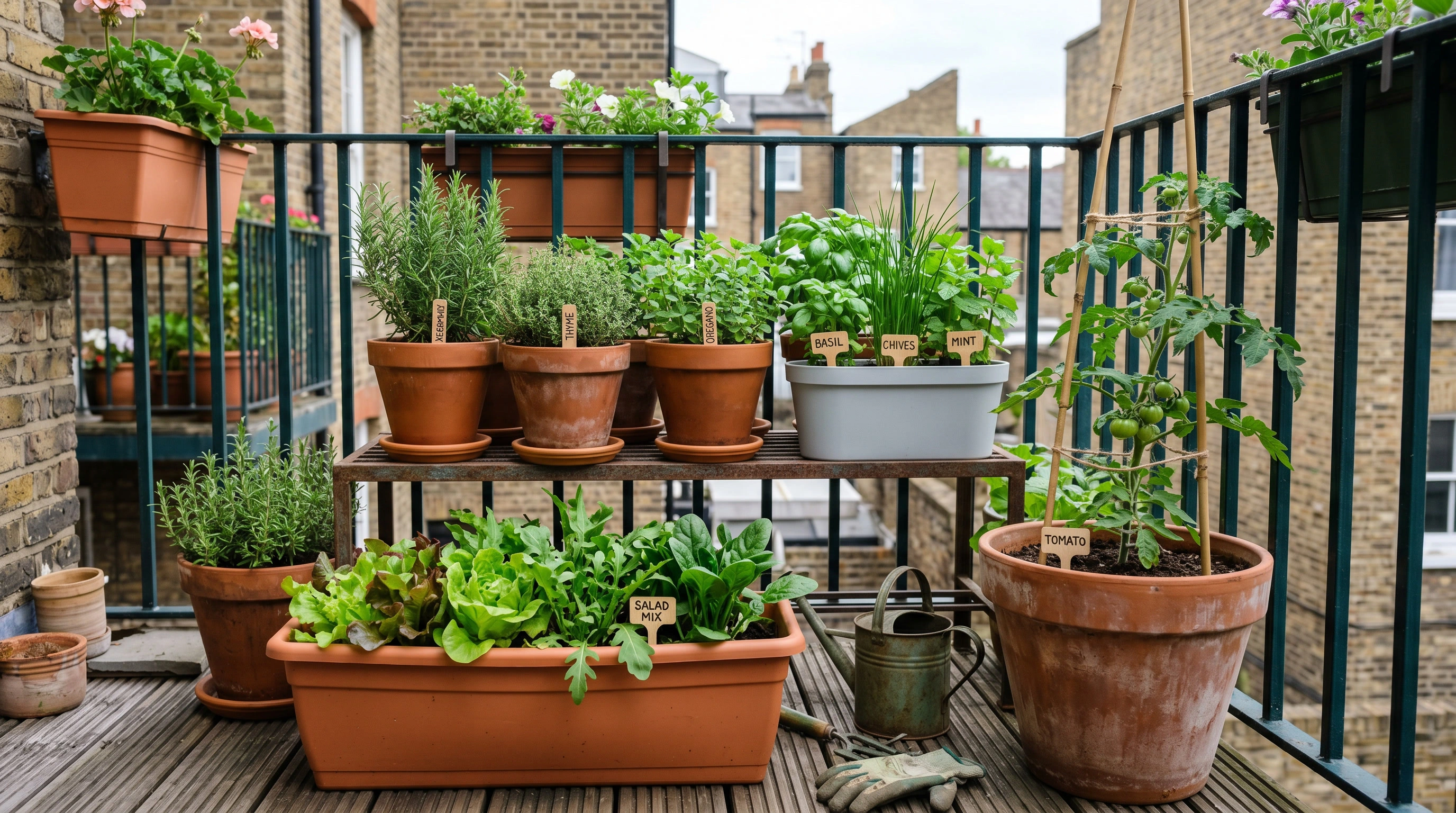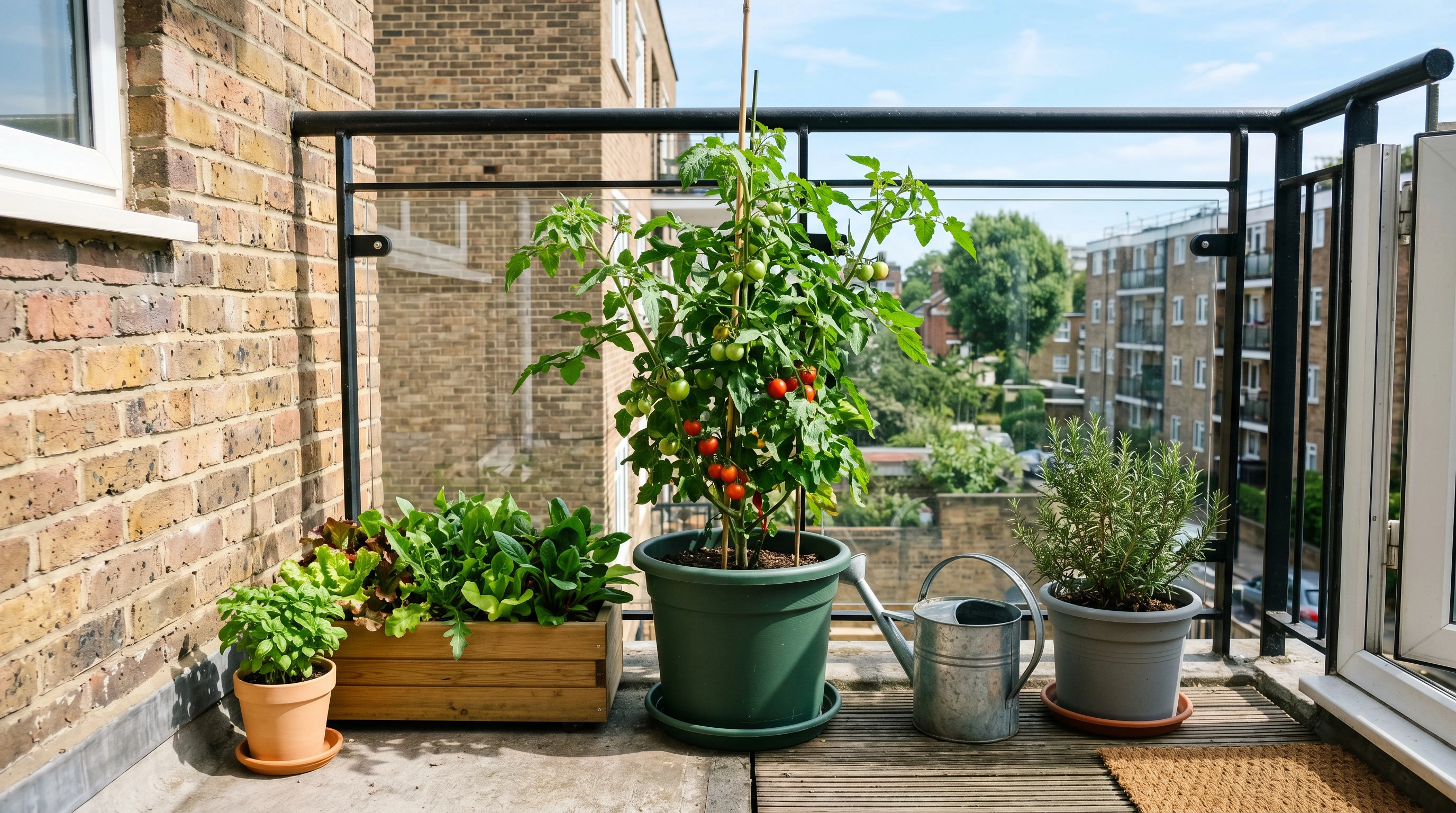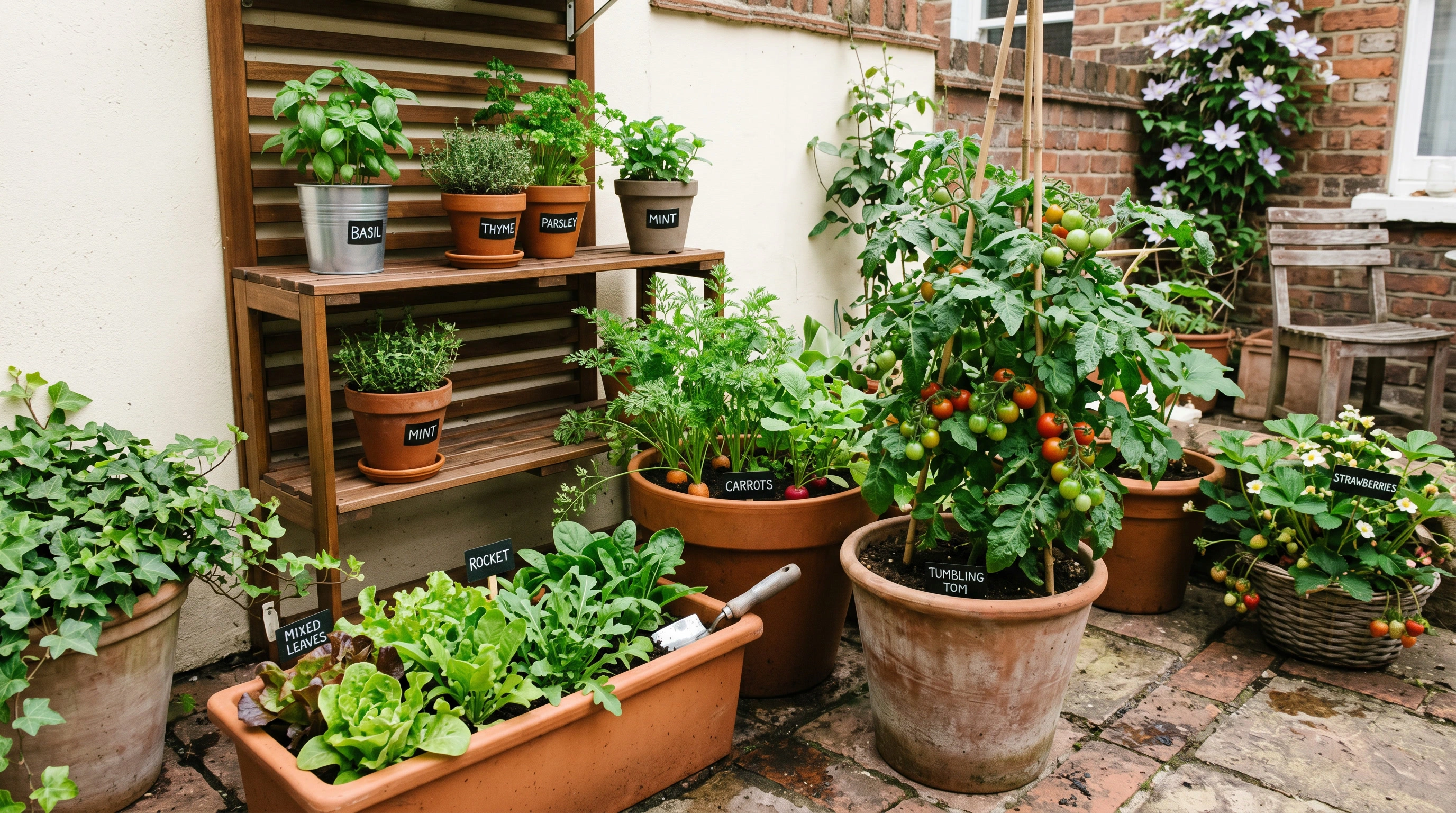
A balcony planting calendar helps you work with the UK seasons instead of fighting them. Small-space gardening is seasonal, even when you use containers. Spring brings sowing, summer brings watering, autumn brings leafy crops, and winter is mostly for hardy herbs, indoor shoots and planning.
This calendar is a practical guide, not a rigid rule. Your exact timing depends on region, shelter, balcony direction and weather.
Before using the calendar
Start with your balcony conditions. A sheltered south-facing balcony warms earlier than an exposed north-facing balcony. A windy upper-floor balcony dries faster than a protected patio.
If you are new, read the Beginner’s Guide to Small-Space Gardening for UK Renters first.

January
Keep expectations low. Outdoor growth is slow. Check overwintering herbs, remove dead leaves, clean trays and plan your first spring crops.
Indoors, try pea shoots or microgreens on a bright sill.
February
Light begins improving, but weather is still cold. You can organise containers, buy seeds, and start a few indoor sowings if you have a bright windowsill.
Avoid filling the balcony too early.
March
March is a good planning and first-sowing month. Try hardy salad leaves, radishes, parsley, chives and pea shoots. Protect young plants from cold snaps.
If starting seeds indoors, read Starting Seeds Indoors Without a Greenhouse.
April
April is useful for salad leaves, herbs, radishes, spring onions and seed starting. Weather can still be changeable, so do not rush tender crops outside.
This is a good month to set up containers and test watering.
May
May is when many balconies become more active. Sow salad leaves, beans and herbs. Tender crops may move outside after cold risks reduce, depending on your area and conditions.
Start carefully with tomatoes and chillies. Harden off indoor plants before leaving them outside.
June
June is a strong growing month. Sunny balconies can support tomatoes, chillies, beans, basil and strawberries. Shaded balconies can grow herbs and leaves.
Watering becomes more important. Read How Often Should You Water Plants in Pots in the UK?.
July
July is about maintenance. Water consistently, feed hungry fruiting crops, harvest leaves young, and watch for wind damage or drying containers.
Sow small batches of salad leaves in cooler spots if heat is causing bolting.
August
Keep harvesting and watering. Start thinking about autumn leaves. Remove tired plants that are no longer useful, especially if space is limited.
Balcony containers can dry quickly in August, even after rain.
September
September is good for rocket, spinach, mustard leaves and herbs. The weather can still be mild, but light begins dropping.
This is a good time to tidy summer crops and sow smaller autumn batches.
October
Growth slows. Continue harvesting hardy leaves and herbs. Move tender plants if you plan to keep them, but do not expect summer growth indoors without strong light.
Clean empty pots and trays.
November
Focus on hardy herbs, indoor shoots and maintenance. Store unused pots neatly. Check that balcony containers are not sitting in water.
December
December is mostly for planning. Choose next year’s crops based on what worked. If you want something fresh, grow pea shoots or microgreens indoors.
Sunny balcony calendar
Sunny balconies can try tomatoes, chillies, beans, basil, strawberries and Mediterranean herbs in the warmer months. They also need more watering.
Read Best Vegetables for South-Facing Balconies in the UK if this is your situation.
Shaded balcony calendar
Shaded balconies should focus on leafy crops, parsley, chives, mint, pea shoots and modest harvests. Summer may still be useful, but fruiting crops are less reliable.
Read Best Vegetables for North-Facing Balconies in the UK.
A simple seasonal framework
If the month-by-month list feels too detailed, use this simpler framework:
- Late winter: plan, clean pots, start only easy indoor crops
- Spring: sow herbs, leaves and radishes, set up containers
- Early summer: move tender plants out gradually and increase watering
- High summer: maintain, water, feed hungry crops and harvest
- Autumn: return to leafy crops and tidy tired summer plants
- Winter: protect surfaces, grow indoor shoots and plan next year
This rhythm keeps the balcony useful without making every month busy. A small-space garden should fit your life, not become another source of clutter.
What to do if you start late
You do not need to wait until next year if you miss spring. In early summer, buy a few young herbs, sow salad leaves in a cooler spot, or try dwarf beans if your balcony is bright. In late summer, switch to autumn leaves, parsley, chives and indoor pea shoots.
If you start in autumn or winter, keep expectations modest. Use the time to learn your light, collect containers and grow microgreens or pea shoots indoors.
The best starting month is the month when you can look after one or two pots properly.
Planning around holidays
Summer holidays can interrupt balcony growing. If you travel often, avoid relying on lots of thirsty crops in tiny pots. Choose larger containers, self-watering support, or lower-maintenance herbs.
Before going away, water well, group pots in a slightly cooler position where practical, and ask for help only with clear instructions. “Water the plants if needed” is less useful than “check these two pots every other day and water if the top compost is dry”.
Read How to Choose Self-Watering Herb Pots in the UK and DIY Self-Watering Planter from Bottles if watering gaps are a regular issue.
Planning around rental moves
Renters may move at awkward times. A container garden is easier to move if it stays modest. Avoid building the whole year around large permanent planters, especially if you are unsure about your tenancy length.
If you expect to move, focus on herbs, small pots, salad containers and lightweight setups. Use crops that can be finished, harvested or gifted before moving day. Keep trays and saucers clean so plants can be transported without mess.
This is one reason small-space gardening rewards restraint. A few healthy pots are easier to relocate than a crowded balcony of half-finished experiments.
Combining indoor and outdoor growing
Balcony growing does not have to happen only outside. You can use windowsills for seed starting, pea shoots, herbs and backup crops while outdoor containers handle stronger seasonal plants.
In spring, start seeds indoors and move suitable plants out gradually. In summer, keep heat-loving plants outdoors and use indoor sills for herbs that prefer a calmer spot. In winter, let the balcony rest and use the brightest indoor sill for quick shoots.
For seed timing, use Starting Seeds Indoors Without a Greenhouse alongside this calendar.
Beginner crops by season
If you want the simplest crop choices, think in seasonal groups. In spring, try salad leaves, radishes, chives, parsley and pea shoots. In summer, use sunny balconies for tomatoes, basil, dwarf beans and strawberries if you can water consistently. In autumn, return to rocket, mustard leaves, spinach for baby leaves and hardy herbs. In winter, keep to indoor shoots, microgreens and planning.
This avoids asking one crop to do everything. Tomatoes are not winter crops for ordinary UK balconies. Salad leaves are not always happiest in the hottest part of summer. Herbs vary widely.
A minimum viable balcony year
A very small balcony year could look like this:
- March: clean pots and sow a small tray of salad leaves
- April: add parsley or chives
- May: buy one compact tomato if the balcony is sunny
- June to August: water, feed the tomato if fruiting, and harvest herbs
- September: clear tired plants and sow rocket or spinach
- October to February: tidy, keep hardy herbs, and grow pea shoots indoors
That is enough. A useful year does not require constant sowing.
Keeping notes
Keep simple notes on what worked: the month sown, the container, the light, and whether watering was easy. This does not need to be a formal journal. A note in your phone is fine.
After one year, your own notes are more useful than a generic calendar. They tell you whether your balcony warms early, dries quickly, stays shaded, or suits particular crops.
Adjusting for different UK conditions
A sheltered London balcony, a windy coastal balcony and a shaded northern courtyard will not behave the same way. Use the calendar as a starting point and adjust gently. If your area is colder, wait longer before moving tender crops out. If your balcony is exposed, choose compact plants and stable pots.
When in doubt, start later and smaller. A healthy late sowing is better than early seedlings that struggle for weeks.
How to use this calendar with other guides
Use this calendar as the timing layer, then use the crop guides for detail. If the calendar says summer tomatoes are possible, read the tomato guide before buying a plant. If it suggests autumn leaves, read the salad guide before sowing.
This keeps the site practical: the calendar tells you when to think about a crop, while the individual guides explain whether that crop suits your light, pots and routine.
Use it lightly, not as a strict checklist.
Common mistakes
The biggest mistake is sowing too early indoors without enough light. The second is putting tender plants outdoors too soon. The third is forgetting autumn sowings after summer crops finish.
A calendar should make gardening calmer, not busier. Choose a few tasks each month.
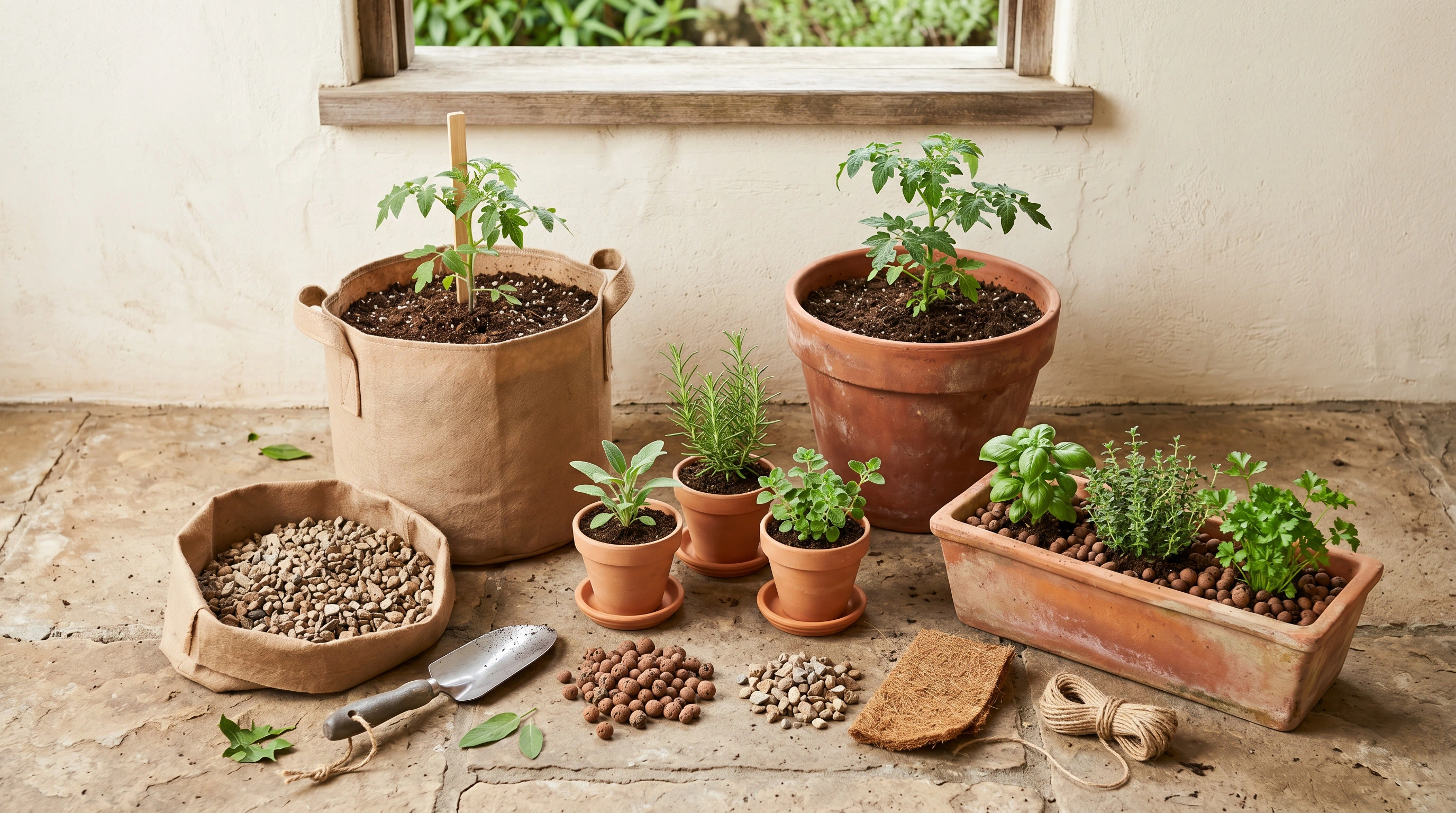
If a seasonal task means you need labels, trays, a watering can or container basics, the small-space gardening kit list explains what helps and what can wait.
FAQ
When should I start balcony gardening in the UK?
March and April are good months for hardy crops and setup. Tender summer crops need warmer conditions.
Can I grow on a balcony in winter?
Outdoor growth is limited, but hardy herbs may survive and indoor pea shoots or microgreens are realistic.
What can I sow in spring?
Salad leaves, radishes, parsley, chives, coriander, pea shoots and spring onions are good starts.
What should I grow in summer?
Sunny balconies can grow tomatoes, chillies, beans, basil and strawberries. Shaded balconies are better for leaves and herbs.
Is this calendar the same for all UK regions?
No. Colder, exposed or northern areas may run later. Sheltered urban balconies may warm earlier.
Related guides
- Beginner’s Guide to Small-Space Gardening for UK Renters
- How Much Sunlight Do Herbs and Vegetables Need?
- Starting Seeds Indoors Without a Greenhouse
Next step
Use this calendar with your light level. If you are not sure what your balcony can support, read How Much Sunlight Do Herbs and Vegetables Need?.