Growing tomatoes in pots is one of the most tempting projects for small-space gardeners. They can grow in pots, suit sunny balconies and patios, and feel more exciting than herbs or salad leaves. But they are not the easiest first crop. They need sun, warmth, a suitable container, steady watering and regular feeding once established.
This guide keeps expectations realistic for UK renters and flat dwellers.
Are cherry tomatoes suitable for small spaces?
Yes, if the space is sunny enough. A sheltered balcony, patio or bright outdoor corner can work well. A dim windowsill or north-facing balcony is usually not ideal.
If you are still learning the basics, start with the Beginner’s Guide to Small-Space Gardening for UK Renters and consider easier crops first.
Choose the right type
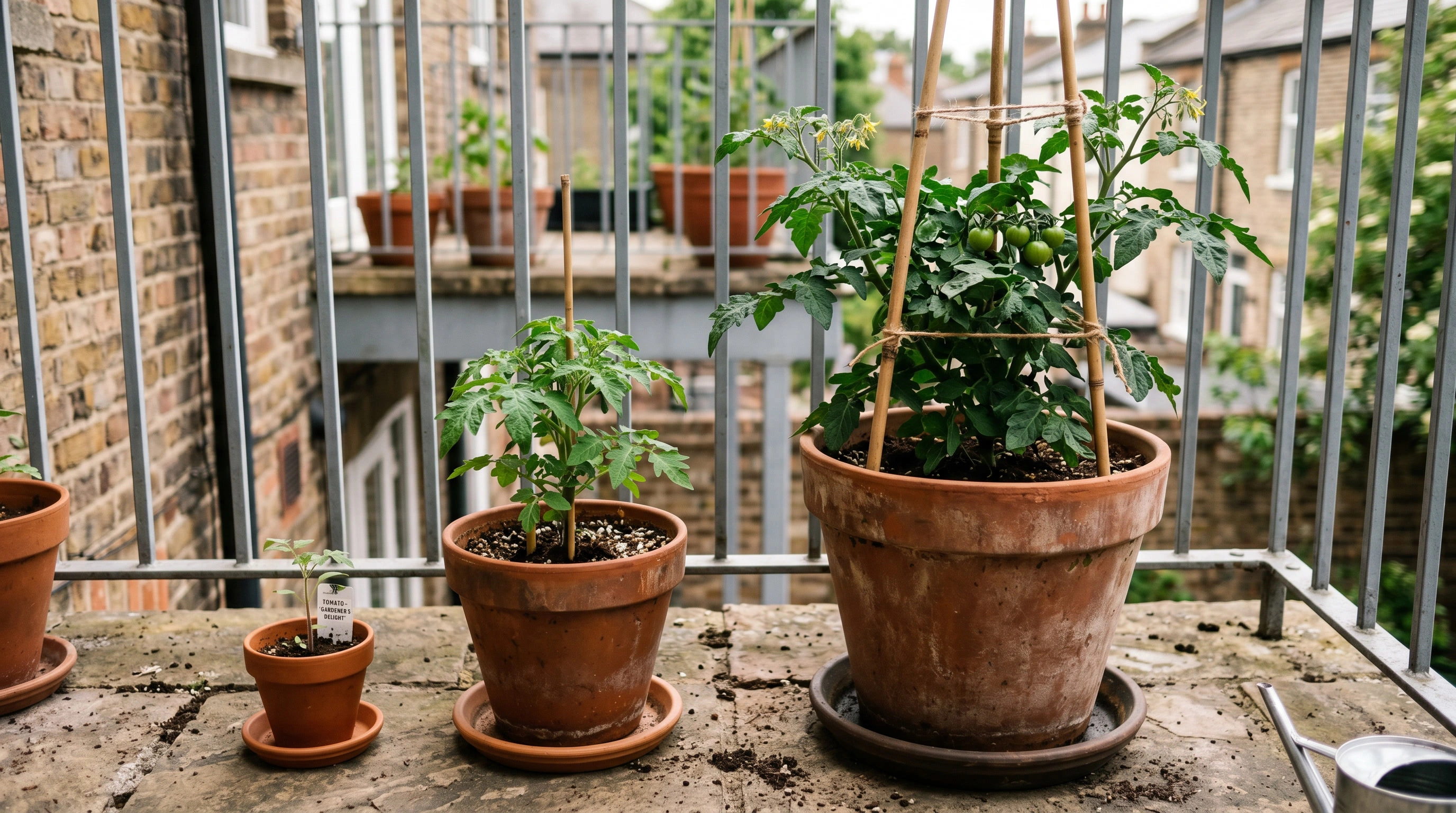
Look for compact, patio, dwarf or bush cherry tomato varieties. These are easier in pots than tall cordon varieties.
Cordon tomatoes can still grow in containers, but they need stronger support, regular side-shooting and more vertical space. Bush types are usually simpler for balconies.
When to start tomatoes in the UK
Tomatoes are warm-season plants. Many UK growers sow indoors in early spring, then move young plants outside only when conditions are reliably warmer. For renters and beginners, buying one healthy young plant can be simpler than starting from seed.
If you do start from seed, you need bright light once seedlings appear. Weak indoor light produces tall, thin seedlings that struggle later. The guide to Starting Seeds Indoors Without a Greenhouse explains the basic setup.
Do not rush plants outside after the first sunny weekend. Cold nights can set tomatoes back. Move them out gradually, bringing them in or protecting them if weather turns cold.
Light and warmth
Tomatoes need strong light. Aim for a spot with several hours of direct sun in summer. South-facing and west-facing balconies are usually better than north-facing ones.
If your space is shaded, read Best Vegetables for North-Facing Balconies in the UK and choose leafy crops instead.
Choosing a pot
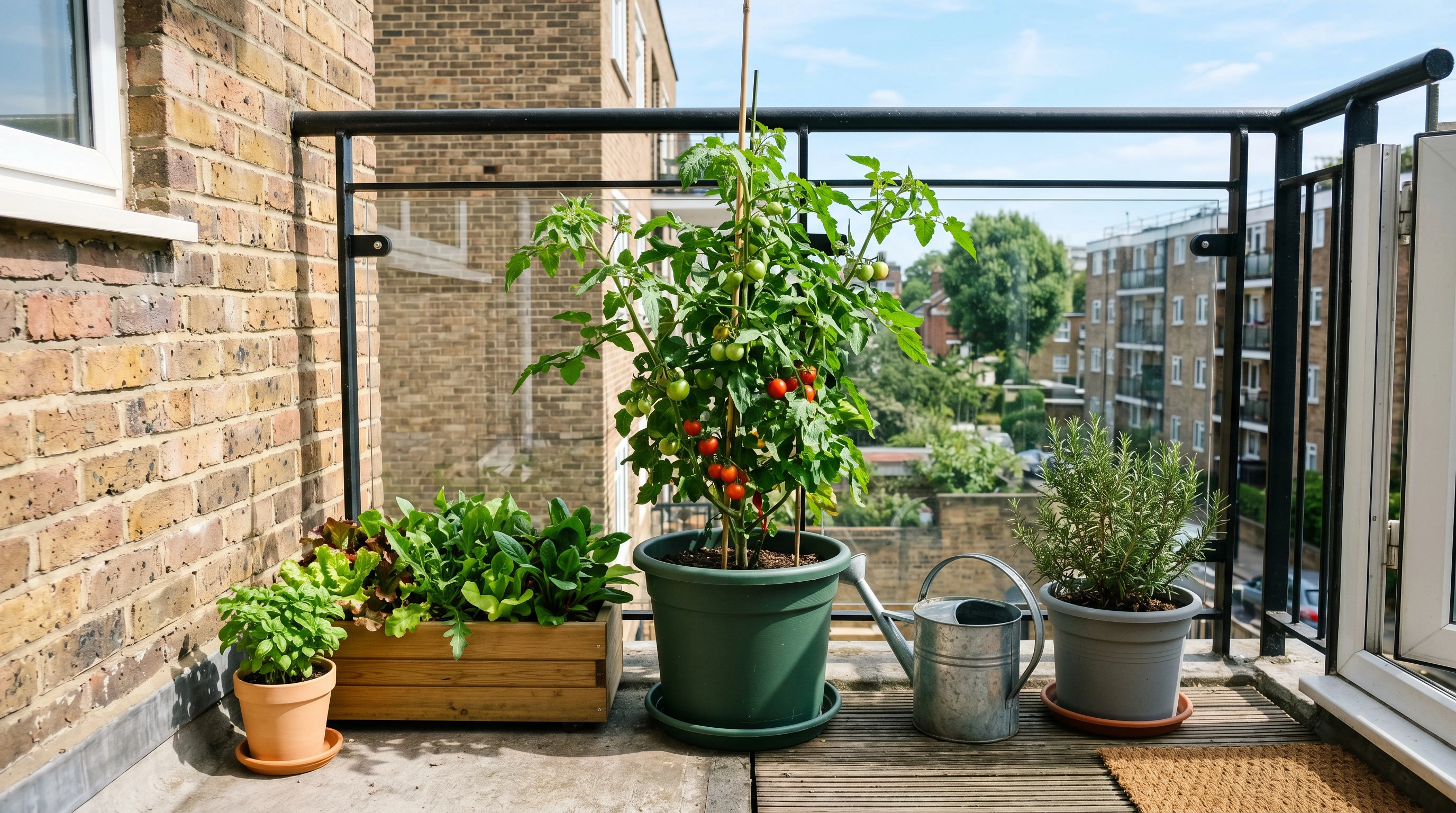
Use a large pot with drainage holes. Tiny pots dry too quickly and restrict roots. A bigger container holds more compost, which helps with watering.
Avoid decorative pots without drainage. Use a saucer or tray if you need to protect surfaces, but do not leave the plant sitting in water for long periods.
For container detail, read How to Choose Pots for Balcony and Windowsill Gardening.
Compost and planting
Peat-free multipurpose compost can work for tomatoes in pots. Plant the young tomato deeply enough to settle it firmly. Water well after planting.
Do not put tender tomato plants outside too early. UK spring nights can still be cold. Harden plants off gradually if they were raised indoors.
Tomatoes are tender plants. A warm spell in spring does not guarantee nights are safe for outdoor tomatoes.
Watering
Consistent watering is essential. Pots can dry quickly in summer, especially on balconies. Letting tomatoes dry severely and then soaking them stresses the plant.
Check compost daily in warm weather. Water slowly and deeply when needed.
For more detail, read How Often Should You Water Plants in Pots in the UK?.
Feeding
Tomatoes are hungry compared with herbs and salad leaves. Once flowers and fruits develop, use a suitable tomato feed according to the product instructions.
Do not overfeed young plants before they are established. Good light, pot size and watering come first.
Pollination in small spaces
Outdoor tomatoes are usually pollinated by movement, insects and air. On a very sheltered balcony, gently tapping flower trusses can help pollen move. You do not need to make this complicated.
If flowers appear but no fruit forms, check the basics first: enough warmth, enough light, steady watering and a healthy plant. Very hot, cold or stressed conditions can reduce fruit set.
Support and wind
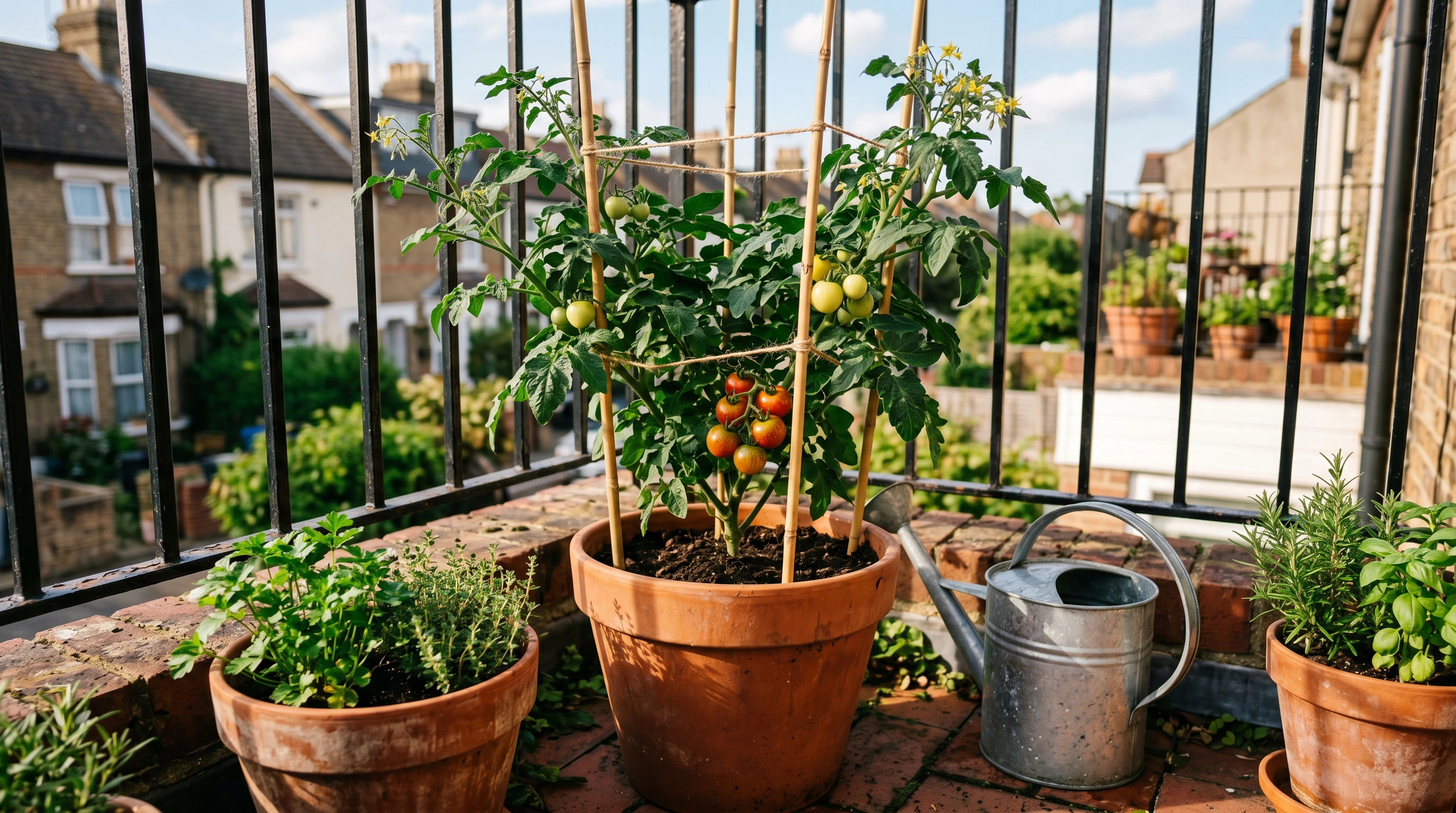
Even compact tomatoes may need support. Use canes or a small cage suited to the pot. Keep the setup stable and avoid top-heavy containers.
Balcony wind can rock plants and damage stems. If wind is a problem, read How to Protect Balcony Plants from Wind.
Harvesting
Harvest cherry tomatoes when fully coloured and ripe. Do not expect huge harvests from a tiny pot. A well-grown container tomato can be rewarding, but it will not behave like a greenhouse crop.
A realistic balcony tomato setup
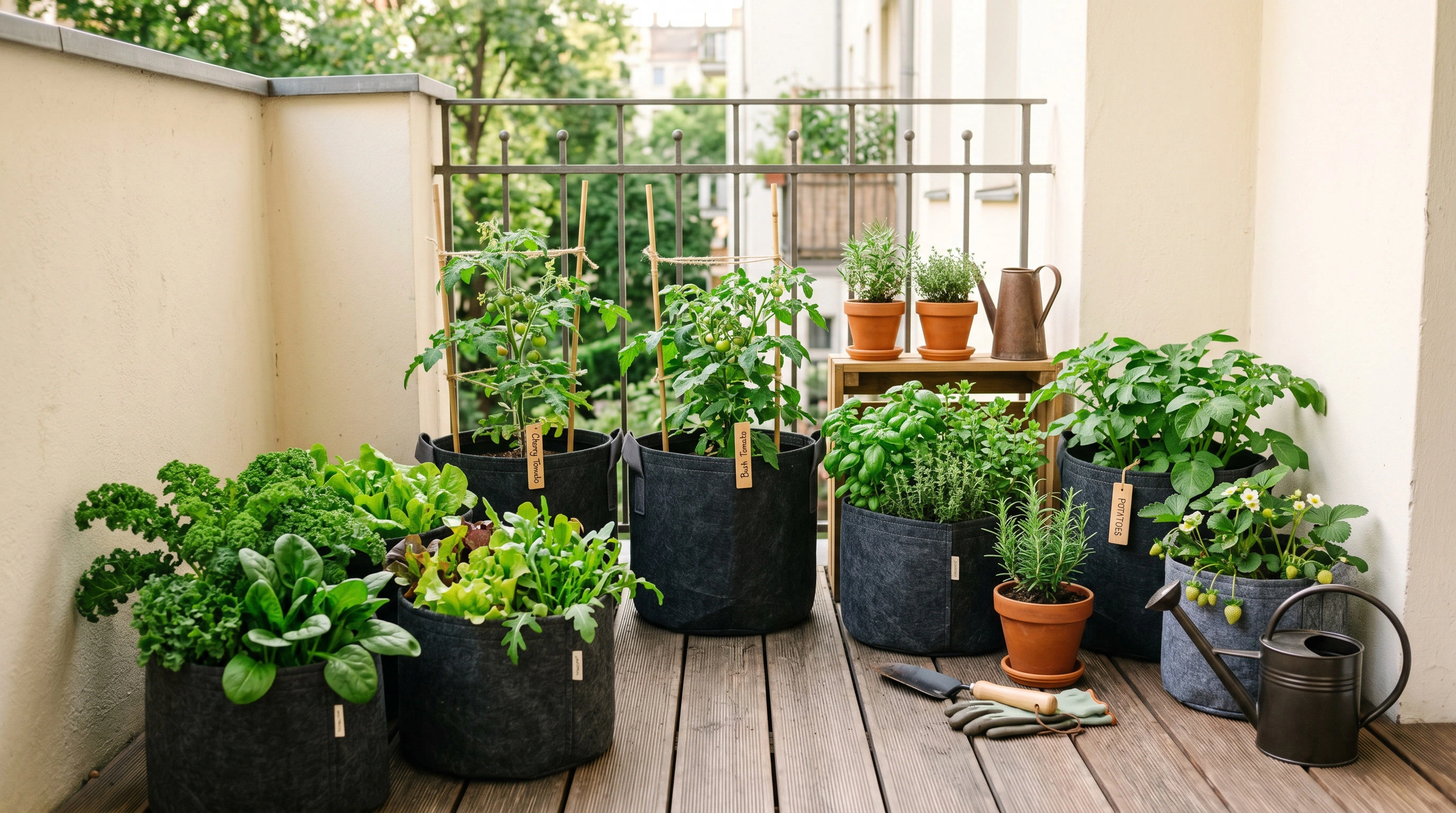
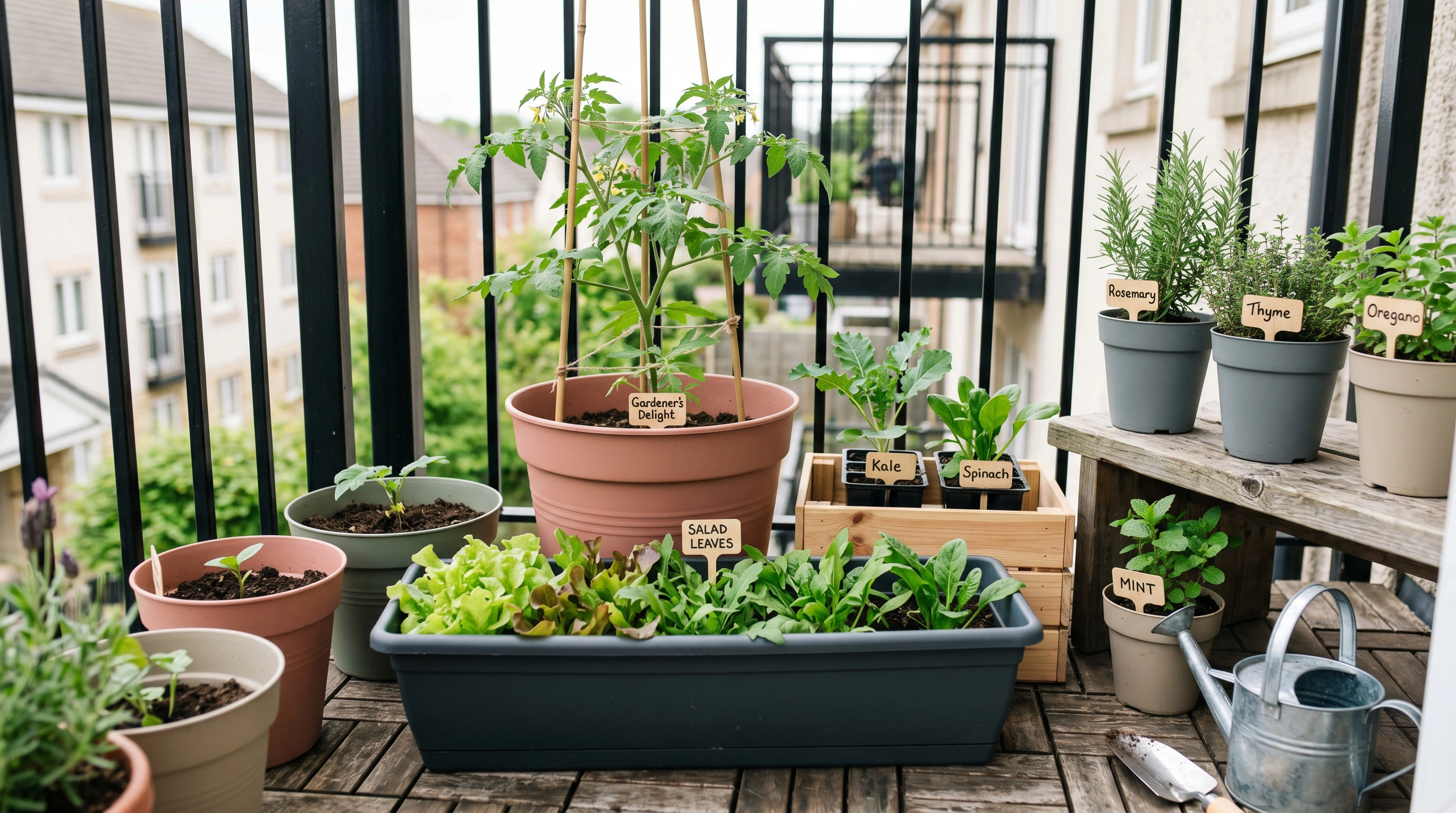
For one plant, use one good-sized container, one support, one tray if surfaces need protection, and a sunny sheltered position. Keep the plant where you can water it easily. A thirsty tomato tucked behind furniture is easy to neglect.
Avoid filling a small balcony with several tomato plants in the first year. One well-managed plant teaches more than five stressed plants competing for light and water.
If your balcony is very sunny, you may prefer to combine one tomato with lower crops such as basil, chives or salad leaves in separate pots. If the balcony is exposed, protect the tomato from wind before it becomes tall.
When tomatoes are not worth it
Tomatoes are satisfying, but they are not always the best use of a small space. If your balcony receives little sun, if you travel frequently in summer, or if watering is awkward, leafy crops and herbs may give a better experience.
That is not failure. It is good crop matching. The article What Can You Grow Without a Garden in the UK? gives easier alternatives for limited spaces.
Bush or cordon tomatoes?
Bush tomatoes are usually the easier choice for small balconies. They stay more compact, need less pruning and are simpler to support. Look for wording such as bush, patio, dwarf or compact when choosing seeds or plants.
Cordon tomatoes grow taller and usually need stronger support and side-shooting. They can produce well in the right conditions, but they are less forgiving in a windy rented balcony setup. If you are new, choose one compact plant first.
A basic tomato season
In early spring, decide whether to sow seeds or buy a young plant. In late spring, harden off plants gradually before they live outside. In summer, focus on watering, feeding once fruit forms, and keeping support steady. In late summer and early autumn, harvest ripe fruit and remove tired plants when the season is clearly ending.
Do not expect the same timing in every part of the UK. Shelter, altitude, nearby buildings and local weather all matter. A protected urban balcony can warm earlier than an exposed coastal or northern spot.
Troubleshooting tomato problems
If a tomato grows lots of leaves but few flowers, check whether it has enough sun and whether feeding is balanced. If leaves wilt daily, the pot may be too small or drying too quickly. If the plant rocks in wind, improve support or move it to a calmer position.
If fruit is slow to ripen, be patient and check light. Late-season tomatoes often slow down as days shorten. A small pot cannot force greenhouse-style results.
Good companion pots
Keep companion planting simple. Basil, chives, parsley and salad leaves can sit nearby in their own pots. Avoid cramming them into the tomato container, because the tomato already needs root space, water and feed.
Separate pots are easier to move and water. They also let you replace tired salad leaves without disturbing the tomato.
What to buy as a beginner
If you are buying a young plant, look for a compact tomato with a sturdy stem and healthy green leaves. Avoid plants that are already tall, pale, wilted or root-bound in a tiny pot. A smaller healthy plant often establishes better than a stressed larger one.
Buy the pot and compost before the plant if you can. Tomatoes dislike waiting around in cramped nursery pots while you search for a container.
Daily care in warm weather
In summer, tomatoes in pots may need checking every day. This does not mean watering every day automatically. It means looking at the plant, feeling the compost, and noticing whether the pot is drying faster than usual.
Water at the compost surface rather than soaking the leaves. Keep the routine steady. Big swings from bone dry to flooded are harder on tomatoes than moderate, consistent watering.
End-of-season expectations
As autumn approaches, growth slows and ripening becomes less reliable. Remove tired plants when they are no longer useful and clean the pot before storing or reusing it. Do not keep a declining plant for weeks if it blocks space for autumn leaves or herbs.
Your first tomato season is partly a test of light, watering and wind. Even a modest crop can be a success if it teaches you whether tomatoes suit your space.
Take a quick note of the pot size, variety and balcony position. Those details are easy to forget, and they make next year’s tomato choice much easier.
If you enjoyed the routine, repeat it with small improvements. If it felt like too much work, switch that sunny space to beans, strawberries, herbs or salad crops next season.
The right crop is the one you can keep healthy, not the one that looks most impressive on a seed packet.
Common mistakes
The biggest mistake is trying tomatoes in too little light. The second is using a pot that is too small. The third is inconsistent watering.
Another mistake is choosing a tall variety for a windy balcony without support. Compact varieties are easier.
If you are buying your first tomato pot, compost, supports or watering basics, the small-space gardening kit list can help you compare useful beginner kit.
FAQ
Can cherry tomatoes grow on a balcony?
Yes, if the balcony is sunny, warm and sheltered enough.
Can I grow cherry tomatoes indoors?
It is possible in a very bright warm spot, but most indoor windowsills are not ideal.
What size pot do cherry tomatoes need?
Use a large container with drainage. Bigger pots make watering easier than tiny decorative pots.
Do cherry tomatoes need feeding?
Yes, once flowering and fruiting begins, tomato plants usually need feeding in containers.
Are cherry tomatoes good for north-facing balconies?
Usually no. Choose leafy crops and herbs instead unless the balcony still gets strong direct sun.
Related guides
- Beginner’s Guide to Small-Space Gardening for UK Renters
- Best Vegetables for South-Facing Balconies in the UK
- How Often Should You Water Plants in Pots in the UK?
Next step
If your balcony is sunny, compare tomato options with Best Vegetables for South-Facing Balconies in the UK.