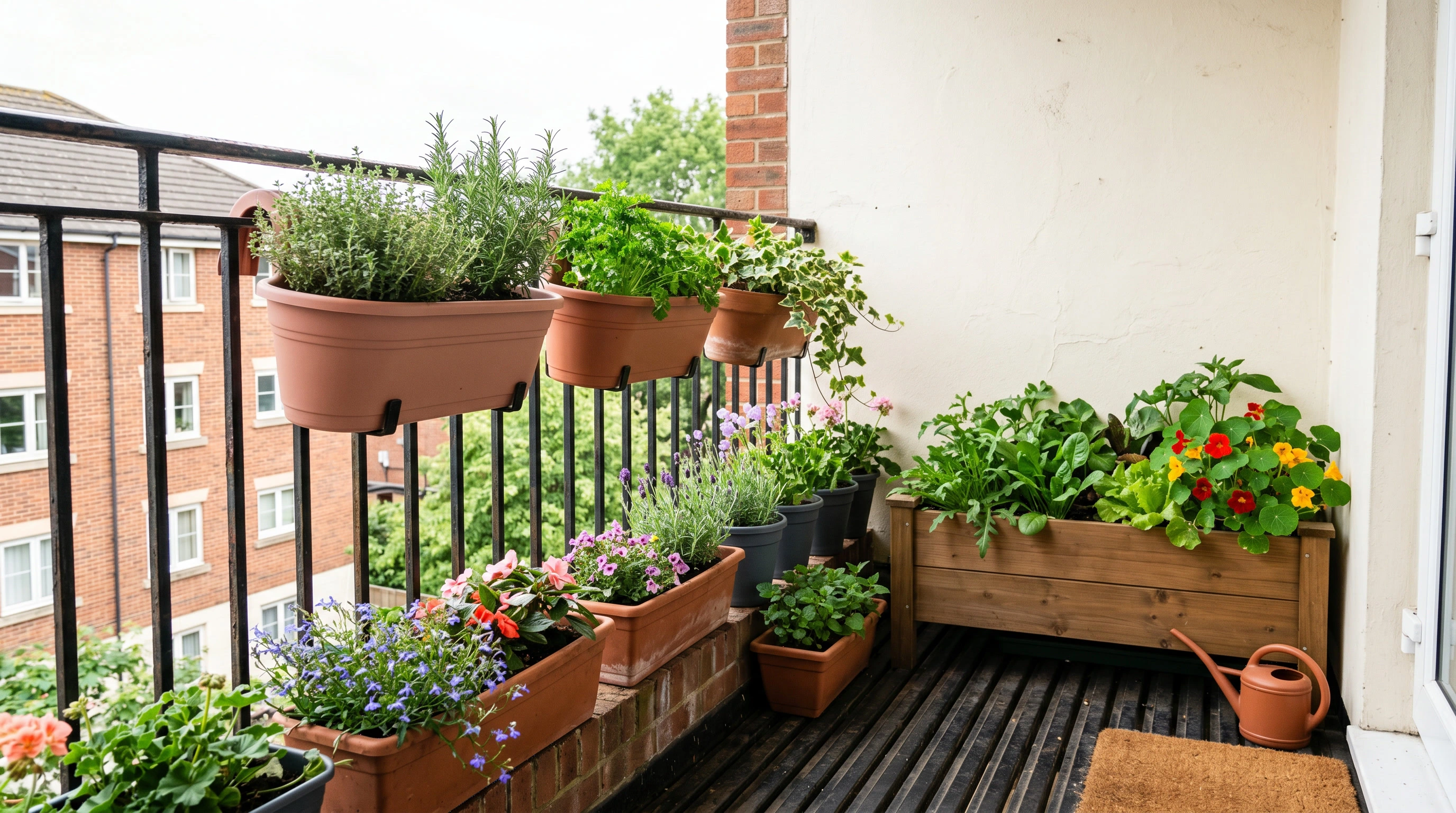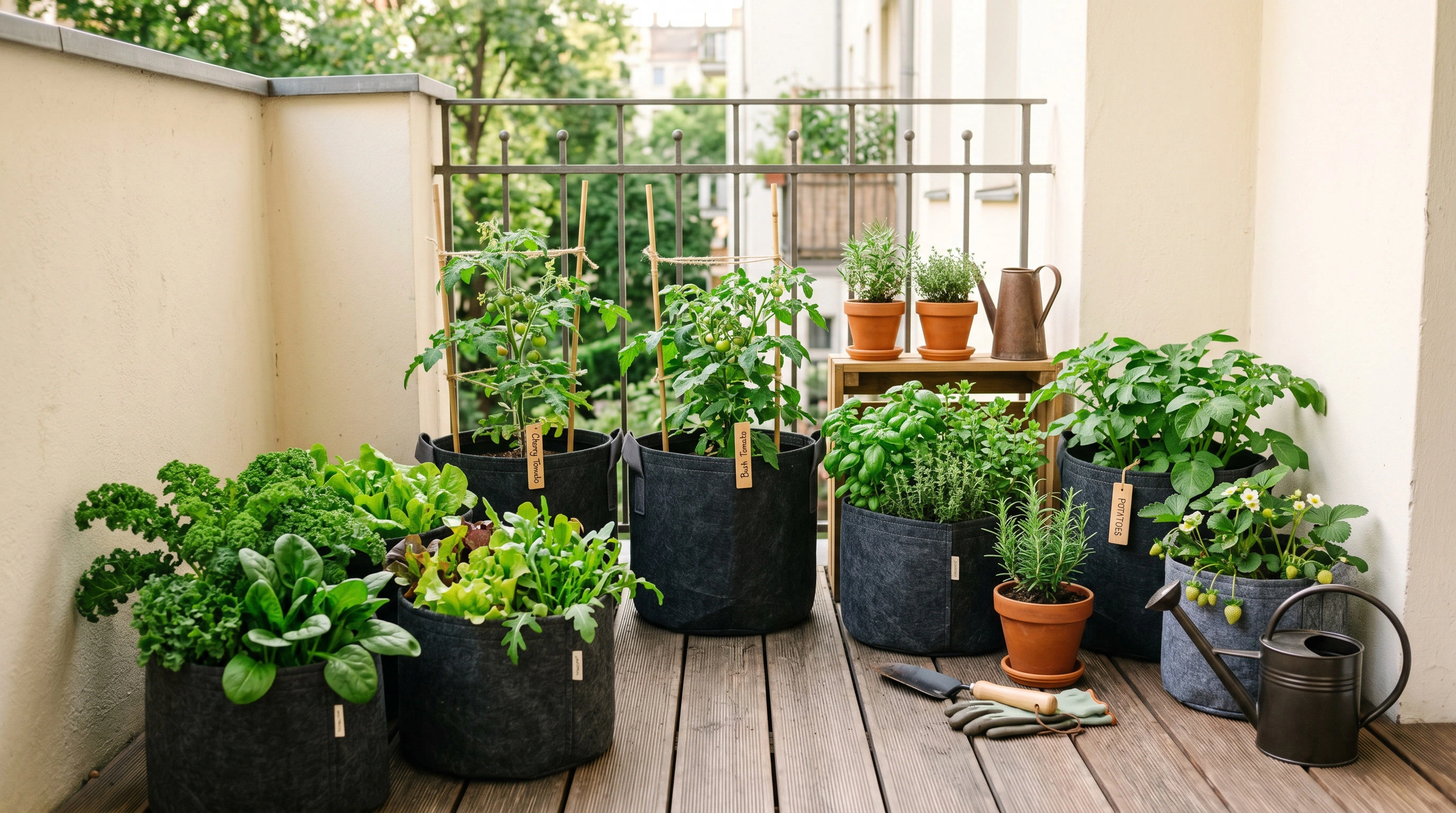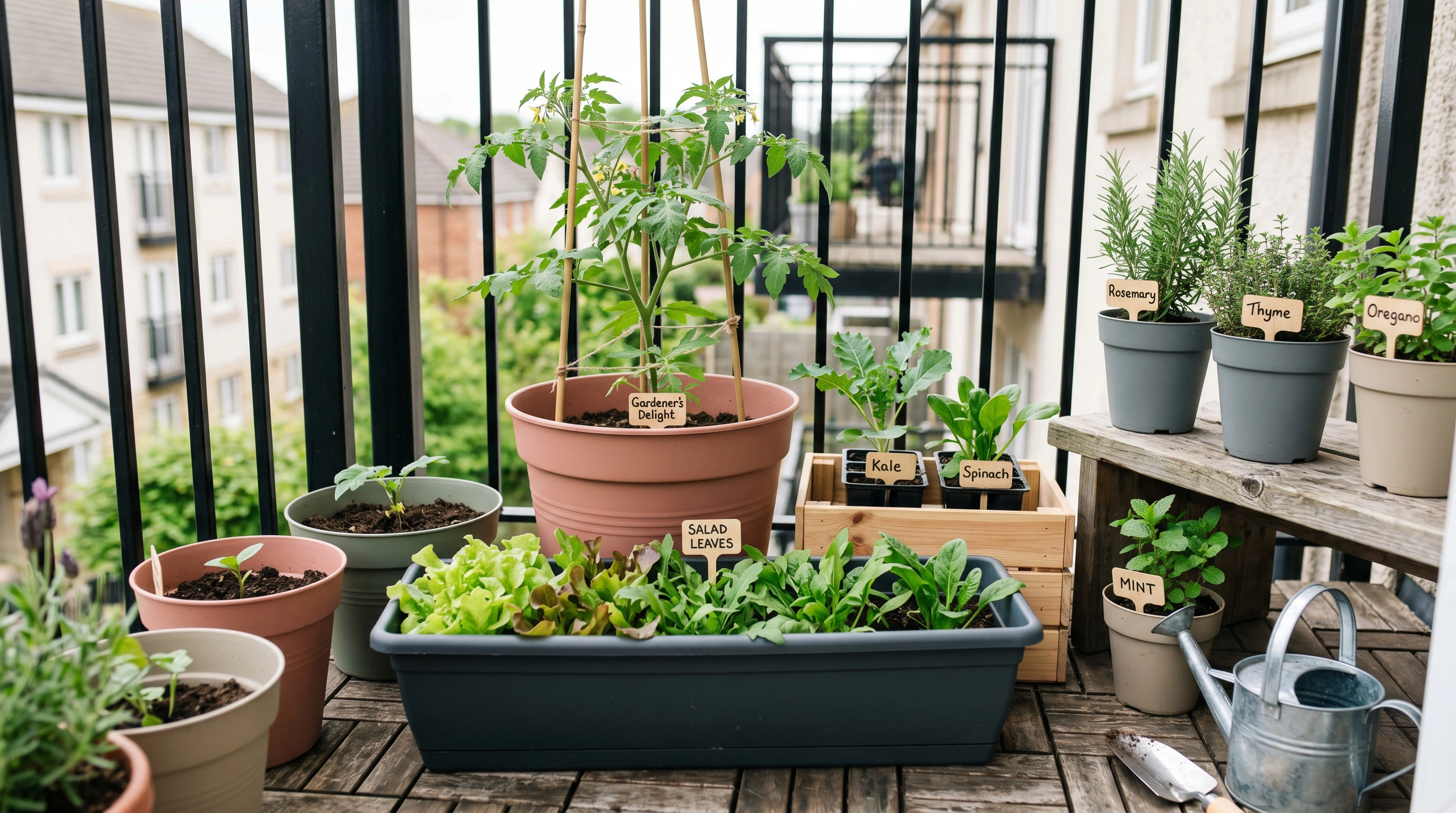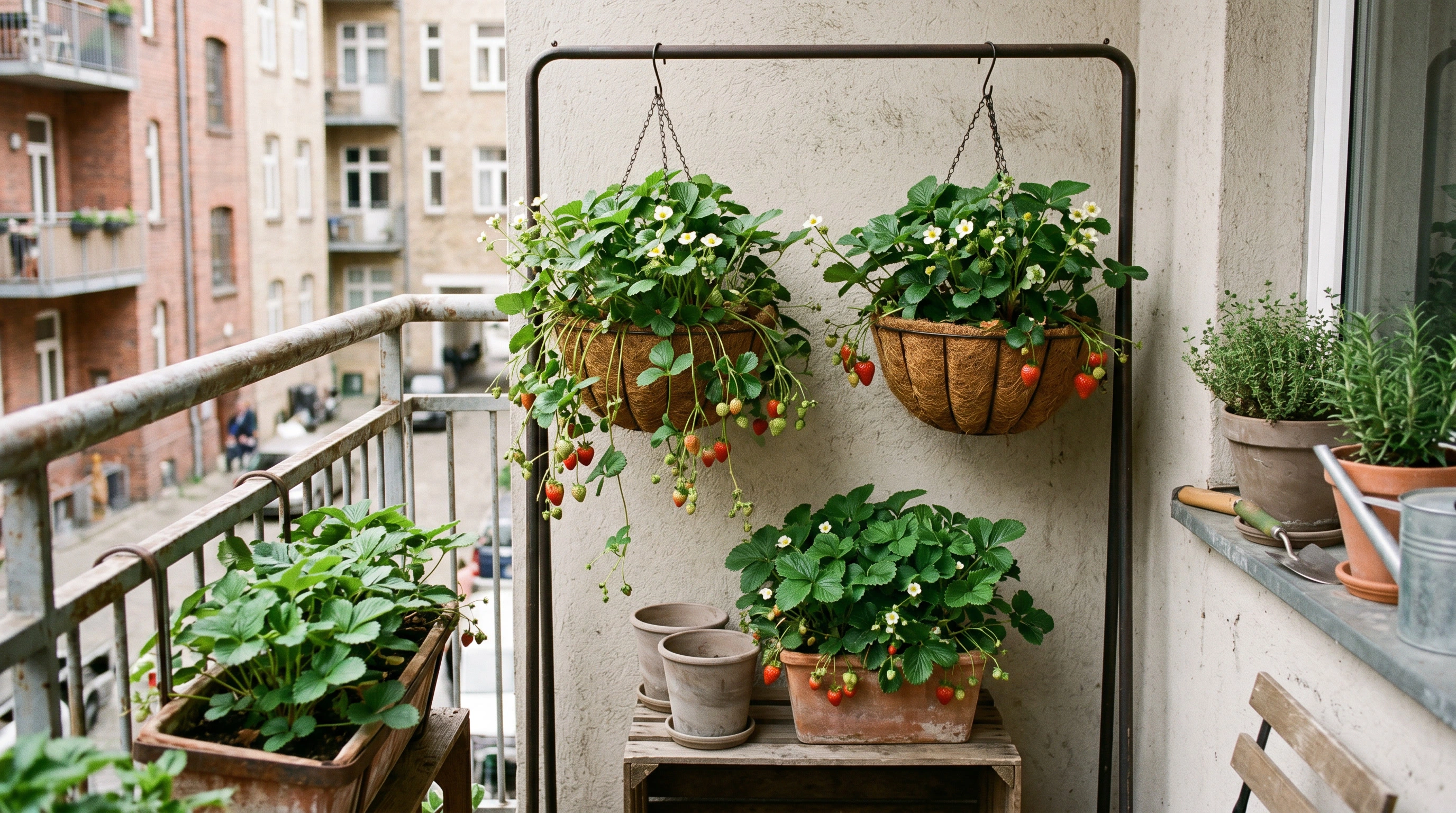
Strawberries are one of the better fruit crops for small spaces. They can grow in pots, troughs, grow bags, hanging baskets and compact patio containers, which makes them useful for renters, balcony growers and anyone without a proper garden.
They still need the right conditions. A strawberry plant in a tiny dry pot on a windy balcony will struggle. A plant in a sensible container, with good drainage, regular watering and enough sun, can give a useful small harvest without taking over the space.
This guide explains how to grow strawberries in pots in the UK, including where to place them, what container to use, how to water, when to feed, what to do with runners and how to keep the setup manageable in a rented home.
Who this guide is for
This article is for beginners growing strawberries on balconies, patios, doorsteps or other compact outdoor spaces. It assumes you want a practical setup that is removable, tidy and easy to water.
If you are completely new to growing in pots, start with Beginner’s Guide to Small-Space Gardening for UK Renters. For general container choices, use Container Gardening for Beginners: A UK Small-Space Guide.
Are strawberries good for pots?
Yes. Strawberries are well suited to pots because they are compact, shallow-rooted compared with many vegetables, and useful even when the harvest is small. A few ripe berries from a balcony are still worthwhile, especially if the plants are easy to reach and maintain.
They are not completely maintenance-free. In pots, strawberries rely on you for water and nutrients. They also need enough light to flower and fruit well. If your space is very shaded, you may get leaves but fewer berries.
Best place to grow potted strawberries
Strawberries do best in a sunny, sheltered outdoor position. A south or west-facing balcony, patio or doorstep is usually better than a shaded north-facing spot. Morning sun can also work, especially if the space is bright for several hours.
Try to avoid the windiest part of a balcony. Wind dries pots quickly and can damage flowers, leaves and runners. If your balcony is exposed, use a lower, heavier container and place it near a sheltered wall or corner.
If you are unsure how much light your space gets, read How Much Sunlight Do Herbs and Vegetables Need?.

Choosing the right pot
Choose a pot that gives roots enough room and does not dry out too quickly. Very small decorative pots are tempting, but they make watering harder and can limit growth.
Good options include:
- Medium plastic pots with drainage holes.
- Wide troughs or window-box style planters.
- Fabric grow bags if they are stable and easy to water.
- Strawberry planters if you can keep all pockets watered evenly.
- Hanging baskets if the space is sheltered and watering is easy.
For a beginner, a medium pot or trough is usually the simplest choice. It gives more compost volume than a tiny pot and is easier to manage than a multi-pocket strawberry planter.
For more help choosing containers, read How to Choose Pots for Balcony and Windowsill Gardening.
Best compost for strawberries in pots
For a simple beginner setup, use a good-quality peat-free multipurpose compost. It should hold moisture without staying permanently wet. If the compost is very heavy or dense, drainage can become a problem in cool weather.
Do not reuse tired old compost from a failed pot unless you refresh it properly. Strawberries need enough nutrients to grow leaves, flowers and fruit. Fresh compost gives the plants a better start.
If you are growing in a very exposed or sunny spot, a larger container with more compost volume is usually more useful than trying to fix everything with specialist products.
Planting strawberries in pots
The most important planting detail is the crown. The crown is the central part of the plant where the leaves emerge. It should sit level with the compost surface, not buried deeply and not raised too high.
Basic planting steps:
- Choose a container with drainage holes.
- Add compost and firm it lightly.
- Place the strawberry plant so the crown sits level with the surface.
- Fill around the roots without burying the crown.
- Water thoroughly after planting.
- Place the pot in a bright, sheltered position.
If planting several strawberries in a trough, give them enough space so leaves can spread and air can move between plants. Crowding increases watering problems and can make fruit more prone to rot.
Watering strawberries in pots
Strawberries like steady moisture, especially when flowering and fruiting. In pots, the compost can swing from wet to dry quickly, which stresses plants and can reduce fruit quality.
Check the compost by touch. If the top few centimetres feel dry and the pot feels light, water thoroughly. In warm or windy weather, containers may need checking daily. In cool wet spells, watering too often can cause soggy compost and root problems.
Try to water the compost rather than soaking the fruit and leaves. Wet fruit is more likely to spoil, especially if air movement is poor.
For a wider watering guide, read How Often Should You Water Plants in Pots in the UK?.
Feeding potted strawberries
Strawberries in pots have limited access to nutrients, so feeding becomes more important once plants start flowering and fruiting. A general beginner approach is to start with fresh compost, then feed during the fruiting period using a suitable liquid feed according to the product instructions.
Avoid overfeeding early on. Too much nitrogen can encourage leafy growth at the expense of fruit. The goal is healthy plants, flowers and steady fruiting, not huge leaves in a crowded pot.
Dealing with runners
Strawberry plants often produce runners, which are long stems that create new young plants. Runners are useful if you want to propagate more strawberries, but they can drain energy from the parent plant.
For a small-space setup, remove most runners during the main fruiting period unless you specifically want new plants. If you do want to keep a runner, peg it into a small pot of compost and let it root before separating it from the parent plant.
Do not let runners spread across shared spaces, balcony edges or walkways. Keep the setup tidy and easy to manage.
Protecting fruit from slugs, birds and rot
Potted strawberries can still attract pests. Slugs may climb pots, birds may take ripe berries, and fruit can rot if it sits against wet compost or crowded leaves.
Useful habits include:
- Keep pots tidy and remove dead leaves.
- Lift fruit away from wet compost where possible.
- Harvest ripe berries promptly.
- Use netting only if it is secure and cannot trap birds or wildlife.
- Improve spacing if the plant is too crowded.
On balconies, slugs may be less of a problem than in gardens, but they can still appear in pots or brought-in plants.
Seasonal care in the UK
In spring, tidy plants, refresh compost where needed and move pots into good light. Flowers and fruit usually follow as temperatures rise.
In summer, focus on watering, feeding and harvesting. This is when containers dry fastest, especially on sunny patios and balconies.
In autumn, remove tired leaves, tidy runners and decide which plants are worth keeping. You can root selected runners if you want new plants for next year.
In winter, strawberries can usually stay outdoors in a sheltered position. Pots are more exposed to cold than plants in the ground, so avoid placing them where they will sit waterlogged through winter. Reduce watering and check occasionally rather than treating them like active summer plants.

Strawberries in pots vs hanging baskets
Pots are usually easier for beginners because they hold more compost, are easier to water, and are less exposed to wind. Hanging baskets can work well, but they dry quickly and need secure fixing.
If you rent, check whether hanging baskets are allowed before using hooks, brackets or railing fixtures. A free-standing pot or trough is usually the safer first choice.
If you specifically want baskets, read Strawberries in Hanging Baskets for Small Spaces.
Common mistakes and fixes
Mistake: using tiny pots
Fix: use a medium pot or trough with enough compost to hold moisture steadily.
Mistake: burying the crown
Fix: plant strawberries so the crown sits level with the compost surface.
Mistake: letting pots dry out during fruiting
Fix: check moisture regularly in warm weather and water thoroughly when needed.
Mistake: keeping too many runners
Fix: remove runners unless you want new plants. Too many runners can weaken the parent plant.
Mistake: growing in too much shade
Fix: move pots to the brightest practical position. Strawberries need good light for decent fruiting.
For a first attempt, grow two or three strawberry plants in one practical trough or separate medium pots. It is easier to manage than a complicated tower or overloaded basket.
First-month setup plan
Week 1: choose the brightest sheltered spot and decide whether to use pots, a trough or a basket.
Week 2: plant strawberries with the crown level with the compost surface and water them in well.
Week 3: watch how quickly the compost dries in your space and adjust watering by condition, not by calendar.
Week 4: remove early runners if the plants are small, keep the area tidy, and check whether the container is easy enough to maintain.
By the end of the first month, you should know whether your chosen spot and container are practical before adding more plants.
FAQ
Can strawberries grow in pots in the UK?
Yes. Strawberries grow well in pots if they get enough light, drainage, steady watering and seasonal care.
What size pot do strawberries need?
Use a medium pot or trough rather than a tiny decorative pot. The container should have enough compost volume to stay evenly moist and enough room for the plant to spread.
Do strawberries need full sun?
They fruit best in a sunny position. They may grow leaves in partial shade, but fruiting is usually weaker if light is poor.
How often should I water strawberries in pots?
Check the compost regularly. In warm or windy weather, pots may need daily checks. Water when the top compost is drying and the pot feels light.
Should I cut off strawberry runners?
Usually yes during the main fruiting period, unless you want to create new plants. Removing runners helps the parent plant focus on growth and fruit.
Can I grow strawberries on a balcony?
Yes, if the balcony is bright enough and the pot is stable, watered consistently and protected from the worst wind.
Related guides
- Beginner’s Guide to Small-Space Gardening for UK Renters
- Container Gardening for Beginners: A UK Small-Space Guide
- How to Choose Pots for Balcony and Windowsill Gardening
- How Often Should You Water Plants in Pots in the UK?
- Strawberries in Hanging Baskets for Small Spaces
Next step
Choose a bright sheltered position and one practical container before buying more plants. If you are unsure about the container, read How to Choose Pots for Balcony and Windowsill Gardening. If watering is your main concern, read How Often Should You Water Plants in Pots in the UK?.