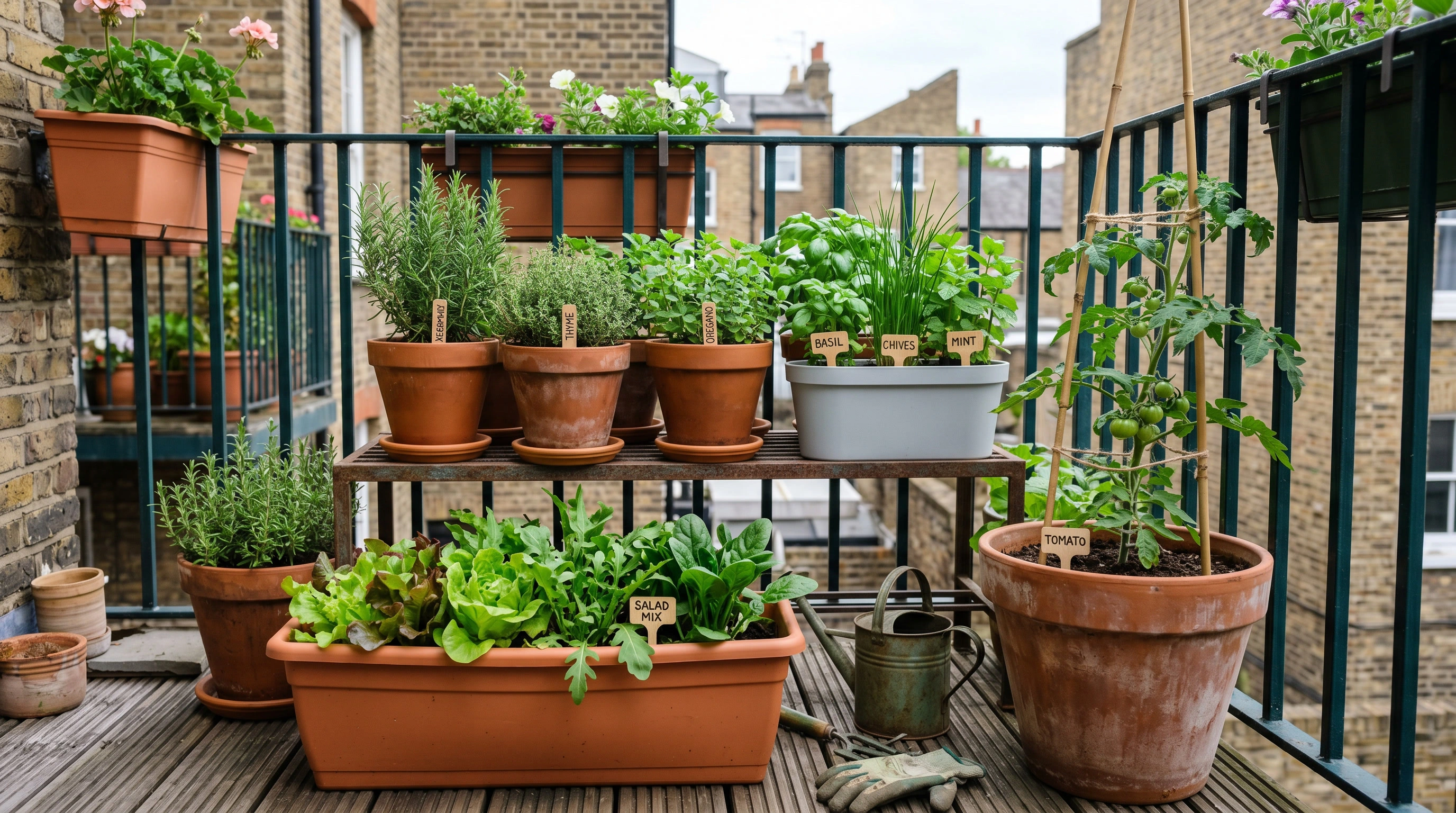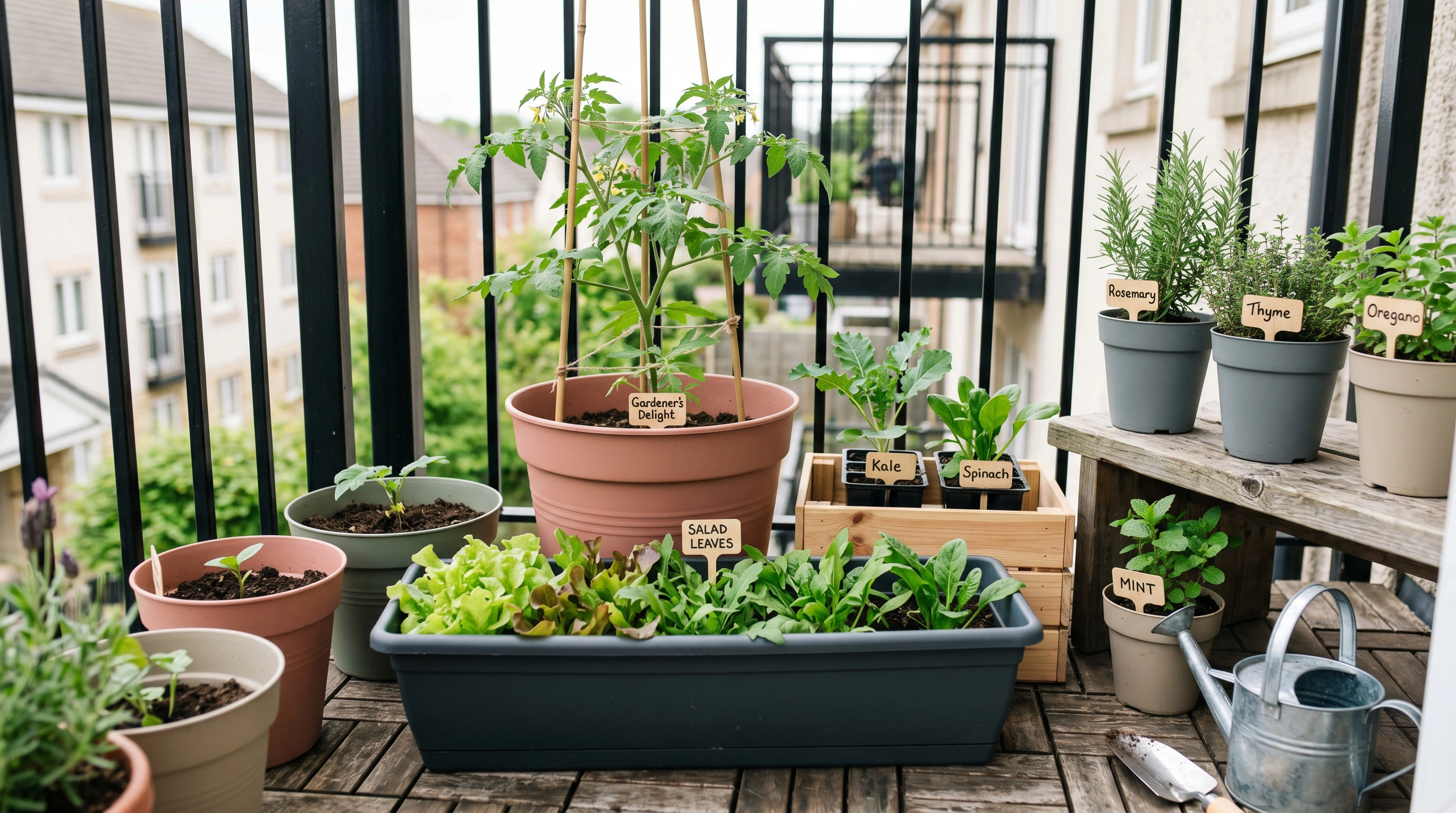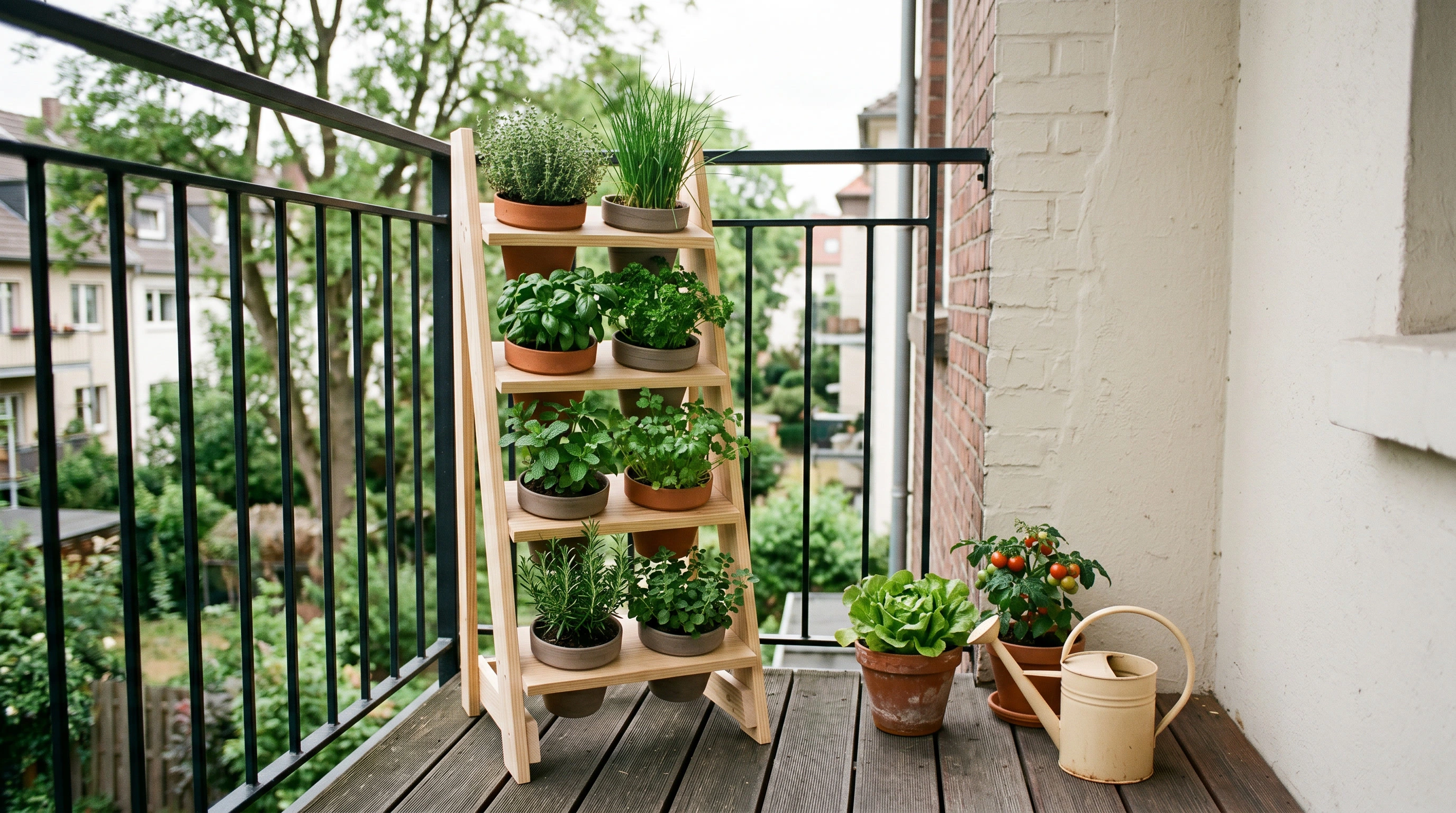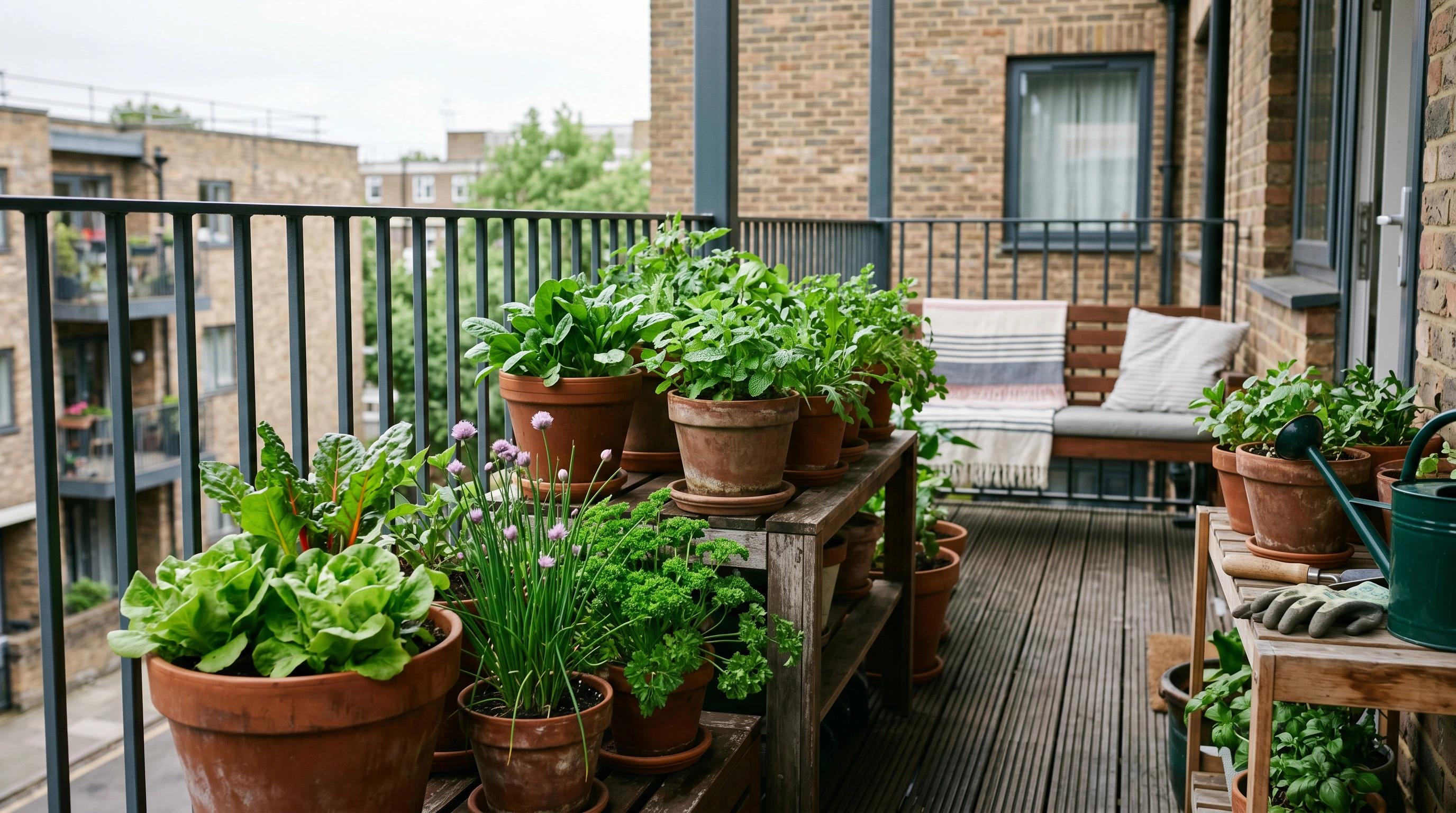
Mint is one of the most useful herbs for small-space growers, but it has a reputation for taking over. In a garden bed, that reputation is deserved. In a pot, mint is much easier to control, as long as you give it its own container and keep on top of trimming.
For UK renters, flat dwellers and balcony growers, mint is a good beginner herb because it is tougher than basil, more forgiving than many Mediterranean herbs, and useful in drinks, salads, sauces, potatoes and cooking. The main rule is simple: do not plant mint in a shared container with weaker herbs.
Why mint needs controlling
Mint spreads through vigorous roots and runners. In open ground, this can let it move through beds and borders. In a small rented space, the risk is not usually that mint will invade a whole garden. The real problem is that it can quickly dominate a mixed pot.
If you plant mint beside parsley, basil, chives or thyme, the mint may outcompete them for space, water and nutrients. That is why mint is best treated as a one-pot herb.
This makes it ideal for small spaces. You do not need to avoid mint. You just need to contain it properly.
Can you grow mint in pots?
Yes. Pots are one of the best ways to grow mint because they keep the roots contained. Mint can grow outdoors on balconies, patios and doorsteps, and it can also grow indoors on a bright windowsill.
It is a good first herb if you want something more forgiving than basil. It will still need watering and light, but it copes with a wider range of conditions than many delicate herbs.
If you are new to growing in containers, start with Container Gardening for Beginners: A UK Small-Space Guide for the basics.
Best place to grow mint
Mint likes bright conditions but does not always need the hottest sunniest spot. Outdoors, it often grows well in partial shade or gentle sun. On a very hot balcony, mint may prefer a slightly cooler position than tomatoes or chillies.
Indoors, choose the brightest windowsill you have. Mint can survive in lower light for a while, but it may become stretched, pale or weak if the room is too dim.
For wider herb options, read Best Herbs to Grow on a Windowsill in the UK.

What size pot for mint?
Use a pot that gives mint room to grow without becoming awkward to move. A small supermarket herb pot is usually too cramped for long-term growth, so repotting helps.
Choose a pot with:
- Drainage holes.
- A stable base.
- Enough width for the plant to spread.
- A saucer or tray if you need to protect surfaces.
A wider pot is often more useful than a very deep narrow one. Mint grows well when it has room to spread across the surface, but you still want the container to stay manageable.
Compost and drainage
Peat-free multipurpose compost is fine for mint in pots. The container should drain freely, but mint does not like drying out completely for long periods.
Avoid sealed decorative pots with no drainage. If you want a neat indoor look, keep the mint in a nursery pot inside a cover pot, then check that excess water is not sitting at the bottom.
For choosing practical containers, read How to Choose Pots for Balcony and Windowsill Gardening.
How to plant mint in a pot
You can start mint from a young plant, a supermarket herb pot, or a cutting. For beginners, a young plant is simplest.
To pot it up:
- Choose a pot with drainage holes.
- Add fresh compost.
- Remove the mint from its old pot gently.
- Place it at roughly the same depth as before.
- Fill around the roots with compost.
- Water well and let excess water drain.
- Put the pot somewhere bright and easy to reach.
If you are using supermarket mint, it may be crowded. You can split it into smaller sections and pot the healthiest pieces separately. For more detail, see How to Keep Supermarket Herbs Alive for Longer.
Watering mint in pots
Mint likes steady moisture. In a pot, it can wilt if the compost dries too much, especially during warm weather or on a breezy balcony.
Check the compost with your finger. If the top layer is drying and the pot feels light, water thoroughly. If the compost is still damp, wait. Indoors, avoid leaving the pot sitting in water for long periods.
Outdoor mint in summer may need checking often. Indoor mint in winter will usually need less water because growth slows.
For a full watering guide, read How Often Should You Water Plants in Pots in the UK?.
How to prune mint
Regular pruning keeps mint bushy and useful. If you let it grow tall without cutting, it can become leggy and untidy.
Pick stems above a pair of leaves, rather than removing random individual leaves. This encourages branching and gives you better harvests.
Use mint often. Small regular harvests are better than waiting until the plant is oversized and then cutting it back hard.
How to stop mint taking over
The simplest control method is to keep mint in its own pot. Do not plant it directly into a shared bed, trough or mixed herb planter unless you are happy for it to dominate.
To keep mint tidy:
- Give it a separate container.
- Trim stems regularly.
- Remove runners that try to creep across the pot surface.
- Repot or divide the plant when it becomes congested.
- Do not let trailing stems root into neighbouring pots.
If mint fills the pot and growth becomes weak, lift the plant, divide a healthy section, and replant it into fresh compost. You do not need to keep the whole old root mass.
Growing mint indoors
Mint can grow indoors, but it still needs enough light. A bright kitchen windowsill is usually better than a dim shelf. Rotate the pot if the plant leans strongly toward the window.
Indoor mint often struggles because of low light, dry indoor air, cramped supermarket pots or inconsistent watering. Repotting and trimming usually help, but very dark rooms may not support strong growth.
If your main growing space is indoors, compare mint with other options in Windowsill Herbs for Beginners: What Works Indoors?.
Mint on balconies and patios
Mint is useful outdoors because it copes with partial shade and does not need the intense sun that tomatoes and chillies need. This makes it a good option for cooler balconies and patios.
Wind can dry pots quickly, so use a stable container and place the mint where it is easy to water. If the balcony is exposed, group it with other pots rather than leaving it alone on a rail edge.
For windy spaces, read How to Protect Balcony Plants from Wind.
Winter care
Mint naturally slows down in colder months. Outdoor mint may die back and return when conditions improve. Indoor mint may keep some growth, but it is often weaker in winter because light levels are lower.
Do not panic if mint looks tired in winter. Cut back dead or weak growth, reduce watering slightly, and wait for stronger growth in spring.
If the plant is in a small pot, protect it from becoming waterlogged during long wet spells.
Common problems
Mint is leggy
It probably needs more light or more regular trimming. Move it brighter if possible and cut stems back above leaf pairs.
Mint is wilting
Check the compost. Mint in pots can wilt quickly when dry. If the compost is wet and the plant still wilts, check drainage and root health.
Leaves are yellowing
Yellow leaves can come from overwatering, underwatering, old growth, poor light or exhausted compost. Check moisture first, then consider repotting if the plant is cramped.
Mint is taking over the pot
That is normal mint behaviour. Trim it, remove runners, and divide the plant if the root mass is congested.
Mint has lost flavour
Very old, stressed or flowering growth can be less useful. Harvest younger stems regularly and cut back tired growth.
Simple first setup
For a first mint setup, keep it boring and practical:
- One mint plant.
- One medium pot with drainage.
- Peat-free multipurpose compost.
- A tray or saucer if growing indoors.
- A bright windowsill, balcony or patio spot.
- Regular trimming once the plant is growing well.
If you are buying basic kit, the small-space gardening kit list separates useful starter items from extras that can wait.
FAQ
Should mint be grown in a pot?
Yes, especially in small spaces. A pot keeps mint contained and stops it spreading through other plants.
Can mint grow indoors?
Yes, if it has enough light. A bright windowsill is best.
Does mint need full sun?
No. Mint can grow in bright light or partial shade, which makes it useful for many UK balconies and patios.
Why is my mint leggy?
Leggy mint usually needs more light, more regular pruning, or both.
Can I grow mint with other herbs?
It is better not to. Mint is vigorous and can crowd out weaker herbs in a shared container.
How often should I cut mint?
Cut small amounts regularly once the plant is growing well. This keeps it bushy and productive.
Related guides
- Windowsill Herbs for Beginners: What Works Indoors?
- Best Low-Maintenance Herbs for Pots
- How to Keep Supermarket Herbs Alive for Longer
- How Often Should You Water Plants in Pots in the UK?
- Container Gardening for Beginners: A UK Small-Space Guide
Next step
If you are growing mint indoors, read Windowsill Herbs for Beginners: What Works Indoors?. If you are starting from a supermarket mint pot, go to How to Keep Supermarket Herbs Alive for Longer.