* Some links may be affiliate links. See the footer disclosure.
Starting seeds indoors is useful when you grow in a flat, on a balcony, or in another small UK space. It lets you begin the season before outdoor conditions are ready, but it also creates a few easy traps for beginners.
The most common problems are not complicated: too many seedlings, not enough light, too much water, weak airflow, and moving plants outside before they are ready. This guide shows the mistakes to avoid and the simple fixes that make indoor seed-starting less frustrating.
Why indoor seed-starting goes wrong
Indoor seed-starting looks simple because seeds are small and trays are cheap. The difficulty comes after germination. Seedlings need light, air, space, moisture and timing. In small homes, they are often squeezed onto windowsills, watered unevenly, and left to stretch toward weak light.
That does not mean you need a greenhouse or expensive kit. It means you need a simple setup and a small number of seedlings you can actually care for.
For a full beginner setup, read Starting Seeds Indoors Without a Greenhouse.
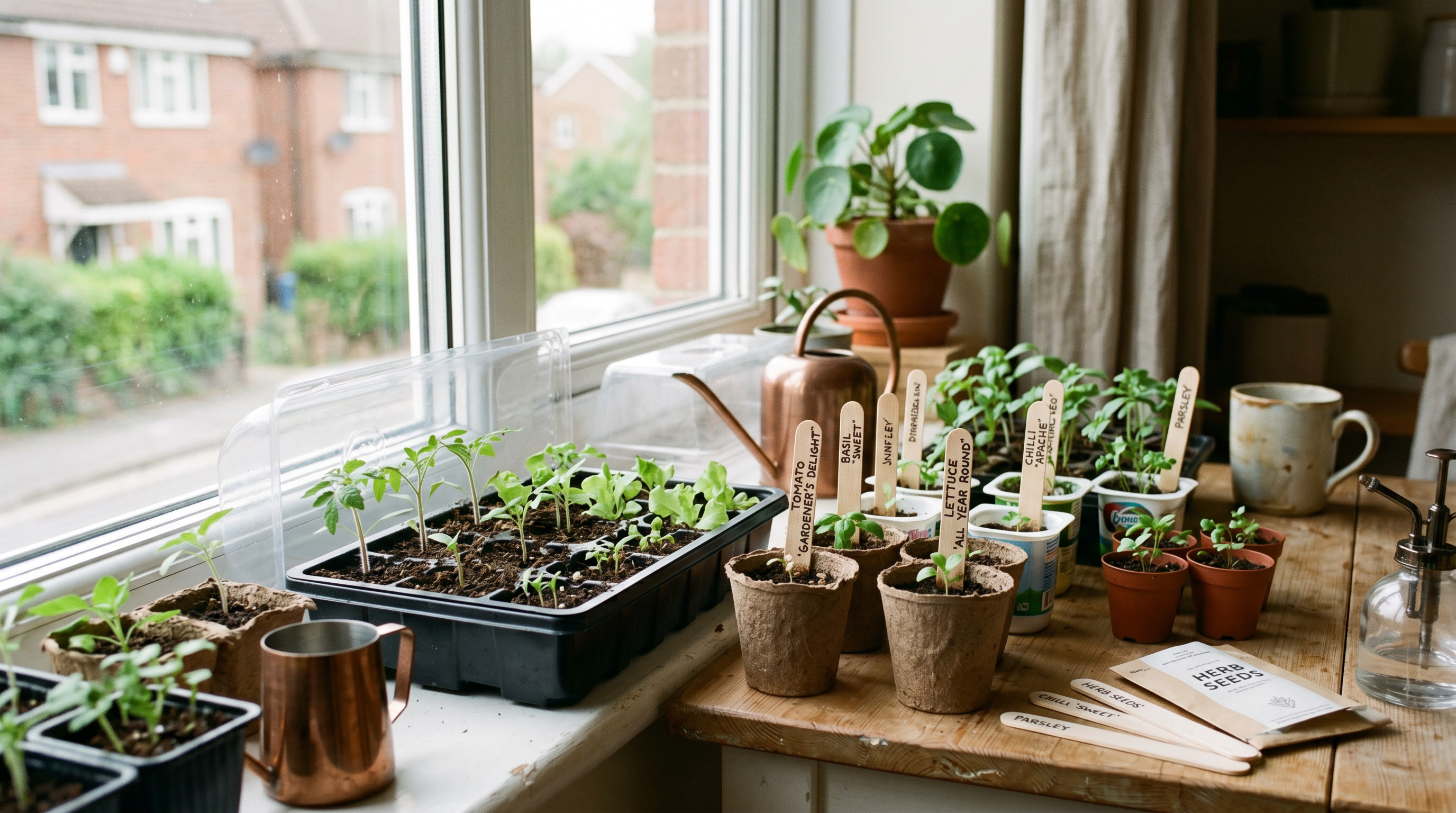
Mistake 1: starting too many seeds
The easiest beginner mistake is sowing the whole packet. It feels productive at first, but it quickly creates too many seedlings for your windowsill, balcony or patio.
Start with a small number of plants you genuinely have room to grow on. For a balcony or small patio, that might mean two tomato plants, one tray of salad leaves, a few herbs, or a small number of flowers.
A good rule is to sow for the space you have, not the number of seeds in the packet.
Mistake 2: sowing too early
Early sowing is tempting, especially in late winter when you want the growing season to begin. But if seedlings are started too early, they may sit indoors for weeks with poor light and limited space.
This often leads to weak, leggy plants that struggle later. Tomatoes, chillies and basil need warmth and light. Salad leaves and herbs are usually more forgiving, but they still need sensible timing.
Check the seed packet and your own space before sowing. A later, stronger seedling is usually better than an early, weak one.
Mistake 3: not enough light
Weak light is one of the biggest causes of poor indoor seedlings. Seedlings that stretch tall and thin are usually reaching for light. They may look alive, but they become fragile and difficult to grow on.
Use the brightest windowsill you have. South or west-facing windows are often better for light, though glass can become hot in strong sun. Turn trays regularly so seedlings do not lean heavily in one direction.
During darker UK months, some herbs and vegetables may need extra help. For herbs, read Indoor Grow Lights for Herbs: When Do You Actually Need Them?.
Mistake 4: overwatering
Seeds and seedlings need moisture, but they do not want to sit in soggy compost. Overwatering can cause weak growth, mould, algae on the compost surface, and root problems.
Keep compost evenly moist while seeds germinate, then reduce watering once seedlings appear. Check the compost rather than watering automatically every day.
Small trays dry quickly, but covered trays can also trap moisture. Remove lids or vents once seedlings are up so airflow improves.
Mistake 5: using the wrong containers
Seed trays, modules, small pots and reused containers can all work, but drainage matters. Avoid sealed containers unless they are only being used as outer trays.
For beginners, modules are useful because each seedling gets its own small space. This makes transplanting easier and reduces root disturbance.
Reused yoghurt pots or food containers can work if they are clean and have drainage holes, but do not use anything that will collapse when wet or leak onto indoor surfaces.
Mistake 6: not labelling seedlings
Many seedlings look similar when they first appear. Without labels, it is easy to forget what you planted, when you planted it, and which variety performed best.
Use labels from the start. Include the crop name and sowing date. This is especially useful when you are testing different herbs, salad leaves or tomato varieties in a small space.
Good notes make next year easier.
Mistake 7: skipping airflow
Seedlings need gentle airflow once they germinate. A closed, humid tray can encourage weak growth and mould. This is common when lids stay on too long.
Remove lids after germination, avoid crowding trays too tightly, and give seedlings space as they grow. You do not need a fan for a basic beginner setup, but you do need to avoid stale, trapped moisture.
Mistake 8: moving seedlings out too fast
Indoor seedlings are soft. Moving them straight from a warm windowsill to an exposed balcony can shock them. Sun, wind, cold nights and rain are all harsher outdoors than indoors.
Harden seedlings off gradually. Put them outside for short periods in mild conditions, then increase the time over several days. Bring them back in if the weather turns cold or windy.
For balcony wind problems, read How to Protect Balcony Plants from Wind.
Do not rush tender seedlings outside after one warm day. UK spring weather can change quickly, and cold nights can set young plants back.
Useful seed-starting kit
You do not need a full greenhouse setup to avoid most beginner mistakes. A few small items can help if they solve a real problem in your space, especially surface protection, labelling and gentle watering.
- Seed trays with lids: See examples
- Spray bottle: See examples
- Plant labels: See examples
For a broader beginner supply list, use the small-space gardening kit list.
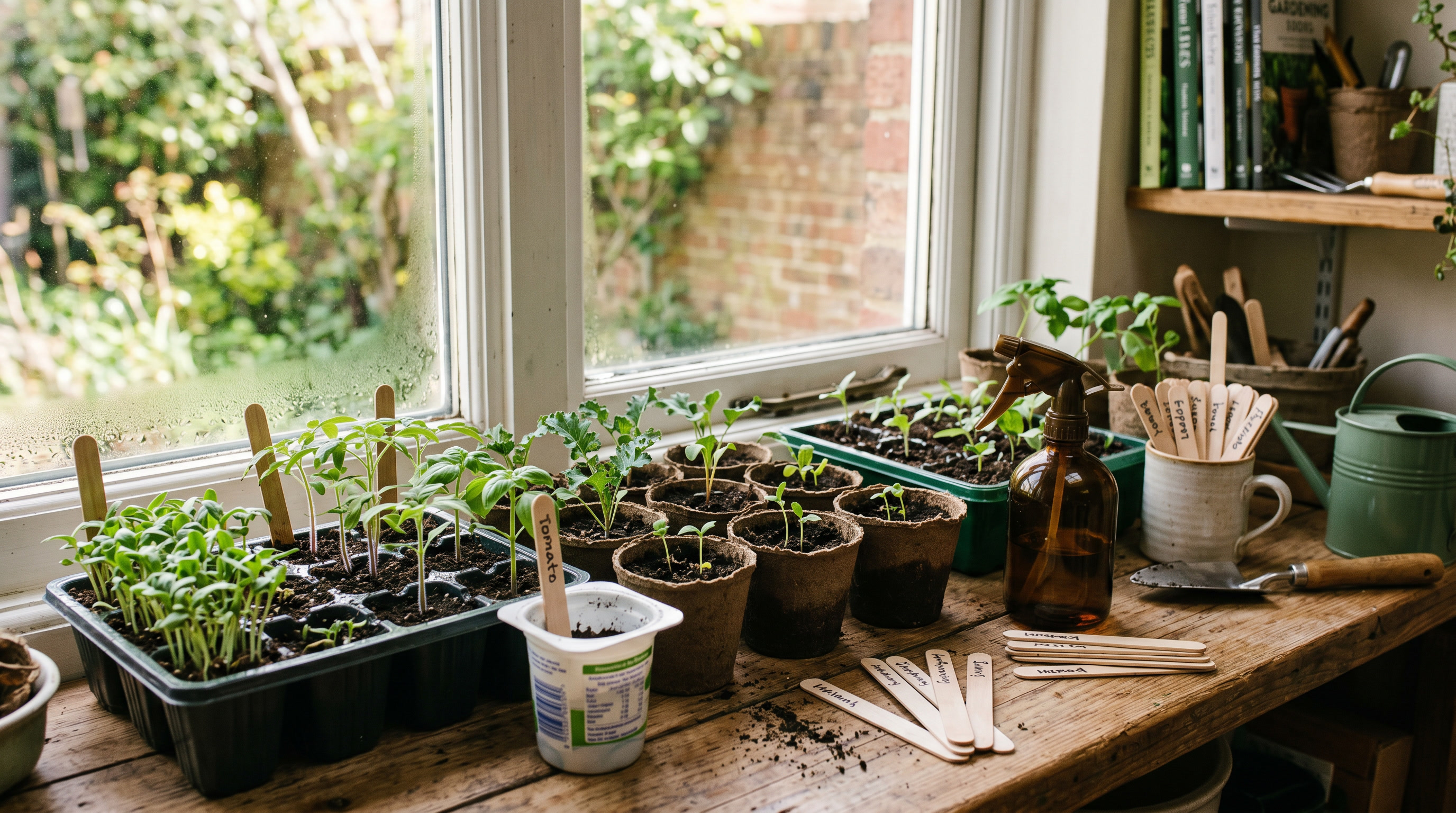
Simple indoor seed-starting setup
For a small flat or rented home, keep the setup modest:
- One bright windowsill or small table near a bright window.
- One tray to protect surfaces.
- One or two seed trays or a few small pots.
- Labels for every crop.
- A small watering can or spray bottle.
- A notebook or phone note for sowing dates.
This is enough to learn the basics without filling your home with trays you cannot manage.
Which seeds are worth starting indoors?
Some crops are more useful indoors than others. Tomatoes, chillies and basil often benefit from a warmer start, but they need good light. Salad leaves, herbs and pea shoots can be simpler for beginners because they grow quickly and do not always need long indoor growing periods.
For small-space growers, the best seed choices are usually crops that either save money, suit containers, or give repeated harvests. Do not start large crops indoors unless you have a realistic outdoor container ready for them later.
For crop ideas, read What Can You Grow Without a Garden in the UK?.
Weekly care routine
A simple weekly routine prevents most problems:
- Check moisture every day, but water only when needed.
- Turn trays if seedlings lean toward the window.
- Remove lids once seedlings have germinated.
- Thin overcrowded seedlings early.
- Check labels are still readable.
- Move stronger seedlings into larger pots when they outgrow modules.
Seed-starting works best when it becomes a small daily check, not a big rescue job once a week.
When to pot on seedlings
Potting on means moving a seedling into a larger container. Do this when the seedling is growing strongly, roots are filling the module, and the plant needs more space.
Do not move tiny seedlings too early. Also do not leave strong seedlings trapped in small cells for too long. Both can slow growth.
Handle seedlings by their leaves rather than crushing the stem. Water gently after moving them, then keep them somewhere bright and calm while they settle.
Troubleshooting
Seedlings are tall and floppy
This usually means low light. Move them to a brighter spot, turn the tray regularly, and avoid sowing too early next time.
Compost has mould on the surface
This often means too much moisture and not enough airflow. Remove lids after germination, water less often, and avoid keeping trays constantly wet.
Nothing has germinated
Check seed age, temperature, sowing depth and moisture. Some seeds take longer than others, but cold or dried-out compost can delay germination.
Seedlings collapse
This can happen when seedlings are weak, overcrowded, too wet or poorly ventilated. Start again with cleaner trays, fresher compost, fewer seeds and better airflow.
Seedlings stop growing
They may need more light, more space, warmer conditions or fresh compost. Change one thing at a time so you can see what helps.
FAQ
Do I need a greenhouse to start seeds?
No. A bright windowsill, small tray and sensible watering routine can be enough for many beginner crops.
When should I start seeds indoors in the UK?
It depends on the crop. Check the seed packet and avoid starting so early that seedlings become weak before outdoor conditions are suitable.
Why are my seedlings leggy?
They are usually not getting enough light. Move them brighter, rotate trays, and avoid sowing too early in dark months.
Should I use seed compost or normal compost?
Seed compost can make sowing easier because it is finer and designed for germination. Multipurpose compost can work for some crops, but large lumps can make small seed trays harder to manage.
How many seeds should I start?
Start fewer than you think. Sow based on the number of plants you can realistically grow on, not the number of seeds in the packet.
Can I start seeds on a windowsill?
Yes, if the windowsill is bright enough and the seedlings are protected from cold draughts, overheating and drying out.
Related guides
- Starting Seeds Indoors Without a Greenhouse
- How Much Sunlight Do Herbs and Vegetables Need?
- Small-Space Gardening Kit List
- Container Gardening for Beginners: A UK Small-Space Guide
- What Can You Grow Without a Garden in the UK?
Next step
Start with one small tray, one crop and clear labels. For the full setup process, read Starting Seeds Indoors Without a Greenhouse.